


Regional Cooperation Key In Cross Border Crime FIght
26 Feb 2026
Botswana stands ready to work with Angola, Namibia, South Africa, Zambia, Zimbabwe and all SADC member states to promote a secure, stable, and prosperous Southern Africa.
Through regional cooperation mechanisms such as Operation USALAMA and the broader SADC security framework, progress to that effect has been realised.
This came to light during a high-level consultative meeting that is part of the implementation of the decisions of the 2nd Bi-National Commission between Namibia and Botswana that took place October, 2025, in Windhoek, where a resolution was made to jointly and effectively tackle transnational organised crime affecting countries and the region at large.
Police chiefs from Angola, Botswana, Namibia, South Africa, Zambia and Zimbabwe met in Kasane to discuss and examine cross border crimes affecting their respective countries and the SADC region at large.
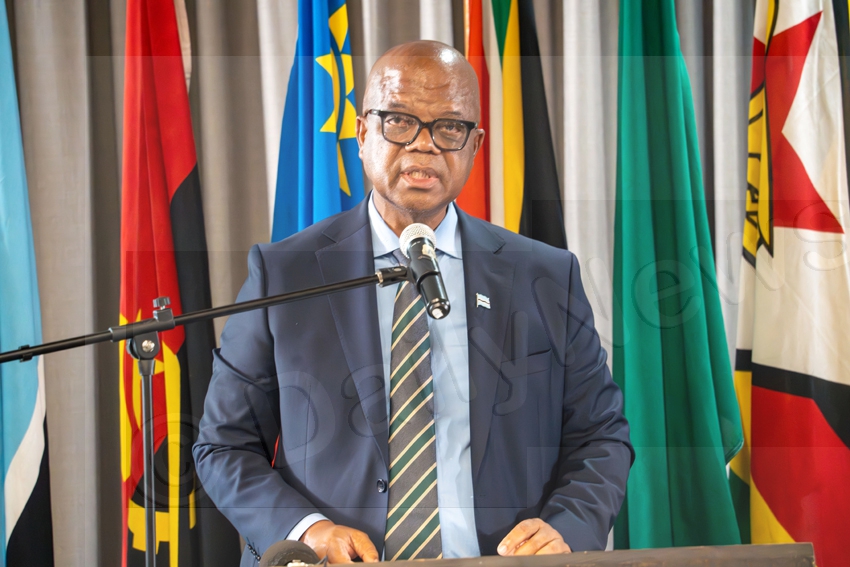
Addressing the meeting, Minister for State President, Defence and Security, Mr Moeti Mohwasa, explained that through joint patrols and coordinated operations, the law enforcement agencies had disrupted drug trafficking networks, recovered stolen vehicles, intercepted poached wildlife products, and strengthened border enforcement.
Such, he said was the result of joint efforts.
The safety of citizens, protection of borders and the stability of the economies, depend not only on national efforts, but also on regional unity and therefore, all must work together to dismantle criminal networks, protect the people, safeguard natural heritage, and ensure that the region remains a place of opportunity and peace.
“Your presence here, despite demanding national priorities, demonstrates a shared conviction: that peace and security in Southern Africa are indivisible. When one country faces instability, the effects are felt across borders.
Our cooperation, therefore, is not optional it is essential,” he added.
Participants were urged to acknowledge that transnational organised crime continued to evolve in sophistication and reach therefore, remained a serious threat to peace, development and good governance in the region.
Minister Mohwasa stated that stock theft destabilised rural communities and undermined livelihoods while human trafficking and smuggling violated fundamental human rights and exploited the vulnerable.
He also highlighted that drug trafficking damaged families and robbed youth of their potential; motor vehicle theft syndicates operate across borders with increasing coordination while poaching and illegal fishing threatened biodiversity and undermine regional conservation commitments.
“These crimes are interconnected. The same networks often facilitate multiple forms of illicit activity from narcotics to weapons, from stolen goods to human exploitation. They exploit gaps in legislation, weaknesses in coordination and delays in information sharing. As such, our response must therefore be equally coordinated, deliberate and modern,” said Minister Mohwasa.
He appreciated that the meeting was held in Kasane, an area that reflected the strength of the tourism sector, the value of biodiversity, and the livelihoods of communities that depended on the resources.
Participants were advised to strengthen real-time intelligence sharing through secure and reliable platforms and Minister Mohwasa emphasised that information must move as quickly as the criminals they sought to intercept.
They were also urged to integrate technology into security architecture from advanced border surveillance tools to data-driven analysis of trafficking patterns.
At the same time, nations were encouraged to invest in continuous training and capacity building to equip their officers with the skills required to address emerging threats, including cyber-enabled crime and financial flows linked to organised networks. ENDS
Source : BOPA
Author : Esther Mmolai
Location : KASANE
Event : High-level consultative meeting
Date : 26 Feb 2026
Related News



10 Oct 2026
Feature Reliving the Long March 90 years on


09 Oct 2026