


Chilisa Unpacks Role Of Constitutional Conundrum
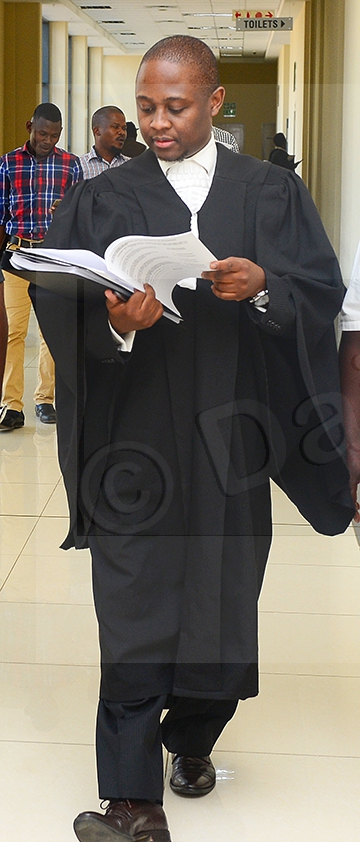
26 Feb 2026
Is a Constitutional Court the missing piece in Botswana’s democracy, or an unnecessarily expedited reform?
As government intensifies consultations on the 2025 Constitutional Amendment Bill seeking to establish the court, debate continues, with some arguing its creation is long overdue while others question the timing.
Daily News (DN) journalist, Bonang Masolotate sits down with seasoned attorney Mboki Chilisa (MC), Managing Partner at Collins Chilisa Consultants, to unpack what this specialised court really means for human rights and judicial independence.
DN: What is a Constitutional Court and why do regimes establish Constitutional Courts?
MC: A constitutional court is a specialised forum that deals with disputes that concern the interpretation and application of the Constitution. It is the final arbiter of any legal matter that concerns the Constitution.
DN: What mechanisms should be in place for appointing judges to this court to ensure independence and impartiality, especially given the political, contentious nature of constitutional issues?
MC: There should be transparency in the appointment of members of such court. Transparency is achieved by having a public process of appointment that involves everyone who qualifies to be considered being given an opportunity to apply, and having the interviews being conducted publicly by a body that is representative of various stakeholders, e.g., the legal profession, the judiciary, civil society, opposition political parties, the executive etc
DN: How specifically will a dedicated Constitutional Court address the, ‘delays, inaccessibility, and lack of prioritisation’ of constitutional cases, as raised in the Dibotelo Commission report?
MC: There are various ways in which it can address judicial delays and lack of prioritisation of human rights. It can indicate what constitutes a fair and reasonable standard that the constitution dictates and direct the courts to follow that standard. It can also in exceptional circumstances sit as a court of first instance in constitutional disputes, i.e., it will not be confined to only dealing with appeals.
DN : Will this court strengthen the protection of human rights compared to the current system, which has historically taken a ‘low key approach’ to constitutional enforcement?
MC: Part of the mandate of any constitutional court is to promote human rights, and develop a coherent human rights jurisprudence that lower courts will have to apply. As it will be part of the mandate of the Constitutional Court to promote human rights, it will obviously be better than the current set-up where the courts have sometimes shied away from determining constitutional issues. Under the current set-up, the courts have at times taken a very narrow interpretation of human rights that seeks to inconvenience the executive as little as possible.
DN :Should the establishment of the Constitutional Court come before or after the broader, comprehensive review of the entire Constitution?
MC: As I understand it, the intention is to have the Constitutional Court before the review of the constitution. The idea behind that is to ensure that Court becomes the arbiter of the process of review.
This ensures that the proposed final document complies with an agreed universal set of basic principles. If the process of review is guided by adherence to a set of basic principles, it avoids a situation where the final product may end-up being simply a reflection of the tyranny of the majority.
This is how we ended up having a situation where discrimination perpetuated by the constitution, which recognises some tribes as major and fails to recognise others. If there are set of values and basic principles that guides the process, and you have an arbiter that oversees the process, you will not end-up with provisions like Section 77, 78 and 79 of the Constitution, which engender discrimination based on one’s tribe.
A constitutional court will not endorse those, even if that is what the majority of Batswana say they want, because it is inconsistent with the basic value of non-discrimination. Part of the purpose of having a constitutional court as arbiter of the review process is to strike a proper balance between ensuring the constitution reflects the will of the majority and adheres to basic universal norms and values.
DN: Does the creation of a new, top-tier judicial body, as a change in the structure of the judiciary, technically necessitate a national referendum?
MC: The current Constitution establishes the Court of Appeal as the apex court in all matters in which it has jurisdiction, including those that concern the constitution. If you then seek to establish another court as the apex court you have to amend the Constitution. Any changes to provisions of the Constitution dealing with the judiciary require a referendum.
DN: Considering similar debates elsewhere, what lessons can Botswana learn from the South African Constitutional Court model regarding the balance of power between a specialised judiciary and parliament?
MC: The lessons that have been learnt from the jurisprudence of the South African Constitutional Court is that a constitutional court, manned by men and women with the right attributes, can be extremely useful in upholding the rule of law and providing appropriate standards of governance. It can be effective in keeping the executive in check, and preventing maladministration. This is especially important in a Parliamentary system where Members of Parliament tend to defer to their political party leadership rather than being guided by the interests and desires of the electorate. A constitutional court can be transformative in terms of infusing equity in society and coming to the aid of those who are marginalised.
DN: Is this court a genuine necessity for legal development, or is it merely a political response to the demand for reform?
MC: There is an obvious genuine need for a constitutional court for the reasons that have already been articulated above.
DN: How can the new court approach interpret contentious issues, like the death penalty and rights of marginalised groups?
MC: The text of the Constitution provides the primary guidance in matters of interpretation. As regards the death penalty, it is constitutionally entrenched. It can never be properly interpreted as per se unconstitutional.
What could be debated is how it is in practice implemented. The right to non-discrimination is entrenched and has been interpreted as outlawing gender-based discrimination and protecting the rights of LGBTI, not to be subjected to unfair discrimination. The discriminatory effect of distinguishing between minor and major tribes is entrenched in our Constitution, no amount of judicial activism can remove this from the Constitution. BOPA
Source : BOPA
Author : Bonang Masolotate
Location : Gaborone
Event : Consultative meeting
Date : 26 Feb 2026
Related News


10 Oct 2026
Feature Reliving the Long March 90 years on


09 Oct 2026