



Gaolathe Issues Stark Call as Botswana Outgrows Diamond Era
25 Feb 2026
For decades, Botswana’s economy was the ‘golden child’ of Africa, robust and fuelled by the diamond trade.
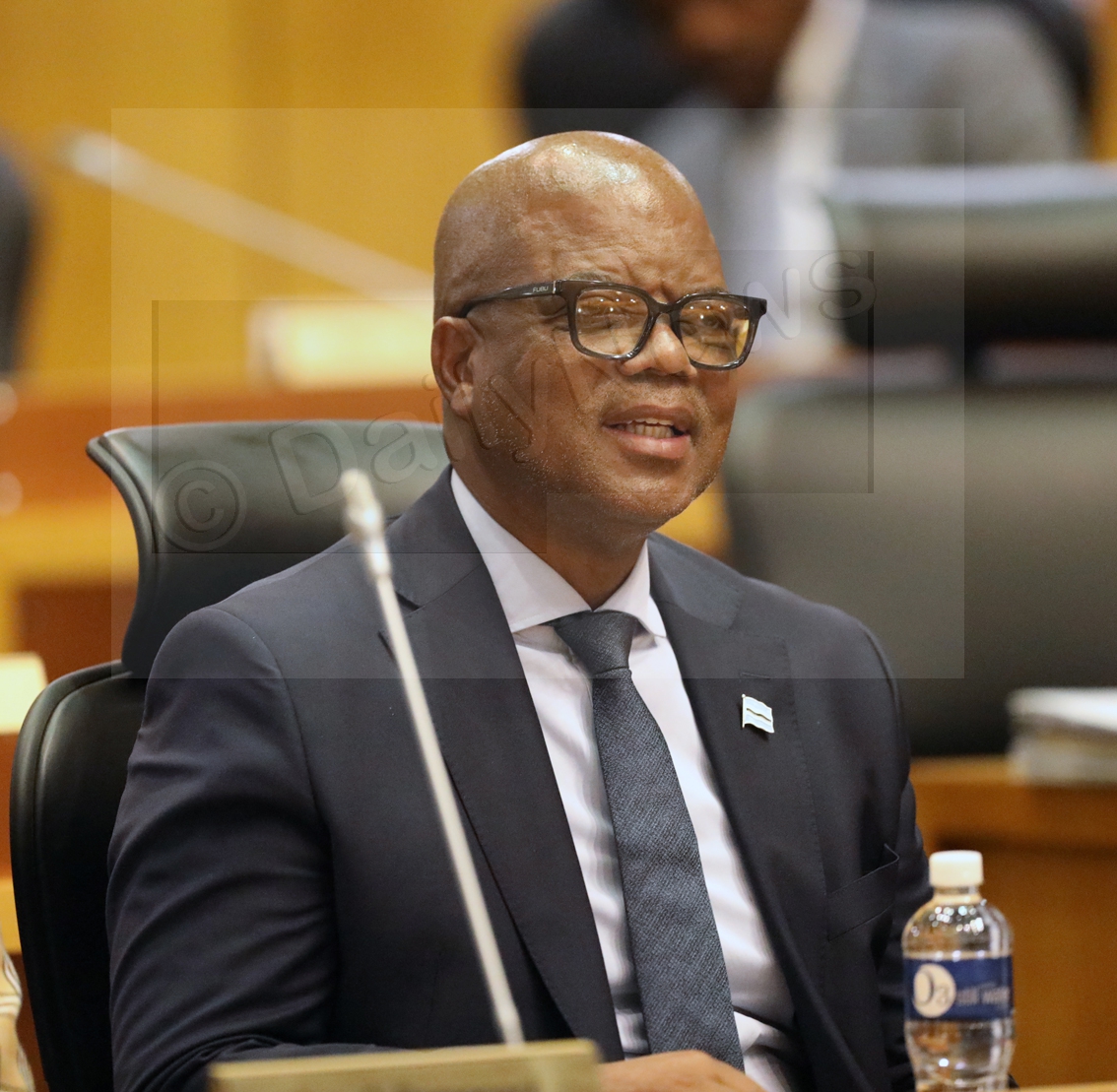
But in Parliament on Tuesday, Vice President and Minister of Finance, Mr Ndaba Gaolathe offered a stark portrait of the nation’s economy as he responded to the legislators’ contributions to the debate on the 2026/27 budget. Minister Gaolathe spoke of an elderly and sick parent.
Once the provider and the pillar of the home, she now lies bedridden, her strength sapped as diamond revenues, the very lifeblood of the nation, plummet.
“The sick parent represents an economy that was once booming. Now, she relies on her children to see her through,” he told Parliament. The metaphor was not just a rhetorical flourish; it was a plea for collective action.
As government moves to resuscitate the patient, the Vice President indicated that the era of passive inheritance was over. Botswana can no longer survive on the memory of past successes or the dwindling safety net of its foreign reserves.
The 2026/27 budget, according to the finance minister, is the beginning of a long-term treatment plan. It is not a magic pill that provides all the answers, but rather a roadmap toward a diversified and private-sector-led recovery.
To fund this recovery, government has had to tighten its belt. One of the most talked-about moves has been the centralisation of Government Purchase Orders (GPOs).
While Mr Gaolathe admitted this was not a permanent solution, he credited the move with stopping wastage of public funds, essentially plugging the leaks in a system that could no longer afford to lose a single drop.
However, the treatment is not without its critics. Leader of the Opposition and Maun North MP, Mr Dumelang Saleshando, though he supported ending supplementary budgets, he warned that extreme centralisation could backfire, arguing that in trying to save money, government might inadvertently starve local businesses of the timely payments they need to survive.
The phrase ‘economic diversification’ has been a staple of the country’s political vocabulary for a generation. But as Mr Gaolathe said, the time for talk had expired.
“We have had good policies. All that is left is execution,” said Minister Gaolathe. Enter the Botswana Economic Transformation Programme (BETP).
Billed as the ‘active wing’ of government’s strategy, the BETP is designed to turn blueprints into bricks and mortar.
Whether it is improving infrastructure, digitising tax collection, or stabilising struggling entities like the Botswana Meat Commission (BMC), the goal is to ultimately create a country where a citizen’s dreams are not dictated by the price of a gemstone in a London vault.
The debate revealed a rare, albeit cautious, sense of national unity. Even as opposition members like Okavango West MP, Mr Kenny Kapinga pushed for more stability and Selebi Phikwe East MP, Mr Kgoberego Nkawana pledged his support, the underlying message was the same, the ‘sick parent’ belongs to everyone.
The Vice President was quick to clarify that a private-sector-led economy does not just mean rolling out the red carpet for foreign billionaires.
It means empowering the local farmer, tech entrepreneur and the small business owner to take their place at the table. As Parliament end debate on the Appropriation Bill, yet to move toward the Committee Stage, the atmosphere remained one of focused urgency.
The ‘parent’ is still in the hospital bed and the recovery will be slow. But with a shift from diamonds to digital services and from wastage to welfare, government is betting that the best days are not just a memory, but a future waiting to be built. BOPA
Source : BOPA
Author : Tebagano Ntshole
Location : Gaborone
Event : Parliament
Date : 25 Feb 2026
Related News

25 Aug 2026
Forensic audit generates 90 priority actions
25 Aug 2026