


Pandamatenga farmers return to full operation
20 Feb 2026
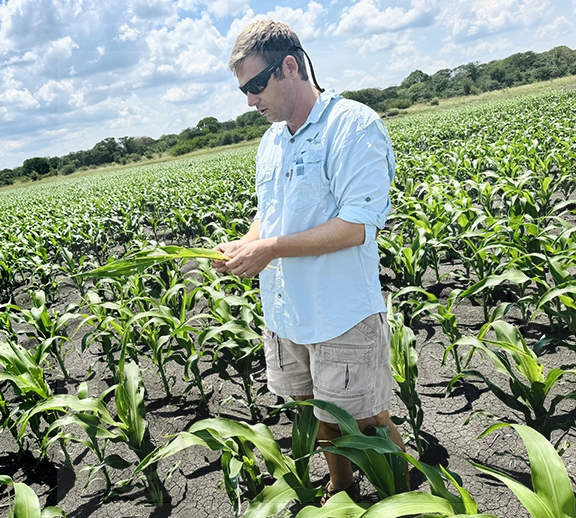
Pandamatenga commercial farmers have resumed ploughing operations following heavy downpours in January that left fields inaccessible and crops submerged in water.
In an interview, Pandamatenga Commercial Farmers Association executive member Mr Ryan Neal emphasised that this was a critical season to sustain national grain stability and financial viability for farmers.
Mr Neal stated that the fact that Pandamatenga was the primary source of grain production in Botswana compelled farmers to return to full operations in order to ensure a steady supply of harvest.
He indicated that it was essential for the soil conditions to continue to hold optimal soil moisture, adding that if the soils became waterlogged it would adversely affect the yields.
He assured that despite substantial damage to crops, farmers were working hard to ensure a good agricultural output. Mr Neal said the unprecedented flooding struck when only 8 500 hectares of a total 40 000 hectares project area had already been planted.
He remarked that assessments were still ongoing on farms that were affected by the floods with some farmers replanting the whole fields while some replanted certain portions.
“The biggest damage was the farms themselves suffering from top soil erosion, drainage damage, road damage as well as equipment damage and all of these damages are being assessed by insurance companies.”
Mr Neal pointed out that farming was a high risk undertaking requiring heavy capital investment, hence good yields were vital for farmers to remain solvent, and thereby retain their capacity to service bank loans. He pleaded with government to facilitate settlement of debts owed to farmers by BAMB as the 26 per cent debt was affecting their operations.
The farmer revealed that this year farmers were diverting from planting sorghum heavily and were gravitating towards increased sunflower planting in order to mitigate risks associated with delayed payments from BAMB.
He said farmers were flexible with their cropping plans, into which they easily incorporated high soil moisture crops like wheat, chickpeas, sunflower and mung beans.
Mr Neal acknowledged the critical role being played by the Pandamatenga commercial farms drainage system that was installed by government, noting that without it the floods would have left a total calamity.
“Massive erosion occurred on farming areas and unfortunately the bridge along the A33 highway has insufficient capacity to handle that much water and it became a wall blocking the flood waters.”
He suggested that during road repairs, the bridge be elevated to allow excess water to be released from the farms. BOPA
Source : BOPA
Author : Portia Keetile
Location : Pandamatenga
Event : Interview
Date : 20 Feb 2026
Related News


13 Oct 2026
Expo sparks regional leather expansion


12 Oct 2026
Partnership to boost vehicles maintenance
12 Oct 2026
Farmers urged to treat agriculture as a business
12 Oct 2026