


Youth central to economic reform
28 Jan 2026
Botswana stands at a defining economic crossroads, with leadership warning that the growth model which sustained the country for decades can no longer guarantee jobs, prosperity or stability.
As global conditions tighten and the diamond industry undergoes structural change, the country is being urged to rethink its future, with young people cast as the central drivers of a new economic era.
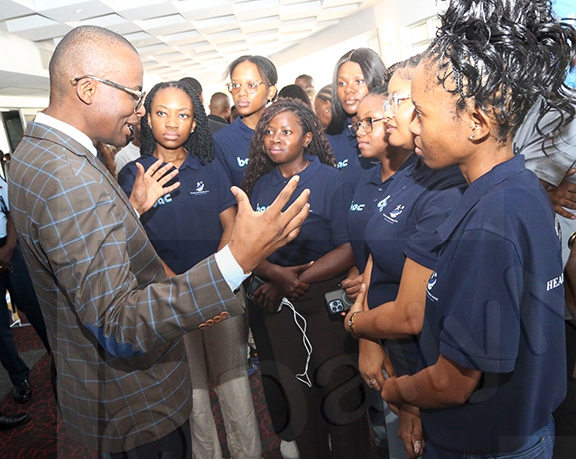
This was the message delivered by the Vice President and Minister of Finance, Mr Ndaba Gaolathe, when he addressed the Budget Pitso for Youth in Gaborone on Tuesday. He cautioned that both the global and domestic economies had entered what he described as a “new normal.”
The Youth Budget Pitso was convened to ensure continued engagement and meaningful participation of young people in the national budgeting process. Mr Gaolathe said global economic growth was expected to slow, particularly in advanced economies that absorb a significant share of Botswana’s exports. At the same time, he noted that long-standing pillars of the domestic economy were weakening.
Falling diamond prices, reduced production and the rapid expansion of lab-grown diamonds are steadily eroding the country’s traditional economic base.
“In previous crises, Botswana experienced strong V-shaped recoveries. That pattern is no longer holding. We cannot continue to do the same things and expect different results,” he said.
Although diamonds still contribute about 30 per cent of government revenue, the Vice President expressed concern that declining sales were weighing heavily on exports, foreign reserves and fiscal buffers. He said lab-grown diamonds now command approximately 20 per cent of the global market, intensifying competition and underscoring the urgency of economic diversification.
Against this challenging backdrop, Mr Gaolathe pointed to Sub-Saharan Africa as a rare bright spot, projected to record positive growth over the next two years. He identified the African Continental Free Trade Area (AfCFTA) as a critical opportunity for Botswana to expand domestic production, reduce import dependence and access regional markets through a more competitive export base.
However, he warned that economic transformation would ring hollow if it failed to confront unemployment, particularly among young people. With youth unemployment estimated to be approaching 40 per cent, he described the situation as “unacceptable” and incompatible with Botswana’s development aspirations.
“This cannot be the new normal. If our policies and budgets do not reduce unemployment, then we are failing,” he said.
Mr Gaolathe added that the forthcoming 2026/2027 National Budget, anchored in the Botswana Economic Transformation Programme, would prioritise a private-sector-led, export-driven economy. This will be supported by targeted skills development, innovation and modern infrastructure aimed at creating sustainable jobs.
“We have transformed before. This generation must now do it again,” he said.
The message to the nation’s youth was both a warning and a call to action that Botswana’s future prosperity will depend not on past successes, but on the willingness to adapt, innovate and place young people at the centre of economic renewal.
As the country confronts an uncertain global environment and the limits of its traditional growth engines, the choices made now in policy, investment and human capital will determine whether Botswana’s “new normal” becomes a story of resilience and reinvention, or one of missed opportunity. BOPA
Source : BOPA
Author : Lorato Gaofise
Location : Gaborone
Event : Budget Pitso
Date : 28 Jan 2026
Related News


13 Oct 2026
Expo sparks regional leather expansion

12 Oct 2026
Partnership to boost vehicles maintenance
12 Oct 2026
Farmers urged to treat agriculture as a business
12 Oct 2026