Botswana confronts diamonds slump and eyes bigger growth
18 Dec 2025
The year 2025 was marked by continued economic challenges, primarily driven by a prolonged downturn in the global diamond market.
Under President Advocate Duma Boko’s administration, which assumed power following the Umbrella for Democratic Change (UDC)’s landslide victory in the 2024 elections, government has intensified efforts to diversify the economy away from its heavy reliance on diamonds.
President Boko has repeatedly emphasised the need to break the ‘resource curse,’ stating in various addresses that Botswana must foster private sector-led growth and attract sustainable investment. Government’s strategy has focused on structural reforms, infrastructure development and new initiatives to build resilience.
A key milestone was the launch of the Botswana Economic Transformation Program (BETP) in mid-2025, aimed at promoting growth in services, regional finance, manufacturing, tourism, renewable energy and agriculture. The programme received thousands of project submissions from citizens and businesses, with hundreds selected for implementation to drive job creation and innovation.
This was complemented by the tabling of the 12th National Development Plan (NDP 12), a P388 billion framework spanning 2025-2030. NDP 12 prioritises investments in transport, housing, water infrastructure and non-mining sectors, with the goal of fostering inclusive growth and reducing vulnerability to commodity shocks.
In September 2025, government established a new sovereign wealth fund to manage state assets and invest diamond-related revenuesin high-growth areas such as agro-processing, renewables and tourism. Additionally, a new agreement with De Beers extended Debswana mining licenses to 2054 and gradually increased the state’s share of rough diamond sales to 50 per cent.
Despite these initiatives, Botswana’s economy faced headwinds in 2025. Real GDP is estimated to have contracted by around one per cent, according to the International Monetary Fund (IMF), following a slowdown in 2024. This reflects weaker diamond production and trading amid subdued global demand.
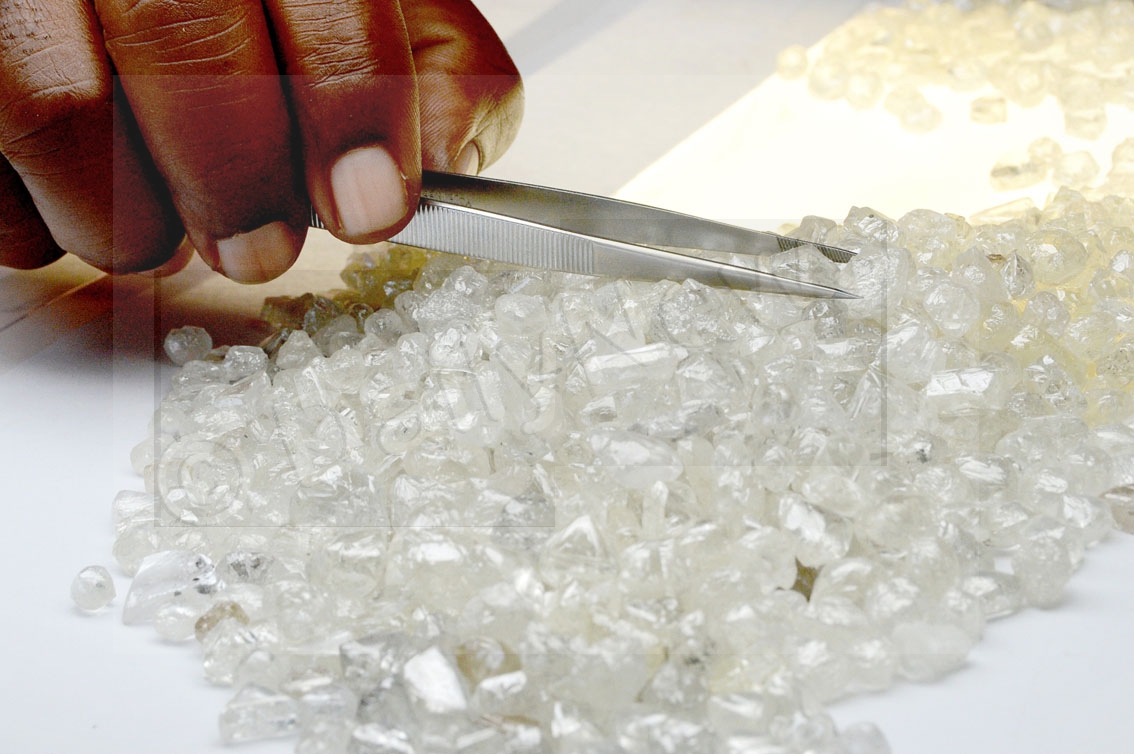
Diamonds remain Botswana’s economic cornerstone, contributing significantly to exports (over 70 per cent), government revenue (around a third) and foreign exchange earnings.
Debswana, the joint venture with De Beers, reduced production to approximately 15 million carats in 2025, a sharp cut from previous years due to inventory build-up, economic uncertainty and competition from lab-grown diamonds, which now hold about 20 per cent of the market and are priced 30-40 per cent lower.
The mining sector’s weakness contributed to a sharp quarterly GDP contraction earlier in the year, prompting downward revisions in growth forecasts. Finance Minister Ndaba Gaolathe highlighted the budget deficit for the 2025/26 fiscal year at an estimated 7.56 per cent of GDP, necessitating careful fiscal management amid reduced mineral royalties.
To support competitiveness and preserve foreign exchange reserves (which dipped to around five months of import cover), government approved an accelerated annual depreciation rate for the Pula of 2.76 per cent in July 2025.
The Bank of Botswana (BoB) maintained an accommodative stance for much of the year, holding the Monetary Policy Rate (MoPR) at 1.9 per cent until October, when it was raised by 160 basis points to 3.5 per cent. This ‘recalibration’ aimed to strengthen policy signalling without immediately increasing commercial lending rates, as banks were directed not to pass on higher costs fully.
Inflation remained subdued for most of 2025, often below the 3-6 per cent target range, before rising toward the end of the year due to Pula depreciation and imported price pressures.
Credit rating agencies reflected the strains: S&P downgraded Botswana’s rating with a negative outlook, followed by Moody’s lowering it to Baa1, citing fiscal pressures and slow diversification progress. Unemployment, particularly in mining regions, remained elevated around 25 per cent, with ripple effects on local communities.
The private sector has shown resilience, with organisations like Business Botswana advancing strategies for competitiveness, skills development and regulatory reforms. Eased permitting processes and public-private partnership initiatives have aimed to attract investment in logistics, digital infrastructure and SMEs.
Agricultural programmes have undergone reviews, with shifts toward precision farming and tech-driven initiatives to boost yields and support export-led growth.
As 2025 ends, Botswana’s economy shows signs of strain but also determination for change. While a diamond market recovery could support modest growth in 2026, sustained diversification through BETP, NDP 12 and regional integration via AfCFTA, will be crucial. President Boko’s efforts, including citizenship-by-investment schemes to draw diaspora funds, underscore a vision for sustainable prosperity beyond diamonds.
Botswana’s journey forward requires continued reforms, investment in human capital and green innovation to transform its economic lustre into long-term resilience. ENDS
Source : BOPA
Author : Marvin Motlhabane
Location : Kanye
Event : The year That Was
Date : 18 Dec 2025
Related News


23 Oct 2026
Khoemacau empowers citizen-owned enterprises
22 Oct 2026
Pheko builds business legacy beyond retirement
21 Oct 2026