

Ministry unveils ICOPE guidelines
25 Feb 2024
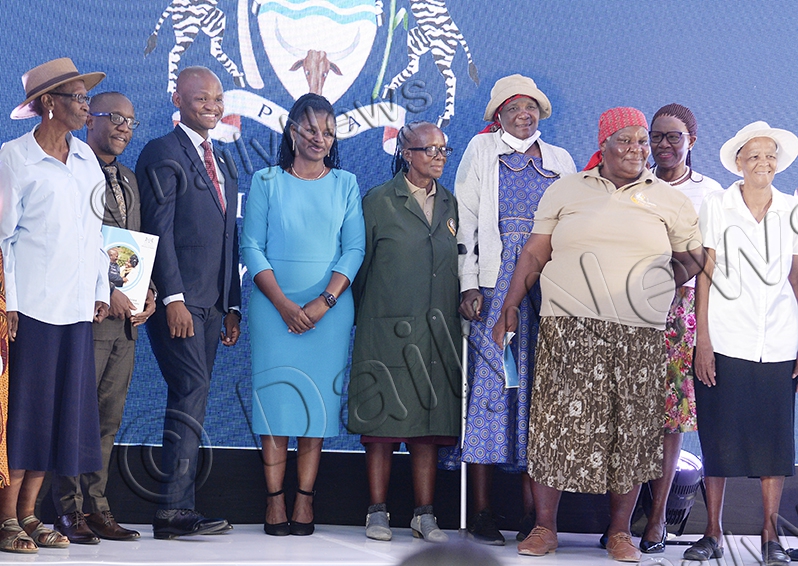
The Ministry of Health has unveiled guidelines for Integrated Care of Older People (ICOPE) to address their basic health needs.
During the launch in Gaborone on Wednesday, Minister Dr Edwin Dikoloti mentioned that through the ICOPE guidelines, older individuals would have routine comprehensive assessments for early detection and treatment, a first in history.
These guidelines, he said offered a minimum package to address the health and social needs of older people, including midlife concerns and challenges related to menopause andropause stages.
Dr Dikoloti highlighted that the guidelines would play a significant role in addressing the challenges faced by the elderly population in Botswana. He emphasised that they would prioritise healthy aging as a national objective, aligning with the ministry’s vision of a Healthy Nation.
Dr Dikoloti said the ministry through the ICOPE guidelines, promised to offer a people-centred health care system which all the primary health care declarations have been calling out for, since 1978.
He observed that government prioritised health, not just as a critical service, but as a catalyst and an engine to drive productivity.
As a result, he said it had become imperative to implement the ICOPE guidelines which would mitigate older people challenges of poor access to health services.
He said the implementation of the guidelines would also aid older people to receive quality health services, that would help to achieve Universal Health Coverage as envisaged by reset agenda, Vision 2036 and the UN Sustainable Development Goal number three.
Dr Dikoloti highlighted that in March 2022, the ministry launched the Healthy Active Ageing (HAA) Strategy, to address the older adults’ diverse needs that were identified in a situational analysis conducted in 2019.
He noted that the coming of age of those guidelines would ensure that the Healthy Active Ageing Strategy was successfully implemented and thus contribute towards redefining and revitalising the health sector.
Meanwhile, Dr Dikoloti thanked World Health Organisation (WHO) Botswana country office for the support to develop the ICOPE guidelines.
Minister Dikoloti said recent studies conducted by the WHO have shown that the older people population was estimated to double from about 11 per cent to 22 per cent the world over between 2000 and 2050, adding that Botswana was not spared from the magnificent growth.
Dr Dikoloti further said findings from the situational analysis of the health of older and ageing people, conducted by the ministry in 2019, showed that older persons lived alone, especially in rural areas, with limited access to social services, such as sanitation and health care.
He highlighted that evidence from the study showed that older adults with disabilities do not use assistive devices and are not able to access most services because of either centralized facilities or unfriendly infrastructures.
In addition, Dr Dikoloti pointed out that older adults mostly have physiological and memory problems that limit their self-care and day-to-day activities.
Furthermore, he noted that older adults were also found to be more affected by Non-Communicable Diseases (NCDs), HIV/AIDS and malnutrition, than the rest of the population.
Sharing the global perspective, WHO Botswana representative, Dr Juliet Bataringaya said aging was not a health issue hence the need to take care of elderly people.
Dr Bataringaya highlighted that being elderly cut across and therefore it was essential that a conducive environment be created for them in all aspects.
She said isolation and loneliness of older persons remained a concern, urging that people should return to the African culture of family unit rather than individualism to foster healthy ageing. ENDS
Source : BOPA
Author : Lesedi Thatayamodimo
Location : GABORONE
Event : launch
Date : 25 Feb 2024
Related News

24 Jul 2026
Desert Bush Walk here

24 Jul 2026