

Abattoir estimated to draw P45m first year
29 Jan 2024
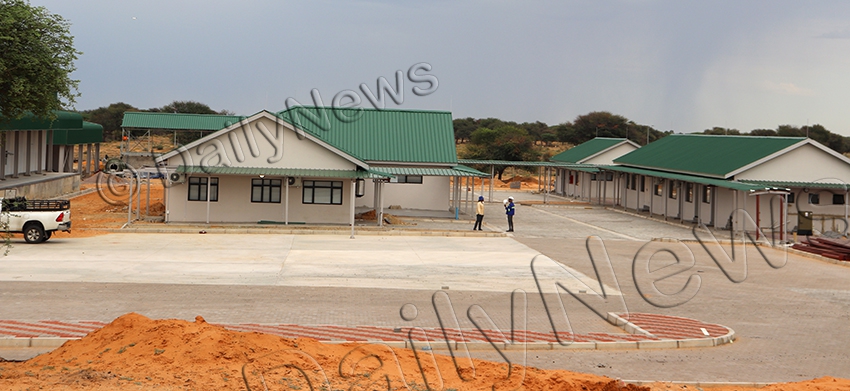
The multimillion Pula state-of-the-art Tsabong multispecies abattoir is expected to draw P45 million in its first year of operation.
Addressing Tsabong District special full council recently, Botswana Meat Commission (BMC) chief executive officer, Mr David Tsheboeng said financial projections indicated that the abattoir would need around P93 million in the first year of operation. He said this would cover start-up and running costs including livestock procurement, staff salaries, electricity, fuel and water.
Mr Tsheboeng explained that estimations showed that the abattoir would realise around P45 million in its first year of operation with an initial annual loss of P48 million.
The loss, he said was expected to be cushioned by government subvention funds. He said BMC was prepared to run the Tsabong abattoir banking on its 59 years of experience and global business networks.
He said the Tsabong Multispecies abattoir was equipped with top-notch automated technology, and a more compact plant whereas the Maun and Lobatse abattoirs operated manually.
The abattoir has a capacity of slaughtering 50-60 cattle and 300 small stock per day thus he called for more to be done to facilitate farmers to be able to consistently supply the abattoir with quality stock as its sustainability would depend on stock produced. Mr Tsheboeng said government strategic objective of constructing the abattoir was to create employment opportunities, diversify the economy and provide direct employment to people in the district.
He highlighted that the abattoir would be instrumental in formalising the small stock market so that farmers would get the best price and get a more predictable environment to receive a return on investment.
Mr Tsheboeng said already, there was an opportunity to export goat meat and mutton to Norway as the quota had already been allocated adding that this was where they could get premium prices. He said BMC planned for Tsabong abattoir to be a leading small stock meat processing and packaging plant in the country.
“To be able to succeed, it is important for farmers to employ sound animal husbandry practices, and improve genetics to be able to produce high quality stock for commercial consumption,” he said.
To kick-start business, he said 15 supervisors would be redeployed from Lobatse, Maun and Francistown to set up the abattoir. He said they would permanently reside in Tsabong and would be paired with locals to transfer skills.
The CEO highlighted challenges in water supply, saying 200 cubic litres of water was needed per day.
He said they were looking to tap into the Camel Park borehole as water availability was critical for abattoir licensing.
To deal with the challenges of electricity in the area, he said electricity had been modified to operate with solar plant to ensure continuous power supply.
For his part, Tsabong South Councilor Mr John Lentshikang appreciated employment opportunities and business value chains that would be created by the abattoir in the district.
He called for transparency in running the abattoir and creating equal opportunities for every Motswana suggesting that a board be set up to provide oversight to ensure equity and avoid potential corrupt practices.
Specially elected councillor Mr Nkatlholang Simane called for a tannery to be built in the district, arguing that such were value chains, which presented great potential for creating employment opportunities locally.
Omaweneno/Kisa/Maralaleng Councillor Mr Ronald Baitsewe called for Kgalagadi Land Board to fast-track land allocation for smallstock holder farmers to be able to produce the required quality and quantity.
He said financiers such as CEDA must make it easier for farmers to access loans to be able to improve stock. ENDS
Source : BOPA
Author : Calviniah Kgautlhe
Location : TSABONG
Event : full council meeting
Date : 29 Jan 2024
Related News
26 Jul 2026
They Came They Conquered
24 Jul 2026
Desert Bush Walk here

24 Jul 2026