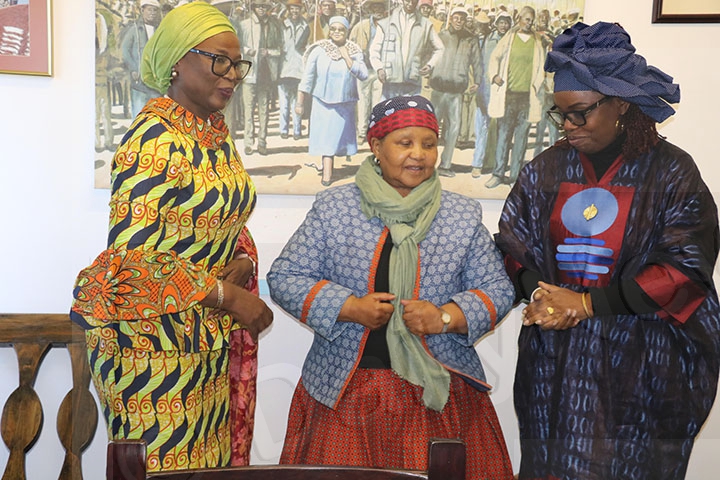
SOS children need homes - magistrate
07 Nov 2023
SOS Botswana has been commended for engaging in de-institutionalising and integrating children back into the community.
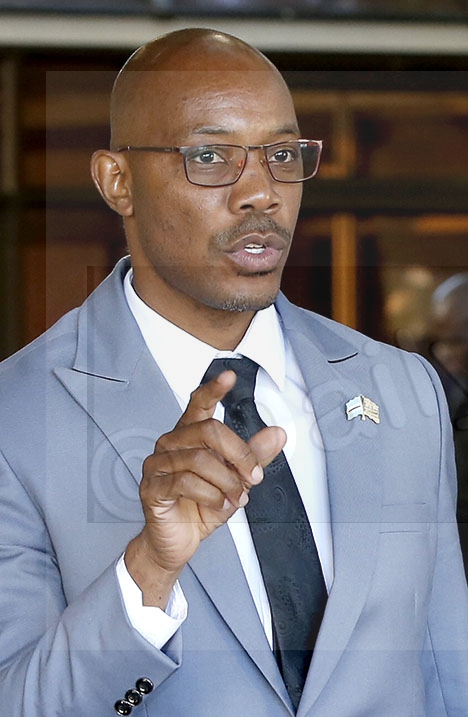
Speaking during the institution’s gala dinner meant to raise funds on Saturday, Francistown principal magistrate, Mr Tshepo Magetse said SOS Botswana had been an enclosed institution for far too long.
He said de-institutionalising would allow the community to live with SOS as physical and social neighbours.
Mr Magetse said the move would also afford the community a chance to raise SOS children.
“I personally welcome SOS’ move to operate right in fron t of the eyes of the society,” said Mr Magetse. He however encouraged the community to be more creative in ensuring the success of the programme.
He applauded government for giving child protection issues the highest attention they deserved, adding that it was comforting that SOS Botswana had credible structures in place.
Also, Mr Magetse appreciated government for recognising the de-institutionalisation efforts of SOS.
He pleaded with the City of Francistown leadership to consider disbursing more resources, partnering and collaborating on an advanced scale with SOS in achieving more safe houses.
“We as citizens have successfully advocated for the Children’s Criminal Justice System to be overhauled. We now have a child-friendly police station in Francistown,” he said.
Mr Magetse said a lot of pressure had been applied towards having a befitting children’s court and government had assured that the country would soon have them in place.
For his part, SOS national director, Mr Motshwari Kitso said over the years they carried out an assessment on how best to assist SOS children.
“We consulted various stakeholders and scholars, various international NGOs and children under our care as well as our former youth to say what innovations we could bring in to improve the quality of our care,” he said.
He said from the consultations, it emerged that through the SOS care system, children were detached from society and they lost out on the cultural norms and values.
He said it was difficult for the children to integrate into the society once they were disengaged from SOS care because in essence they would be confined to the four walls of SOS where would develop their own culture.
Mr Kitso said because of the assessment, there was now a big shift from SOS traditional care to integrated family care.
“Effectively we are integrating our own SOS families with the community. Children have been living in SOS villages, but we are taking them out to live within the community together with our caregivers,” he said.
He said so far they had a house in Matshelagabedi, two in Mathangwane, two in Chadibe, Shashe Mooke, Tonota and Borolong.
“We have a total of 16 families in Francistown and thus far we have managed to get 10 houses in various communities. We are left with six families, he said.
He said once the integration process is complete, the SOS village would be rented out as an income-generating project for the organisation. He, therefore, appealed to potential donors to pledge six houses for the remaining families.
He said the model was tried in 2015 in Serowe with four families and the impact assessment study indicated that it was working well.
“I can assure you that the academic performance of the children has significantly improved because they no longer stay as a bigger group and it is easy to focus as a smaller unit.”
On other issues, Mr Kitso said the funds they had been receiving from SOS headquarters in Austria were declining and would completely be stopped in 2028.
This, he said was because Botswana had now been classified as a sustainable country.
“They looked at our human development index and they also looked at our GDP. They are now saying Botswana is doing well and can look after its own children. We are now being weaned from international support,” said Mr Kitso.
He said in 2023, the SOS budget was reduced by four per cent, and would gradually decrease by the same percentage in the subsequent years until 2028 when funding stops.
SOS has 1 500 children under the family strengthening programme and 310 in some villages functioning with a total budget of P23 million annually.
He explained that from the annual budget, P13 million was from international sources while P10 million was constituted by the Villages’ fundraising activities and partly from government.
He thus appealed for assistance from stakeholders.
“We need all of you. These are our children,” he said. ends
Source : BOPA
Author : BOPA
Location : FRANCISTOWN
Event : Gala Dinner
Date : 07 Nov 2023
Related News
27 Jul 2026

27 Jul 2026
New P1.1m Child Helpline Call Centre opens
27 Jul 2026
Mohwasa commits to maintain public order
27 Jul 2026