

Food for all possible - FAO official
17 Oct 2023
Planet Earth’s farmers produce more food than can be consumed by its nearly Eight billion people, yet a whooping 828 million go hungry or cannot afford a healthy diet, and are prone to malnutrition. But it is possible to provide food for everyone, says Food and Agriculture Organization (FAO) representative (FAO) in Botswana, Dr René Czudek.
What, we, the people of the world need to do, is reduce the amount of food and water we throw away every day, while working towards ensuring there is enough food for everyone, he said.
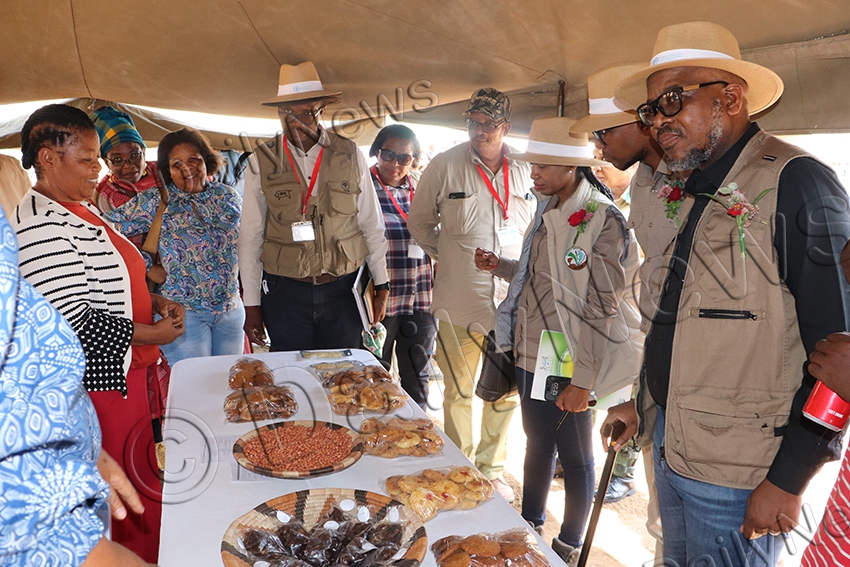
Dr Czudek, who was speaking at the World Food Day commemoration here Friday, said the day was a platform for all stakeholders, to reflect, engage, and share knowledge, expertise, and best practices, with a view to producing food for everyone.
“It is an opportunity for us to harness our collective intelligence and seek sustainable solutions to eliminate hunger and malnutrition,” he said, adding nearly 9 per cent of the global population [nearly 710 million people] suffered from undernourishment. Contributing in no small measure to the crisis was water scarcity, he said.
This year’s theme: Water is Life, Water is Food, Leave No One Behind, could therefore not have been more apt, as it highlighted the critical intersection of water, food, and the imperative of inclusivity, he said.
Dr Czudek, said Botswana, like many other nations, was grappling with the challenges of ensuring food security, what with ever-changing climatic conditions, a growing population, and generally arid land.
Thus, the centrality of water in the country’s efforts to produce food for everyone could not be overstated, he said.
For the world, he said, despite being 71 per cent water, only provided humanity with 2.5 per cent of freshwater suitable for human consumption, agriculture and other industrial uses. And Botswana’s 2.5 million people had to compete with the world’s billions for that little water, and rising global temperatures, droughts and unpredictable weather patterns had made it all the more difficult, with the country experiencing prolonged dry spells and reduced water availability, rendering food production nearly impossible.
But FAO was ready and willing to work with Botswana in its endeavours to produce food against all odds, he said. So far, the country’s efforts to end hunger and malnutrition were evident, and laudable, he said, giving the examples of school feeding programme and provision of supplementary feeding for children aged 6-59 months.
Those initiatives, had made a significant contribution towards the achievement of goal 1 of the UN’s 2030 Agenda for Sustainable Development Goals, which is the universal call to action to end poverty, protect the planet and improve the lives and prospects of everyone, everywhere.
“Let us commit ourselves to a future where no one goes to bed hungry, or thirsty by promoting sustainable water management and climate resilient agriculture,” said Dr Czudek. Educating communities about the importance of water conservation, sustainable agriculture and the need to leave no one behind in these efforts remained critical, he said. While, humanity fretted about what tomorrow would bring, it was also important to be thankful for what was offered at the moment.
“Whilst we are here to raise awareness about the challenges of hunger, it is important to also take this movement to celebrate the good food we have,” he said. Speaking at the same event Deputy Permanent Secretary–Livestock Farming in the Ministry of Agriculture Dr Boitumelo Mogome-Maseko said Batswana were taking food production seriously as shown by their ability to produce and supply food within the country, which went a long way towards ensuring food security. Further, she said, the government was resolved to end hunger in the country, hence its various initiatives and programmes aimed at assisting farmers.
Ghanzi north MP Mr John Thiite, said it was possible to shift farming trends so they were in tandem with the demands of the times.
For example, Ghanzi was undergoing a remarkable economic transformation, where it no longer solely depended on livestock farming, but now had a thriving horticultural hub, which was pioneered by the likes of Messrs Matthys Rothman of Red Cedar farm – at which the event was held; Mr Mirchau of Silver Horizons and other visionary farmers, whose commitment and dedication was truly laudable, he said. ENDS
Source : BOPA
Author : Mothusi Galekhutle
Location : GHANZI
Event : World Food Day commemoration
Date : 17 Oct 2023
Related News


27 Jul 2026
Damaged Roads contributing to accidents

27 Jul 2026
Police launch vehicle leasing pilot project

27 Jul 2026
New P1.1m Child Helpline Call Centre opens

27 Jul 2026