

Reliance on power imports risky for economy - Masisi
08 Oct 2023
Reliance on power imports to meet the country’s increasing electricity requirements is no longer an option because it poses a huge risk to the economy, President Dr Mokgweetsi Masisi has said.
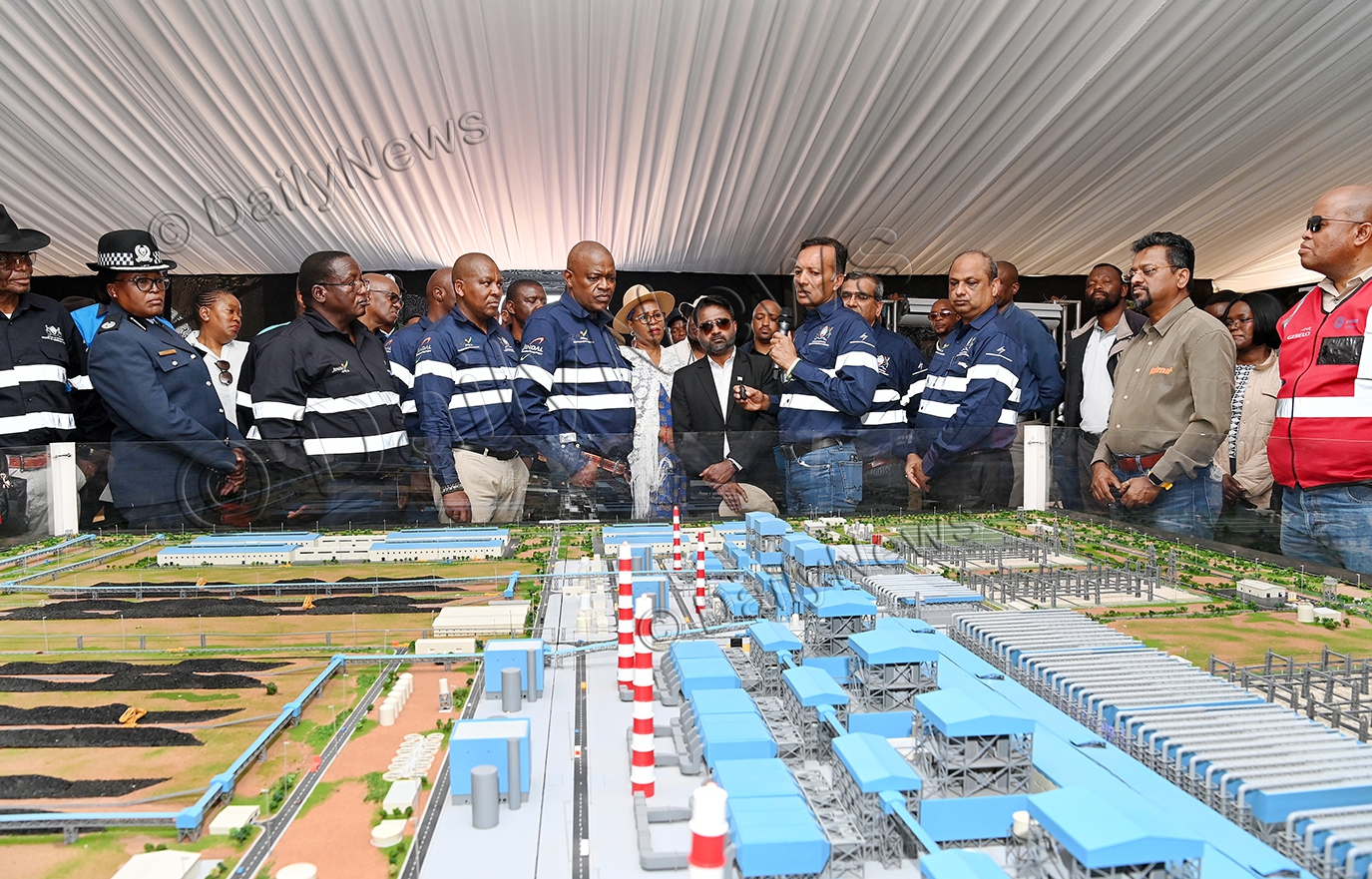
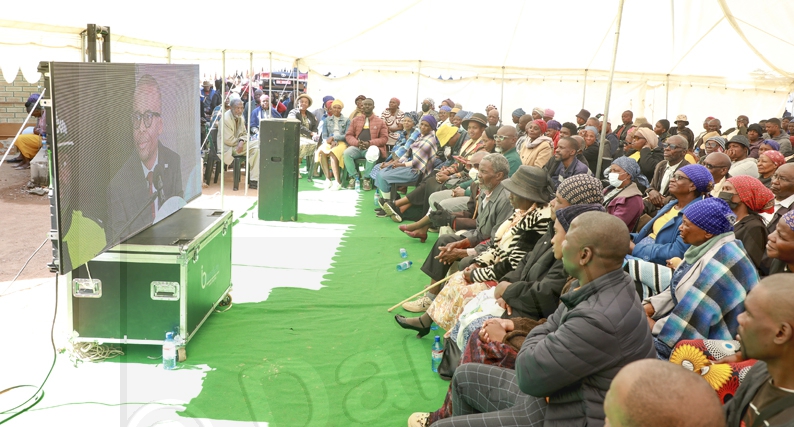
President Masisi said this at the official groundbreaking of Botswana’s first major independent power producer, which will deliver 300MW of coal fired base load generation capacity into the grid.
The project, which is to be developed, financed, constructed, owned, operated and maintained by Jindal Africa, is an integrated project comprising a coal mine and a 300MW power plant under a 30-year power purchase agreement with Botswana Power Corporation (BPC).
President Masisi said the project would significantly enhance the security of electricity supply to Botswana’s economy and was set to end the country’s dependence on neighbouring countries to meet electrical energy demand, which continued to increase with the ongoing developments across all sectors of the economy.
“When delivered by the end of 2027, as anticipated, the 300MW base load generation will significantly augment our current base load generation from Morupule B Power Station, which is currently our main source of base load generation with a net capacity of 520MW,” the President said.
He said while Botswana was grateful for the commercial electricity trade arrangements under the auspices of the Southern African Power Pool, on which BPC had been dependent to meet the nation’s power demand for several years, it had become financially unsustainable to rely on power imports from the neighbours due to the regional power deficit.
He added that electricity peak demand in Botswana was now close to 700MW during winter season, which meant that the current generation capacity was not sufficient to meet the peak, hence important to increase power generation capacity in line with the country’s Integrated Resource Plan.
The President also noted that securing 300MW of base load generation underpinned the national vision and transformation strategy, which envisioned a Botswana that was effective with proper working infrastructure and systems.
The project, he said, evidently demonstrated government’s unwavering commitment to delivering on promises that would transform Botswana’s energy landscape and ensure self-reliance and resilient power supply, which was an enabler for high income economy attainment.
On the village electrification programme, President Masisi indicated that 456 villages out of the 565 gazetted ones had been electrified, which translated to 81 per cent village electrification level.
He noted that the current financial year’s village electrification programme would see electrification in six new villages such as Lepashe, Setsile, Mokoswane, Khekhenye, Betesankwe and Makgaba, in addition to network extension in 27 villages, which were electrified in previous years.
Currently, he said the national electrification level stood at 66 per cent, making Botswana one of the leading countries in the region in terms of access to electricity by households.
Furthermore, President Masisi indicated that electricity connection fees for households with an income of P2 500 and below were reduced from P5 000 to P2 500, adding that the aim was to reduce the cost of electricity connection to low-income households and thus increase access to electricity.
“Government is currently reviewing the connection fees with the intention of achieve zero connection costs,” he added.
Meanwhile, Jindal chief executive officer, Mr Parshant Goyal said the 300MW thermal power plant project, estimated to cost over P20 billion, was based on green technology and it would deploy modern clean coal technology, which limited emissions of harmful gases such as sulphur dioxide and nitrous oxides to international environmental standards. Ends
Source : BOPA
Author : Kabo Keaketswe
Location : MMAMABULA
Event : Groundbreaking ceremony
Date : 08 Oct 2023
Related News
28 Jul 2026
28 Jul 2026
MPs express differing views on student friendly

27 Jul 2026
Damaged Roads contributing to accidents
27 Jul 2026