

Uncharted Botswana Namibias ID for travel policy
22 Feb 2023
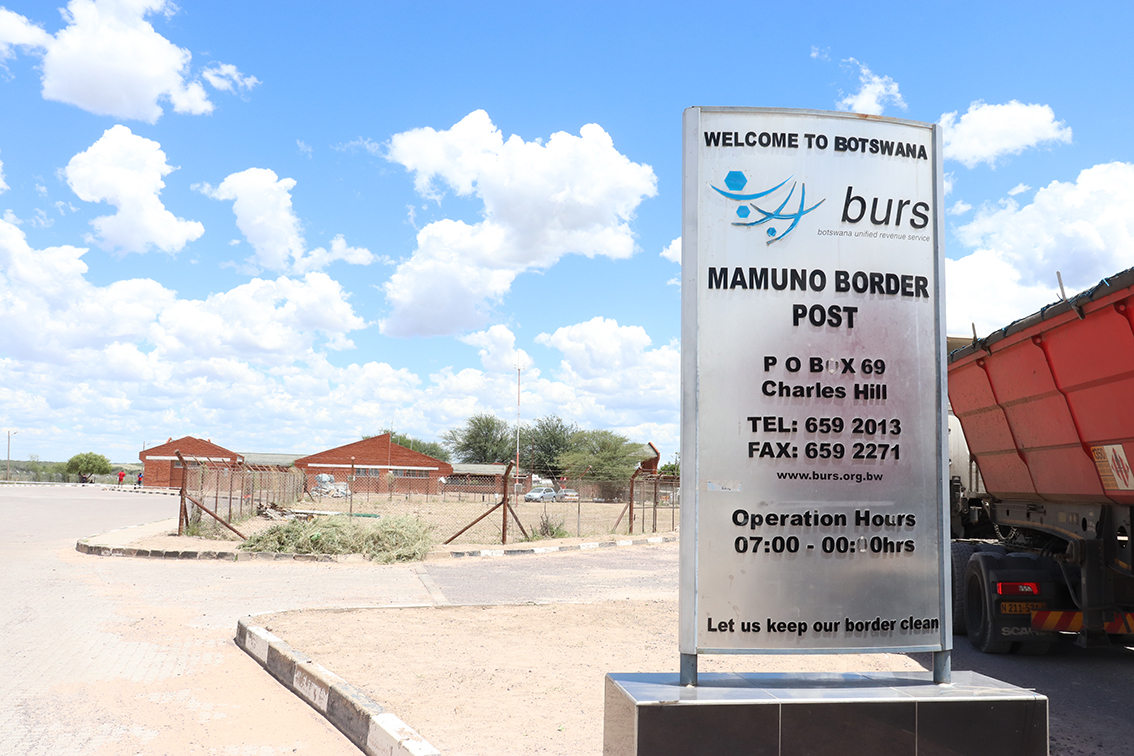
Come Friday, Botswana and Namibia will chart a new chapter in their travel policy, as they will be signing a memorandum of agreement whereby their citizens will start using identity cards in the place of passports at border control.
Not only will the two SADC member states free movement between them.
They will in essence become early embracers of the spirit of the Africa Continental Free Trade Area, Agenda 2063. Says Trans Kalahari Corridor (TKC) chief executive officer Mr Leslie Mpofu about this development: “This is a very important innovative development for the two member states as it will boost trade facilitation, and foster social cohesion among citizens… As the TKC we promote the growth of traffic volume on the Trans Kalahari route, so this initiative will help us a lot.”
In terms of trade facilitation, the step is a huge one, he says.
Take for example the good it will bring to truck drivers: On average a truck driver uses up all the pages of his/her passport,a that is supposed to last 10 years in only 6 month.
It costs N$400 and P260 to renew a passport in Namibia and Botswana respectively. Replacement costs are higher with Botswana charging P1000 and Namibia N$800.
That means a truck driver should expect to pay upwards of P520 or N$800 every six months.
The new arrangement also encourages job creation even as it improves the ease of doing business, says Mpofu.
“The drivers who could not be engaged in cross border assignments will find opportunities doing cross border jobs without having to worry about carrying a passport.
Tour operators who could not be hired because they did not have passports will operate as long as they have the new ID,” he says. Not only does the arrangement auger well for business, it also is sweet music to communities living along the border of the two countries, many of which straddle the border, and whose members can hardly afford the cost of a passport.
“It will certainly make travel much easier and cheaper because not everybody can afford to get a passport; with an identity card anybody can be able to cross the border…When you have relatives in the neighboring country and you have to attend a funeral or a wedding it will be easier to travel,” he says.
Coming at a time Botswana and Namibia are in the process of constructing a multi-billion Pula Trans-Kalahari railway, to link Botswana’s rich coal fields to the Namibian coast, the arrangement is a very welcome one.
“We promote trade and employment across the border, if we start the Trans-Kalahari rail we will have people working without any passport hindrances.
If an emergency incident occurs across the border, it becomes much easier to manage when people have the new IDs to cross over and rescue,” he says.
Mr Mpofu however, warns that as, with any new arrangement, the system will have its own peculiar challenges, hence there is need to come up with water tight security measures.
“There are issues of security, and our two countries are doing their best to ensure that this is water tight.
Traceability is key because countries have to account for people who have crossed,” he says.
To that end, Botswana and Namibia, will need to ensure their digitisation infrastructure is at all times up to the challenge. “We must be able to interface communications systems between the countries such that there is traceability of movement of people,” he says. Any lapse in security could mean failure of the new arrangement, he warns.
Security, he says, has become such a critical issue for countries and SADC is in the process of putting up a system whereby a truck driver’s record can be brought up at the push of a button.
“When they punch you in the system they will be able to see your history and background,” he says. Botswana and Namibia therefore, will need to match this upcoming standard.
The two countries say they are ready. “It’s all systems ready for us.
We did an ID registration of the people who are living along the radius of the Trans Kalahari border post.
We sent out a mobile team for registration to commence and we are issuing out IDs now.
From our side we are ready… we did our assessments a year ago whereby we tested our border management systems,” says Namibia Ministry of Home Affairs Immigration Safety and Security, Public relations Officer, Mr Sakheus Kadhikwa.
The Namibians have already made noticeable progress.
For example, they introduced the new ID in October 2021. “The finger print in the ID has been replaced with a quick response code (QRC) machine readable zone, and the bar code has been replaced by machine readable zone (MRZ) to be read through the immigration border management system,” he says.
The new ID is more secure and contains machine readable-only elements that cannot be forged. Should other countries follow suit, the ID will work without a problem as it meets the specifications of the International Civil Aviation Organisation, says Kadhiwa.
Botswana and Namibia, become the latest African nations to use IDs as travel documents. Rwanda, Kenya and Uganda implemented the use of IDs in 2014 under a tripartite agreement.
At the time the three countries also signed protocol under the East African Common Market on single tourist visa, a single customs territory and fast tracked a joint railway project and oil pipeline.
Source : BOPA
Author : Calviniah Kgautlhe
Location : Tsabong
Event : Interview
Date : 22 Feb 2023
Related News

30 Jul 2026

30 Jul 2026
Botswana traces unclaimed pensions for ex-miners

30 Jul 2026
Process to preserves judicial independence

30 Jul 2026
Road project stands at 42 per cent

30 Jul 2026
Fodder production powers KOINAPHU Trust

30 Jul 2026