


Coordinated response necessary - official
06 Sep 2022
As disasters and outbreaks stretch beyond the health sector, they call for everyone to be on board to avoid haphazard responses.
This has, therefore, necessitated the need for the country’s Risk Communication and Community Engagement (RCCE) Strategic Plan that will guide the holistic approach to pandemics.
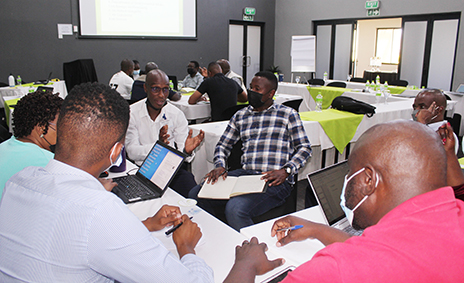
These sentiments were expressed by advisor in community health services from the Ministry of Health, Mr Samuel Kolane during the workshop for the development of the strategic plan in Kasane on Monday.
He said the five-year strategic plan would strengthen the country’s capacity to face future pandemics, noting that the COVID-19 pandemic had highlighted the need to have coordinated responses to pandemics.
“When COVID-19 started, Botswana came up with communication strategies to address the situation, decrease anxieties from the society and build public confidence in the health systems and services provided,” he said.
Mr Kolane said although successes were scored as people were able to vaccinate through mobilisation, information generation and dissemination, there were some gaps in the communication strategy.
He, therefore, said enhancing resilience to future emergencies required a comprehensive health system that considered all aspects involved in pandemic response such as surveillance, risk communication as well as community stakeholder engagement.
In her strategic risk assessment for emergency presentation, health promotion officer, Ms Naledi Mokgethi said Africa had health security problems such as outbreaks, natural and man-made disasters, which called for global collaboration to achieve international health security.
Ms Mokgethi said in Botswana, road traffic accidents were classified as a very high threat while Cholera, Ebola, drought, heat waves, tropical storms and chemical spillage were classified as high risk.
She explained that while such diseases as Cholera and Ebola were not found in Botswana, the country’s neighbours had the highly contagious ailments.
Ms Mokgethi said yellow fever, earthquakes and radio nuclear spill accidents were considered moderate threats.
Principal health officer, Ms Sinah Moakofhi said once developed, the strategic plan would convey public health threats transparently in a timely and coordinated manner.
She said the development of the plan would be done by fast-tracking the first draft of the plan through stakeholder engagement.Ms Moakofhi said the workshop would also finalise, through stakeholder inputs, the RCCE Standard Operating Procedures and also adapt the World Health Organisation preparedness and response checklist for public emergencies. ENDS
Source : BOPA
Author : Keamogetse Letsholo
Location : KASANE
Event : workshop
Date : 06 Sep 2022
Related News

05 Aug 2026
05 Aug 2026
More women join ranks of game rangers

05 Aug 2026
Prisons harvest exceeds P2million
05 Aug 2026