


Decent work crucial
07 Jul 2022
Having a high number of the working age population gainfully employed in decent work is an important variable in the development process, President Dr Mokgweetsi Masisi has said.
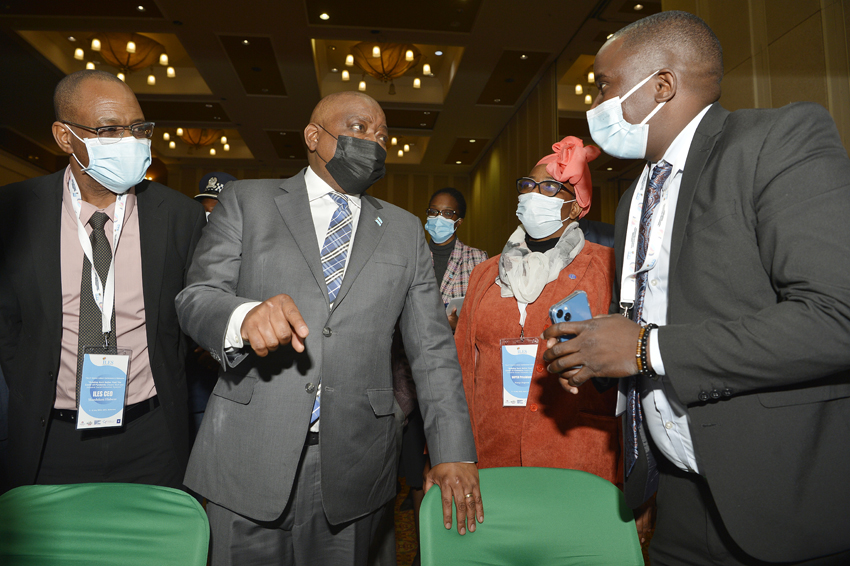
Delivering the keynote speech at an Institute of Labour and Employment Studies (ILES) conference in Gaborone yesterday, he said enhancing citizens’ access to job opportunities was therefore a crucial priority in formulating development policies.
Work, he said, was central to people’s livelihoods and should be harnessed to serve the purpose of holistic human development.
“Critical to human dignity and a sense of self-worth as a person is the capacity to provide for oneself or one’s household, the means for daily survival and a modicum of a decent standard of living,” said Dr Masisi.
The President said higher rates of decent employment increased access to sustainable livelihoods.
In addition to providing goods and services, Dr Masisi said economic growth was stimulated when individuals had sufficient disposal income to spend to meet their basic needs.
The President said government, in conjunction with trade unions and civic organisations, had therefore formulated and adopted the Decent Work Country Programme for Botswana (2020-2024).
“This undertaking is consistent with the aspirations of the Sustainable Development Goals (SDGs) of the United Nations 2030 Agenda. In particular, SDG 8 which seeks to promote inclusive and sustainable economic growth, full and productive employment and decent work for all,” said Dr Masisi.
Noting that ILES was the brainchild of Botswana Public Employees Union (BOPEU), he said the college provided the labour sector with relevant industry skills which contributed to the country’s knowledge economy aspirations.
“This conference is taking place at a time when our focus as a nation is on urgent actions to ensure that people are protected against the COVID-19 pandemic, and its devastating impact on the economy. We need to come up with policies that are robust to withstand future crises,” Dr Masisi said.
The President said as the world moved towards rebuilding economies post-COVID-19, government planned to focus on improving education and training, addressing skills gaps, shortages and mismatch as well as investing in economic value chains.
“We must harness our resources and produce leveraging on the abundance of talent that we have in order to derive more benefit. We must also aim at unlocking high productivity through digitalization.,” Dr Masisi said.
He said efforts included implementation of the country’s Fourth Industrial Revolution Digitalisation Strategy commonly known as SmartBots.
BOPEU president, Ms Masego Mogwera said in the aftermath of the 2011 public sector strike, the union conceptualised a labour training college for cutting edge research and training at a time of hostile labour relations.
Having adopted the idea in 2012, BOPEU formally launched ILES in 2017 which currently offered 21 Botswana Qualifications Authority accredited courses, she said.The college’s CEO Mr Shandukani Hlabano said the conference’s purpose was to bring together various stakeholders to address pertinent industrial relations issues and produce solutions to improve the work environment.
Held under the theme “Building Back Better Post The COVID-19 Pandemic: Decent Work and Inclusive Social Protection Systems” ends today.ENDS
Source : BOPA
Author : Pako Lebanna
Location : GABORONE
Event : ILES conference
Date : 07 Jul 2022
Related News

06 Aug 2026
05 Aug 2026
Zim foreign currency earnings rise sharply in H1
05 Aug 2026
More women join ranks of game rangers

05 Aug 2026