Botswanas status proof of good governance
13 Jun 2022
Botswana’s development trajectory, from one of the world’s poorest countries to an upper middle–income country, is testament to its prudent macro-economic management, strong governance and good institutions.
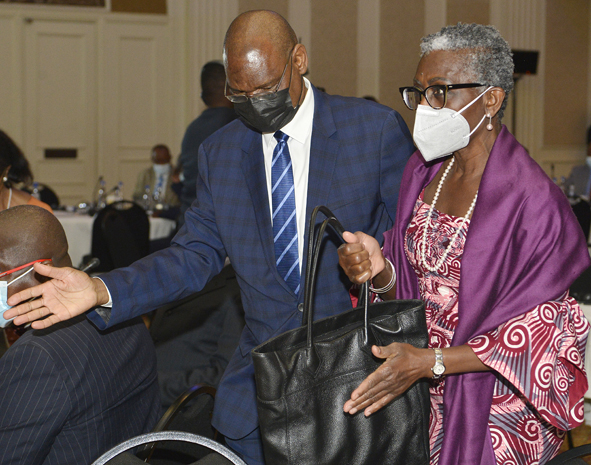
International Monetary Fund (IMF) deputy director, Ms Antonnette Sayeh said this in Gaborone yesterday at a high level conference on promotion of good governance and fight against corruption.
She said the development of a good policy framework by the country had enabled it to prudently manage wealth from mining resources.
“The issue of good governance and transparency is more than just about wasted money, but more about the erosion of a social contract and corrosion of the government’s ability to grow the economy in a way that benefits all citizens,” she said.
Ms Sayeh said she was confident that Botswana could leverage the strong foundation by continuing to uphold the highest standards of governance.
She said the need for good governance had become more urgent as the world faced multiple crises in the form of COVID-19, the war in Ukraine and ongoing climate change challenges.
The crises, she said, had made it clear that countries with strong economic institutions would respond more effectively to the challenges and prepare better for a resilient recovery.
Ms Sayeh said it was evident that the most successful countries had a high level of political commitment to good governance and transparency.
Such countries also had open access about proposed policy actions, she said.
The IMF official said the independence of such countries’ central banks from political pressure and their commitment to declare assets of key public officials had proven to be an important component of their success stories.
Ms Sayeh said the IMF was stepping up engagements with the region on governance and anti-corruption issues.
She explained that the move was in recognition of the fact that addressing corruption was an international issue given the role of professions that enabled the scourge and jurisdictions that harboured its proceeds.
“The IMF’s enhanced framework on governance and corruption, approved in 2018, builds on lessons learned in over 20 years with efforts focusing on reducing vulnerabilities to corruption,” she said.
Ms Sayeh added that would be achieved by strengthening governance in six core state functions of central bank, financial sector, fiscal, market regulation, rule of law and anti-money laundering.
She said the IMF adapted and stepped up work in response to the COVID-19 crisis as it took immediate steps to help member countries save lives and livelihoods.
Ms Sayeh called for increased public investment across Africa in infrastructure, health and education in a more efficient and transparent manner.
Another key investment area was innovation and technology which could help governments deliver on key priority areas, she said. BOPA
Source : BOPA
Author : Thato Mosinyi
Location : GABORONE
Event : conference
Date : 13 Jun 2022
Related News
06 Aug 2026
06 Aug 2026
Botswana future hinges on science

06 Aug 2026
Lesotho hails Botswana health decentralisation

06 Aug 2026