Ministry calls for mainstreaming gender equity
09 Jun 2022
The Ministry of Finance has called for mainstreaming gender equity in the development agenda.
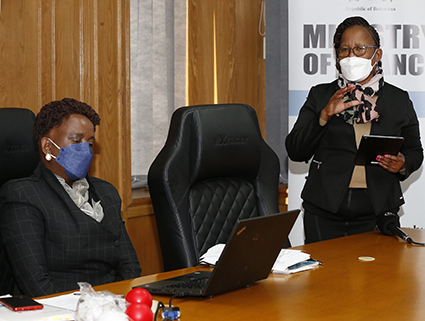
Presenting findings of the Gender Responsive Public Finance Management (GRPFM) assessment in Gaborone on Wednesday, budgeting administration acting director in the finance ministry, Ms Grace Ntereke, said failure to do so had made it difficult for them to analyse the social impact of the development agenda, specifically on gender impartiality.
“Policy making, project prioritisation, budgeting and overall allocation of funds have been done without gender equity,” Ms Ntereke said.
She also indicated that the country’s Public Financing Performance (PFM) systems were deficient in focusing on gender equity issues.
The assessment, she said would therefore guide on improvements to be made on the country’s PFM systems in efforts to equitably distribute resources.
Again, she said it had been gathered, through the assessment, that the country’s policies, laws, programmes and major developments were not done bearing in mind their impact on gender mainstreaming.
Therefore, she said the ministry would be aware on where the country was lacking in responding to gender mainstreaming while the assessment would also have policy makers to be alert and track the impact of budget allocation on the society.She said the Department of Public Finance Management Reform carried out the assessment between
November and December last year, to gauge the adequacy of the country’s PFM systems in response to gender policies and associated laws.
“The assessment was conducted primarily to test the adequacy of government public finance management towards gender equality,” she explained.
She added that findings further revealed that currently, the country was not doing well in preventing and eliminating gender inequalities in some sectors and had overall unsatisfactory performance in Gender Based Violence (GBV).
Therefore, Ms Ntereke said GRPFM made gender an integral part of fiscal and budgetary decision making.
“PFM must contribute in addressing specific gender needs, closing gender gaps in men and women’s opportunities for economic, social and political participation and ultimately development outcomes,” she said.
Additionally, she said the assessment would act as baseline for integration of gender in the process of establishing a budget from planning to post budget execution reporting.
“The assessment report was based on nine indicators and the country has performed unsatisfactorily on four areas as it recorded the lowest grade of D, falling below the basic requirements of international basic practice and standards,” she said.
In relation to the impact of policies on gender mainstreaming, Ms Ntereke said the collected data revealed that the impact of the available policies on gender was also unknown, hence the need to analyse social impact of policies so to be able to classify it by gender.
She added that the other indicator where the country faired below basic standards was on how policy revenue impacted on gender.
The assessment, she said also analysed how annual financial budgets responded to gender issues.
She said there was a need to justify how proposed new spending initiatives and reductions in expenditures would impact on men and women or on gender equality.
Furthermore, she indicated that the assessment findings also revealed that the annual budget was silent on gender mainstreaming and all proposals for increasing or decreasing spending proposals did not include gender mainstreaming nor were they linked to the National Gender and Development Policy (NGDP).
One other indicator, where the country scored the lowest grading, she said, was on the Annual Performance Audit Reports.
The reports presented to the legislature, she added, however lacked specific information on gender responsive expenditure and revenue. ENDS
Source : BOPA
Author : Moshe Galeragwe
Location : GABORONE
Event : Media Briefing
Date : 09 Jun 2022
Related News
06 Aug 2026
06 Aug 2026
Botswana future hinges on science

06 Aug 2026
Lesotho hails Botswana health decentralisation
06 Aug 2026