Five products have food-borne pathogens - studies
08 Jun 2022
Even though there is insufficient food disease epidemiology in Botswana, certain snapshot prevalence studies have identified food-borne pathogens in at least five products.
According to Minister of Health Dr Edwin Dikoloti, the products include cheese, raw milk, meat (biltong), frozen cabbage and salad (coleslaw).
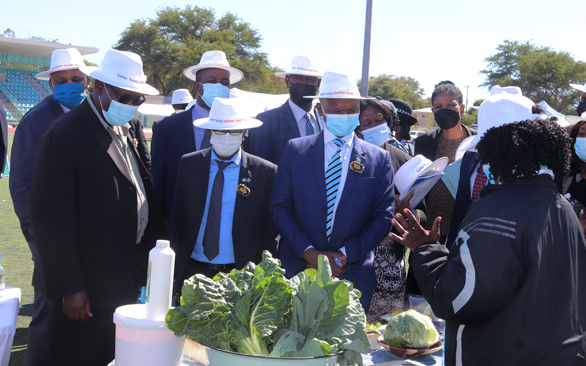
Speaking on the occasion of World Food Safety Day commemoration in Maun on Tuesday, he said with the available evidence, there was need to educate suppliers, supermarket managers, cleaning staff and hygiene specialists on the biology of food-borne infections to prevent outbreaks.
Dr Dikoloti said beyond adherence to laws and regulations, businesses should take more responsibility for the safety of their consumers.
Standardization and policies would also make a significant contribution in ensuring that business owners were clear about their obligation to protect public health, he said.
To that end, Minister Dikoloti said the ministry was engaged in food safety regulatory reforms.
“We have a proposed food safety bill at an advanced stage with the sole aim of closing the gaps in our existing food safety laws,” he said.
Dr Dikoloti said the ministry had also developed tools to guide the food industry.
Unsafe food, he said, contributed to poor health outcomes including impaired growth and development, micronutrient deficiencies, non-communicable or communicable diseases and mental illnesses.
Dr Dikoloti said most food-borne diseases were preventable adding that with proper food handling and education, such illnesses could be avoided.
Consumption of safe and nutritious foods bestowed good health thereby promoting long-term human development, which was key in the achievement of the Sustainable Development Goals (SDGs), he said.
The minister said safe and nutritious foods was critical for the achievement of SDGs on poverty eradication, zero hunger, good health and wellbeing.
He said although the Ministry of Agriculture’s mandate included primary food production, his ministry was tasked with ensuring that food safety was realised throughout the agri-food system.
Food production synergistically coexisted with its safety, he added.
Dr Dikoloti said unsafe food caused 600 million cases of food-borne diseases, resulting in 420 000 deaths worldwide annually.
“WHO estimated that each year, 33 million years of healthy lives are lost due to eating unsafe food, and this number is believed to be an underestimation. These are staggering statistics requiring concerted multi-sectoral efforts to address food safety risks,” he said.
On the implementation of food safety alert and recall regulations, Dr Dikoloti said last year, his ministry, in collaboration with that of local government, media fraternity, other government agencies and international partners, coordinated the recall of eight defective food products.
Thanking all stakeholders involved in the exercise, he said it confirmed that ensuring food safety was a collaborative effort.
Quoting the 2018 Tourism Statistics Report, Dr Dikoloti said Maun was one of the preferred tourism attraction destinations in Botswana hence the need to provide safe food for tourists and international travellers.
WHO representative, Dr Josephine Namboze hailed Botswana for taking the bold decision of commemorating World Food Safety Day soon after its adopted.
The day was declared only three years ago and while many countries were still undecided about its commemoration, Botswana had not wasted time.
Dr Namboze said food safety was an intrinsically multi-sectoral undertaking cutting across several SDGs thereby necessitating collaboration between sectors, the community and other stakeholders.
The approach was in line with the principles and aims of one-health to sustainably balance and optimise the health of people, animals, ecosystem and the wider environment, she said.
Dr Namboze said it mobilised multiple sectors and communities to work together to tackle health and ecosystem threats.
In addition, it addressed the collective need for clean water, energy and air, safe and nutritious food, action on climate change and contributions to sustainable development, she said.
The event was held under the theme; Safer food, better health, to highlight the role played by safe and nutritious food in ensuring human health and wellbeing. ends
Source : BOPA
Author : Esther Mmolai
Location : MAUN
Event : World Food Safety Day
Date : 08 Jun 2022
Related News

06 Aug 2026

06 Aug 2026
Botswana future hinges on science

06 Aug 2026
Lesotho hails Botswana health decentralisation

06 Aug 2026