


Vocational education way to go
14 Mar 2022
Batswana have been urged to shift mindset from viewing technical and vocational education as a last resort.
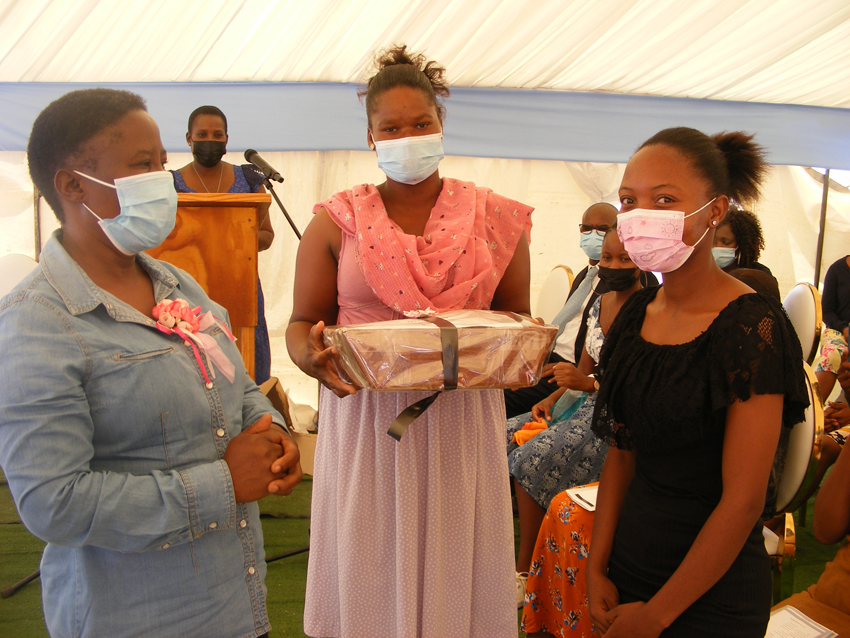
Giving a keynote address at Shashe Brigade prize giving ceremony on March 11, regional director (north) in the Ministry of Basic Education, Mr Labane Mokgosi said people should instead see education as a path of choice.
He said parents had a crucial role to play in shaping the way children perceived vocational education, adding that such education was not for those who failed.
Mr Mokgosi also talked about what he termed the worsening challenges of poverty and high cost of living.
“Major contributor to this scourge of poverty still largely remains the high unemployment rate, especially among the youth and the women of this country,” he added.
He said an accelerated provision of short and long term training would go a long way in addressing the skills gap.
“Though poverty is a challenge nationwide, the effects are usually felt deeper in the marginalised communities.
It is in this light that Shashe Brigade acquired a fundamental role to play in mitigating the problems of skills gap in the neighbouring remote areas of Mabesekwa, Ditladi and Patayamatebele,” he added.
He said provision of vocational skills did not only serve to render the youth employable, but enable them to venture into self-employment.
He stated that most countries that survived the 2008 world economic meltdown were those that invested heavily on artisans and technical skills through vocational training.
“The trend shows that the countries that will succeed in future so as to meaningfully participate in the world economy are those that have already started training their young people in artisan and technical fields,” he said.
He said the Ministry of Education and Skills Development carried out a comprehensive situational analysis in 2012 that focused on diagnosing the deficiencies in the entire education sector.
He explained that through the initiative, government wanted to provide quality, relevant and sustainable lifelong education which was globally competitive to transform Botswana from a resource-based to a knowledge-based one.
In his welcome remarks, the principal, Mr Livius Muthetho said all the three programmes taught at the school and lecturers were accredited with Botswana Qualification Authority (BQA).
He attributed the good performance by the school to a cordial working relationship between students and lecturers.
However, he explained that the main challenge in the school was pregnancy, adding that a lot of female students continued to leave school due to pregnancy.
The other challenge, he said, was lack of water in the school, which disrupted lessons on daily basis especially at the ablutions.
Giving an overview of the brigade centre, head of training department, Ms Sally Botshake said the parent ministry had embarked on reviewing the syllabus to align it with what the industry required, saying a new programme of horticulture was added to the other three of bricklaying and plastering, carpentry and joinery as well as welding and fabrication.
She explained that the programme would kick-start next academic year, adding that farming equipment such as tractors had been secured.
She said the brigade continued to perform well academically, citing that in 2019 the school obtained a 75 perbcent pass, followed by 80 per cent in the following year, but dropped to 60 per cent the year.
She said one of the major challenges facing the school was drop outs of female students impregnated by members of the community. Ms Botshake explained that the problem was exacerbated by the fact that there was no trained counsellor in the school, and counselling was done by lecturers who were also thin on the ground. Ends
Source : BOPA
Author : Thamani Shabani
Location : DITLADI
Event : Prize giving ceremony
Date : 14 Mar 2022
Related News

07 Aug 2026
Xiplomacy Hosting the world building the future

07 Aug 2026
Xiplomacy Pursuing the greater good for all
06 Aug 2026
Gaolathe inspires learners to aim high
06 Aug 2026