


Mmopane make their mind known
13 Feb 2022
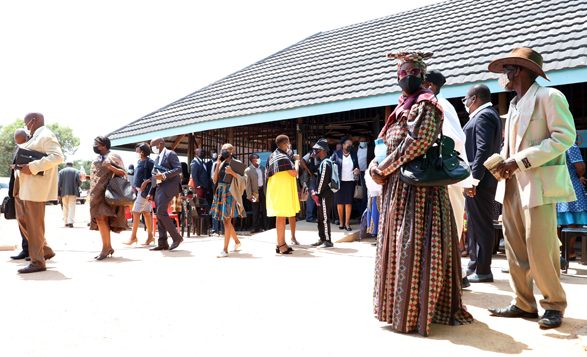
Residents of Mmopane village braved the hot last Friday morning to make their submissions before the Presidential Commission of Enquiry into the Review of the Constitution of Botswana.
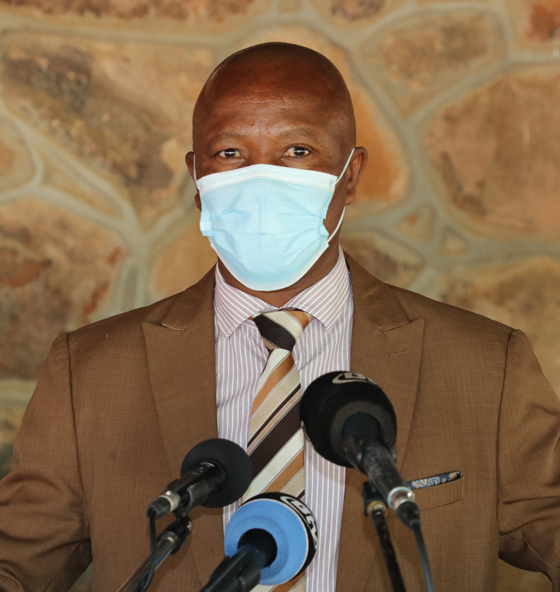
As per Setswana tradition, Kgosi Simon Manthe was the first to speak, and thus set the tone for the rest of the meeting that deputy chairperson of the commission, Mr Johnson Motshwarakgole would later describe as “on point” in terms of delivery. Being the village’s custodian of culture by virtue of his position as a traditional leader, Kgosi Manthe spoke jealously about the neglect and total disregard for Setswana culture and language by the constitution. “Our culture remains the bedrock of our existence as a people but we have given priority to foreign cultures and languages,” he said.
He also said it was time Botswana had a constitutional provision that would ensure stock-theft cases were tried at the kgotla as opposed to the magistrate’s court. Headman of Arbitration, Mr Letlaampona Mokgalajwe called on the commission not to shy away from peeping into fairly new and progressive constitutions from other jurisdictions such as South Africa.
“Motho o ka kopa gore re e lebelele le yone ka gore ha ke ntse ke reeditse batho ba akgela ba bua dingwe dintlha tse di setseng di coverilwe ke yone constitution ya South Africa.” Mr Mokgalajwe further submitted that there was need to review incarceration of people who committed petty crime. Instead of custodial sentences, he said perpetrators could be brought before dikgosi who should be empowered by the law, to administer corporal punishment.
He argued that would go a long way in decongesting prisons.
“Bagaetsho ditoronko di tletse, mme ha ne dikgosi di na le dithata e be gotwe ngwana o utswile koko ha le, le mmiletsa ha kgotleng; Ka moso ha a dira se sengwe gape le mmiletsa ha kgotleng…kgantele ngwana a bone gore mokwatla wame ga o nne sentle,”he said. Like other pro-bogosi speakers, Mr Mokgalajwe recommended that the constitution should empower bogosi. He said prior to independence dikgosi were responsible for land administration, which they carried out with distinction because they knew their subjects and territories very well. It was therefore necessary, he said, to return the power to administer land to dikgosi.
Mr Mokgalajwe also advocated the ensconcing of unemployment benefits, if only to provide for the basic needs of the unemployed, something which augured well with the International Labour Law (ILO) Convention 102, which Botswana was signatory to. Another matter that he felt strongly about was that oversight institutions such as DIS, DCEC and Ombudsman should be autonomous and appointed by and report only to Parliament.
He said further that the institutions in questions should also report to the national assembly. Doing so, according to Mr Mokgalajwe, would help to put to rest suspicions, real or perceived that the institutions were kowtowing to the whims of the government.
Mr Elias Senthufe shared the sentiment of other Botswana from previous meetings who called for direct election of the President. He said a third ballot box should be placed at polling stations so voters could directly vote for the presidential candidate of their choice. He wished the new constitution should strike off the special nomination of councillors and members of parliament (MPs) saying it did not serve any purpose, except to foment conflict, as sometimes the same people who lost at the polls were specially nominated to council or parliament.
“Go raya gore o ya go lwa le mokhanselara yo o leng teng gone kwa,” he said and suggested that instead of maintaining the special nomination provision, the envisaged constitution should provide for an increased number of both wards and constituencies. Mr Senthufe also called for equality of all tribes. “E nngwe e ke e kopang ke ya gore go nne le tekatekano ya merafe. Go se ka ga nna gore morafe o motona mo go o mongwe kana jang,” he said to the applause of the morafe. Ms Ratanang Baalora’s dream was to see the constitution protect the rights of transgender and intersex persons.
“Ba a boga ha ba ya go kopa dithuso ko mafelong a a tshwanang jaaka ko go ba sepodise, ko dipateleng le mafelo a mangwe ka kakaretso,” she said to the jeers of the crowd, which sadly had no understanding of these frustrating medical and morphological conditions.
Mr Kerileng Tlhako could not understand how murderers loitered the streets despite the heinous acts they had committed.
He thus called for the immediate execution of those caught in the act of murder with no extenuating circumstances. “Nna ke a ikopela gore ha ke bolaile motho ebe ke bolawa immediately without fail. I must be sent to the gallows go sa botswe gore jang jang. Motho o bolaya motho in two weeks o mmona a heta jaana. A lekgotla la ditshwanelo le khanselwe,”he said, as he also called for shutting down of Ditshwanelo Centre for Human Rights, which he blamed for advocating freedom of murderers.
Mr Bonatla Tsholofelo called for a cabinet, whose members did not double as MPs.
Ministerial posts, he said, should be advertised so people with necessary skills, knowledge and competence may apply. He argued that having ministers who doubled as MPs caused them to neglect their constituencies. Mr Koziba Kgakgamatso and Chairman of Mmopane ministers’ fraternal cautioned the nation to tread carefully where gay rights were concerned.
“Batho bao spiritually ba a bo ba sa tsoga sentle. Gona le mowa o o dirang gore ba dire ka mokgwa oo ka gore e a bo ele mowa o o kgatlhanong le thulaganyo ya ga Keresete. Ke sone se o bonang rre a kgona go eletsa yo mongwe mme le ene a eletsa mme yo mongwe.”
He said adding that the church was ready to intervene and deliver such people lest the nation brought the wrath of God upon itself. Ms Goonyana Phale wanted the constitution to have a provision for land quota for youth per given area. She said it was painful to see many family members sharing a house because land boards were not allocating land to young people.
Ms Abueng Molefe wanted the constitution to have a special dispensation land quota for people living with disability. Dr Vincent Majama submitted that all land concessions should be returned to Batswana and that all minerals should be tested locally. He called for introduction of specialised learning where children would be introduced to vocational education at primary school. This would allow the children an opportunity to earn a living later on in life, he said.
He also took exception at perpetuation of so called scarce skill. “There is nothing scarce. We often want to claim there are some scarce qualifications. There is nothing like that. Goromente o re isitse mahatsheng, re na le bokgoni ja sepe se se ka bidiwang go twe scarce. Melao e a e ntshiweng, go hirwe batho,” he said.
Dr Majama said a threshold for qualification, as an investor, should be clear to avoid instances where people gained entry into the country under pretext they were investors while in actual fact they were not. Pastor Stephen Sebolaaphuti decried the current situation where churches, which were non-profit-making entities, had to compete for plots with businesses.
He said the arrangement was bad for church growth and development and that the law had to stop it forthwith. “Gongwe ee, dikereke dingwe di dira jaaka business, mme a re kereke e kopa setsha, e sekasekwe gore yone e tsmaya jang, a ke kereke hela e re e itseng ya Modimo e e thusang batho, e e rerang lehoko la Modimo ka tlhamallo, e be e bewa setsha sentle, e sa phadisane le dikgwebo,” he said.
On gay rights, Pastor Sebolaaphuti shared other speakers’ views that the country should not condone homosexuality. “Re seka ra tshaba go nna unique re le Batswana. Ga re tlhoke gore re Tshwane le maEuropa le Maamerika. Re ka nna pharologanyo, ra nna le molao o e leng wa rona, ra ganana le masula ao,” he said, meaning Botswana should not be under pressure to emulate the West and thereby condone homosexuality. Otherwise, God would turn his back on the nation and deny it His blessing, he said. Mr James Lekgetho wanted the new constitution to prevent absolute ownership of land by foreigners. Rather, foreigners should be lent land for up to 40 years, after which it would revert to Batswana.
This, he said, would ensure progeny did not find itself without land. “A batswakwa ba seka ba nna le lefatshe mme ba le adimiwe hela dingwaga tse di ka nnang masome a mararo go ya kwa go masome a mane a bo le boela Batswana,’ he said, and expressed concern that the rate at which foreign nationals were buying land Batswana would soon find themselves without land. ends
Source : BOPA
Author : Mooketsi Mojalemotho
Location : MMOPANE
Event : Commission review
Date : 13 Feb 2022
Related News

07 Aug 2026
Xiplomacy Hosting the world building the future
07 Aug 2026
Xiplomacy Pursuing the greater good for all
06 Aug 2026
Gaolathe inspires learners to aim high
06 Aug 2026