


Otse Mogobane want Presidential powers reduced
08 Feb 2022
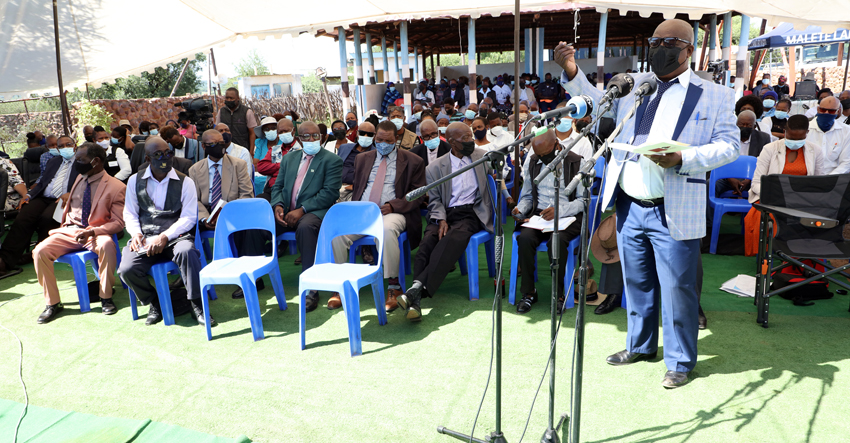
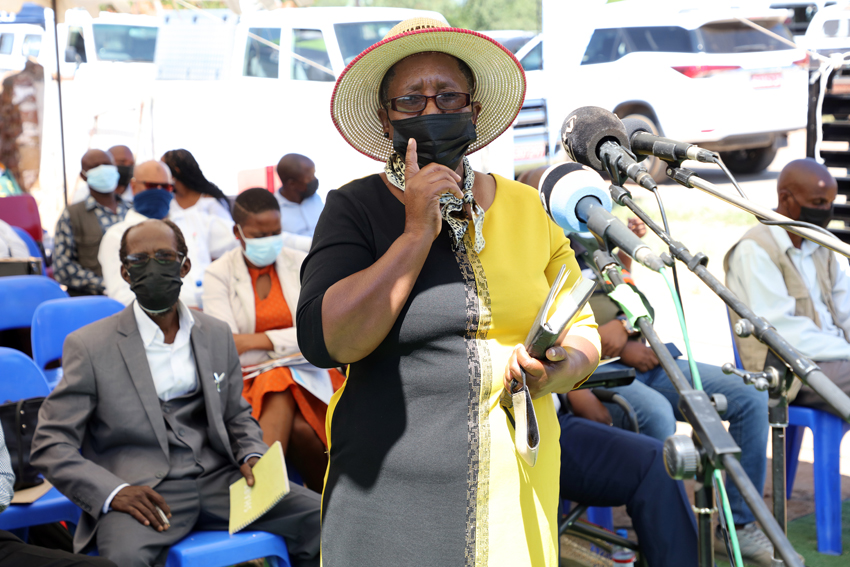
Balete of Mogobane and Otse yesterday descended on Mogobane Kgotla to share their views and suggestions about how they would want the constitution to be fashioned.
The first to present was Mr Sisimogang Abram Botswana’s who told the Presidential Commission of Enquiry into the Review of the Constitution that Botswana’s president was too powerful and the new constitution should curtail his or her powers.
He said the president wielded so much power that he or she could single-handedly appoint commissions, or any individuals to critical national positions without Parliament’s input.
“A Tautona a seka a nna le dithata tse di heteletseng,” he said, to a huge murmur of agreement from the over 200 attendants.
He proposed there should be direct election of the President, where those contesting for the office would make their promises to Batswana who will then vote the one they believed should be their president.
He also suggested there should be limited immunity from prosecution for a sitting president as opposed to the current constitutional provision found at section 41, which protects the President from prosecution, regardless the crime he or she may have committed.
“Tautona ha a ka dira molato o tshwanetse a sekisiwa hela jaaka re bona ko mahatsheng a mangwe,” he said.
Mr Abram called for both capacitation and constitutional entrenchment of oversight and independent institutions such as the Ombudsman, Independent Electoral Commission (IEC, Financial Intelligence Agency, Directorate on Corruption and Economic Crime as well judicial officers in the persons of the Chief Justice and president of the Court of Appeal. He argued once appointed by the President heads of these institutions could not be critical of him. Thus he suggested they be elected by Parliament.
“A candidate for the position of Chief justice must be publicly interviewed by Parliament as we see it happening in other countries, so we may know what his strengths and weaknesses are. These heads of oversight institutions must report to Parliament and not to the office of the President, not to the executive. For they cannot be oversight over the executive and still report to it,” he said.
Another speaker, Mr Busang Mosarwa was of the view that the commission should adequately forewarn Batswana about its coming so the people could meet and consolidate their suggestions.
Mr Gontse Molefe suggested that MPs should not be appointed to ministerial positions, as they tended to become overwhelmed, with the result that they neglected their constituencies. Ministers, he said, should be appointed from outside Parliament. He also proposed a combination of proportional representation and first-past-the-post electoral systems, saying it would be fair to everyone. A person who won through a winner-takes-all system tended to not fully apply himself in his work, he said.
He suggested that the law should allow for recall of non-performing MPs and councilors. This, he said, would compel political representatives to deliver.
Mr Molefhe said the right to work should be inalienable. Where someone was not employed, the government should provide a living wage until the person found a job.
“It’s unemployment that exacerbates crime as these people have nothing to do,” he said.
He proposed that council chairpersons should be given executive powers so they could have direct control of their areas of jurisdiction including that of development plans.
Mr Lawrence Peloewetse expressed concern over land distribution. He said land allocation was unnecessarily bureaucratic and unfair.
“Say you want land for business, you’re required to not only provide a business plan, but must also provide collateral, even though there is no guarantee you will get that land,” he said, adding the arrangement encouraged stealing of intellectual property by officials, who would then give them to their friends and family.
Mr Peloewetse said true citizen empowerment entailed availing land to the people and not favouring anyone ahead of others. The turnaround time for plot allocation was over 25 years, he said adding this did not arguer well for people’s development.
He argued Gamalete may not be a wildlife area, but it was endowed with other natural resources, which the residents could use to generate income through tourism ventures.
“But how do you set up such ventures when you do not have land?” he asked rhetorically and suggested the constitution should make land ownership an incontrovertible right for every Motswana.
Another speaker, Mr Sam Magama who is also chairperson of Otse VDC expressed disappointment that the commission’s meeting was at short notice, which prevented them from bringing together their views.
“We would have preferred collective presentation of our views to the constitution,” he said.
He argued each community had peculiar issues that they may wish to present, and South East would have presented their views as a collective.
On the other hand, Ms Neo Tsetse spoke strongly against too much freedom of speech, saying it promoted lawlessness as young people no longer respected elders.
“Free speech should have limits and guidelines,” she said.
Ms Julia Abram suggested the current electoral system of first-past the-post must be scrapped as it was unfair and lacked diversity of representatives as was the case with proportional representation.
She complained that the constitution was not accessible to everyone, which made it difficult for people to familiarise themselves with it, and suggested the document should be made available to everyone.
Ms Abram also suggested that the rights to health, education, land and shelter should be entrenched in the constitution.
Mr Galelebiwe Lombala suggested that Specially Elected MPs portfolio should be removed, as the positions no longer served any purpose.
“These positions are no longer necessary because the people are not appointed on merit,” he said.
He called for a review of districts boundaries, as some were too big with the result that people travelled long distances for services. He said a redefinition of boundaries, with smaller districts would enhance service delivery, as the district would now be manageable.
As more people wanted to present, Kgosikgolo Mosadi Seboko, who was in attendance, urged them to submit their views to the commission in writing. She further encouraged Balete to speak with one voice as touching issues affecting them.
When clarifying their mission, deputy chairperson of the commission, Mr Johnson Motshwarakgole advised the residents to take note that the same constitution, which they were critiquing, was the one that guided the President when he appointed the commission. He said the commission’s job was merely to consolidate their opinions and submit to the President. ENDS
Source : BOPA
Author : Mmoniemang Motsamai
Location : MOGOBANE
Event : Constitutional review Commission
Date : 08 Feb 2022
Related News

07 Aug 2026
Xiplomacy Hosting the world building the future
07 Aug 2026
Xiplomacy Pursuing the greater good for all
06 Aug 2026