


Scores turn up
02 Feb 2022
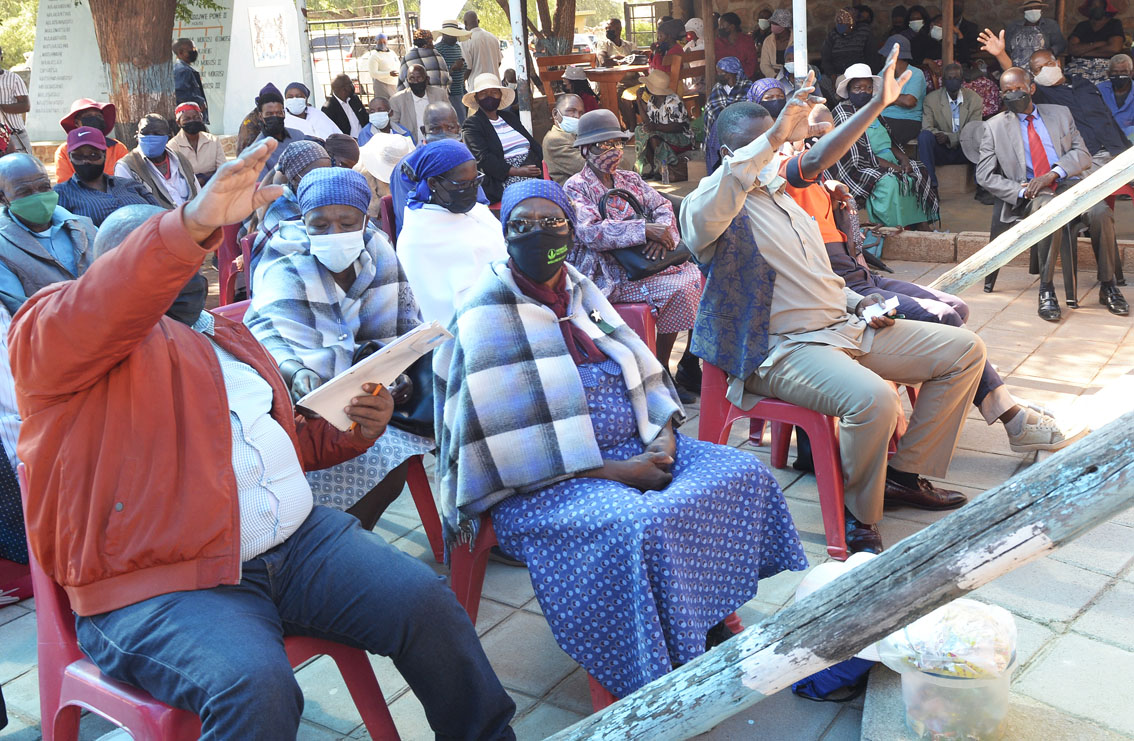
About 200 people, yesterday packed Gabane kgotla as the Presidential Commission of Enquiry into the Review of the Constitution kick-started consultations.
Commission Chairman Justice Maruping Dibotelo started by explaining the mandate of the commission, namely to collect Batswana’s views about their constitution and how they would want it enhanced.
He explained that after gathering their opinions they would submit to President Dr Mokgweetsi Masisi in September as he was the one who assigned them.
“We ask that you feel free to tell us how you wish for your constitution to be improved,” he encouraged the residents.
The first speaker Mr Lentswe Mogomotsi expressed concern that the commission was discussing a subject that people were generally not conversant with, and therefore could not effectively participate.
“Ga re kgone go itse molao-motheo ka botlalo…Re o itse kae? Re o bone kae? Tsamayang le e go re tlela molao-motheo, re fokotse re tlatse se le se re tlelang” meaning they had no comprehension of the constitution as no one had ever discussed it with them, and that the commission should come back to share what the constitution said, so they could be empowered to participate.
While some of the speakers who came after him raised similar concerns, and suggested the commission should review its approach to the consultations, they nonetheless appeared to have an idea of what was expected of them, as one after the other, they made known their expectations.
“ A katlholelo leso e diragadiwe hela ha katlholo e ntshiwa,” said one Mr Bdongo Ntwaagae. He wanted any death penalty sentence to be carried out the moment it was issued.
He said Batswana were worried about murderers who roamed free, “after killing our relatives.”
Mr Anderson Putle suggested a raft of changes. Among these was the suggestion that the leader of opposition be included in the executive, where he would be recognised as one of the three top national leaders.
“Let his functions be clear in the constitution. The Green Book should allow the leader of opposition to hold public meetings,” he said, adding there were incidents in the past where the leader of opposition was barred from holding public meetings.
Mr Putle went on to suggest that ministers should be appointed from outside Parliament.
“They can deliberate in Parliament, but should not vote,” he said.
He further suggested that minsters’ positions should be constitutionally entrenched to prevent the president from sacking them at whim, if they differed with him or her.
Mr Putle called for direct election of the president, who he said must be voted at the same time members of Parliament were elected.
“It’s not impossible to have three ballot boxes; one for the president, one for the Member of Parliament and the other for the councilor,” he said. Yet, he said, the president’s and legislators’ elections could be held separately from those of councilors, which could even be held on a different date.
Mr Putle suggested that a fourth Ntlo ya Dikgosi region be created for Kweneng. That region, he said, should comprise Mmopane, Mogoditshane and Gabane, which he said had a combined population of over 100 000 people.
“GammaNgwato has eight Ntlo ya Dikgosi regions while there are only three in Kweneng,” he said.
While at creating more regions, government should do away with the system whereby representatives to Ntlo ya Dikgosi were elected. This he said was because junior dikgosi often formed leagues through which they ensured they kept the older more experienced and senior dikgosi away from the house.
“Imagine your subordinate now being your superior,” he protested.
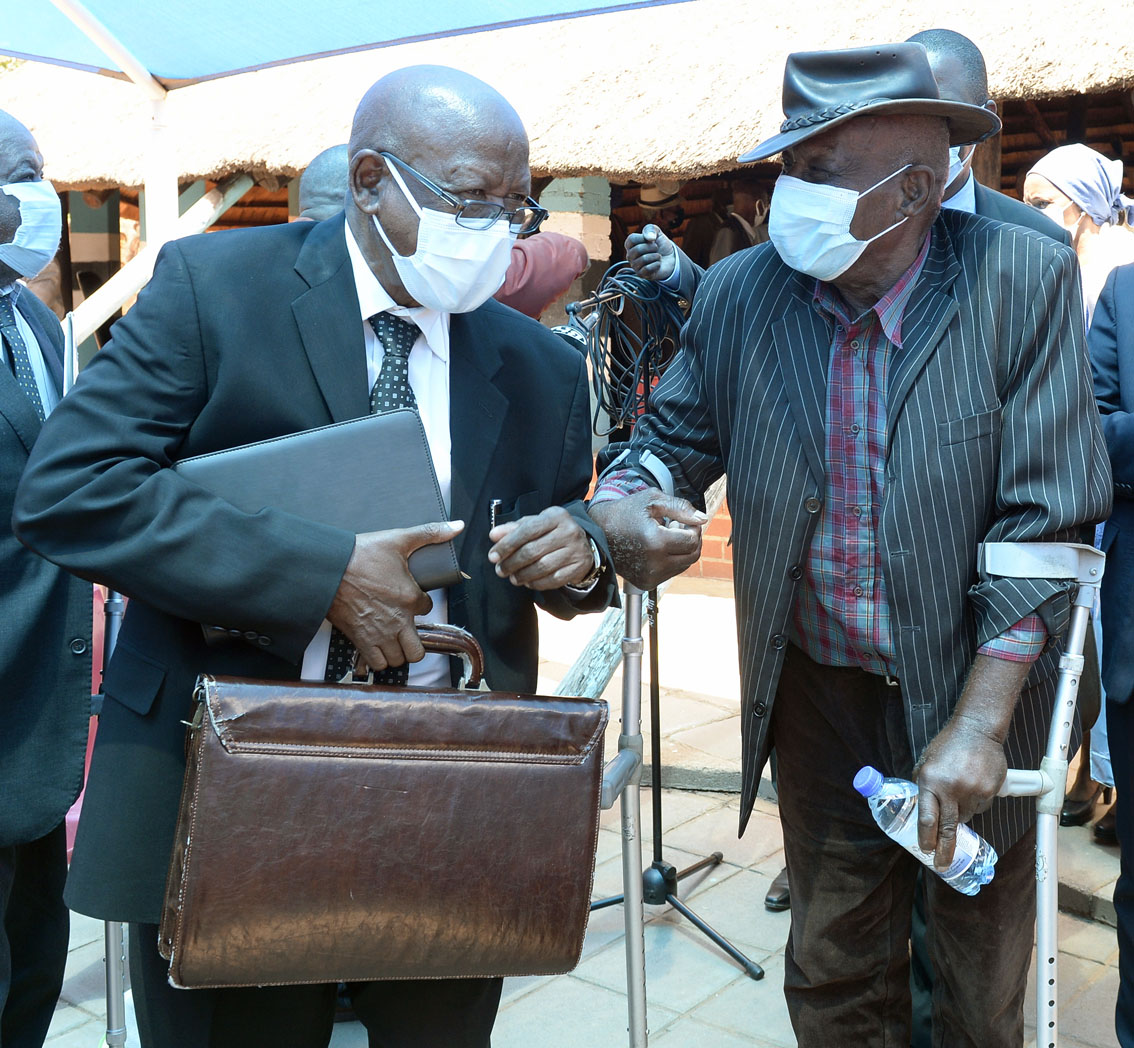
Mr Madisa Manthe called for a law that clearly explicated the rights of people with disabilities. Mr Manthe who has a disability called for “legislation, not policies”, which would protect people with disabilities.
“There should be clear complaint structures” for people with disabilities to lodge their grievances, he said.
The ‘limited’ power of dikgosi, and land ownership were two, often interwoven issues that many of the speakers brought up.
Those who spoke suggested that the government should give the land allocation process to dikgosi. They argued that by taking the dikgosi’s authority to allocate land, the constitution had left them as mere messengers whose only duty was to call kgotla meetings.
They said Landboards, which took over from dikgosi, had numerous challenges and failing in their duty to distribute land.
So imperceptive were land board in their allocation of land that they often allocated complete strangers land, sometimes closing accesses into people’s homes. And these ‘strangers’ would have no relationship with their neighbours; and would not attend kgotla meetings, they said.
“Motho o tlaabo a agile hoo, a tsentse lebotana. O bone hela re setse re boka ntsi e tala,” said Mr John Dingwe. He was referring to the fact some of the unfriendly residents died and sometime decomposed, leaving the neighbours with the stench and burden of finding their relations, and even burying them.
“Ke kopa gore Molao Motheo o boele mo dithateng tsa Dikgosi, lefatshe ke la Magosi eseng land board.
Ga go kake ga re sologela molemo ha re ka tswelela jalo. Ke sone se go nang le mathata a lefatshe aa kana mo bo gompienong,” said Mr Isaac Motswiri, as he buttressed the argument for dikgosi to be given back the power to allocate land.
Mr Otlaadisa Manthe and Mr Masonto Koti both raised concern that Batswana who had plots allocated under the Tribal Land regime were mere ‘borrowers’ of the said land, meaning the government could take it away anytime it deemed doing so necessary. It was therefore imperative to change the regime to allow Batswana who had been allocated land under it to own the plots perpetually, in the same way those allocated under other regimen did. One such regime would be the Freehold system, which allows an individual to own land for 999 years.
Mr Manthe expressed concern that the political leadership was overshadowing Dikgosi as tribal leaders.
Mr Ofentse Mareme pleaded for the establishment of a constitutional court and human rights commission. He said the right to own land should be entrenched in the constitution, such that a person could sue the government for not providing it. Mr Mareme also called for impeachment of political leaders who failed to deliver on their mandate even before their five-year term elapsed.
He further called for autonomy of councils.
“As it is, councils are at the mercy of the minister,” he said.
He also called for independent bodies such as the Ombudsman to report to a parliament select committee.
Mr John Dingwe decried a growing number of cattle rustling syndicates and said dealing with cases of stock theft should be the forte of magosi as the High Court often failed to interpret cattle colours, with the result that perpetrators got away scot free.
For his part Mr Simon Mogomotsi said it was important to engage other interest groups, such as those of people with disabilities, in decision-making programmes such as the commission.
Mr Billy Motladiile suggested that government should lower qualification age from 65 t0 60.
“As early as someone attains age 57, the process must start to prepare their pension. The day they reach age 60, they must get their pension,” he said.
For his part Mr Boniface Makati, who thanked the government for consulting Batswana on the constitution, said the law should on the main remain as it was, save for a few changes, as it “ has carried us well thus far”.
He suggested that the constitution should be amended to recognise senior citizens in lending. As, things stood, he said, lenders would rather give loans to younger people with no estate, than to senior citizens who had already amassed property. Like many other speakers before him, he preferred that capital punishment should be maintained. ENDS
Source : BOPA
Author : BOPA
Location : Gaborone
Event : Comission of enquiry
Date : 02 Feb 2022
Related News

07 Aug 2026
Xiplomacy Hosting the world building the future
07 Aug 2026
Xiplomacy Pursuing the greater good for all
06 Aug 2026