


Concessional finance critical for energy transition
07 Nov 2021
Botswana as a developing country needs concessional climate finance to accelerate mitigation and resilience ambitions on climate change impacts, especially on energy transition.
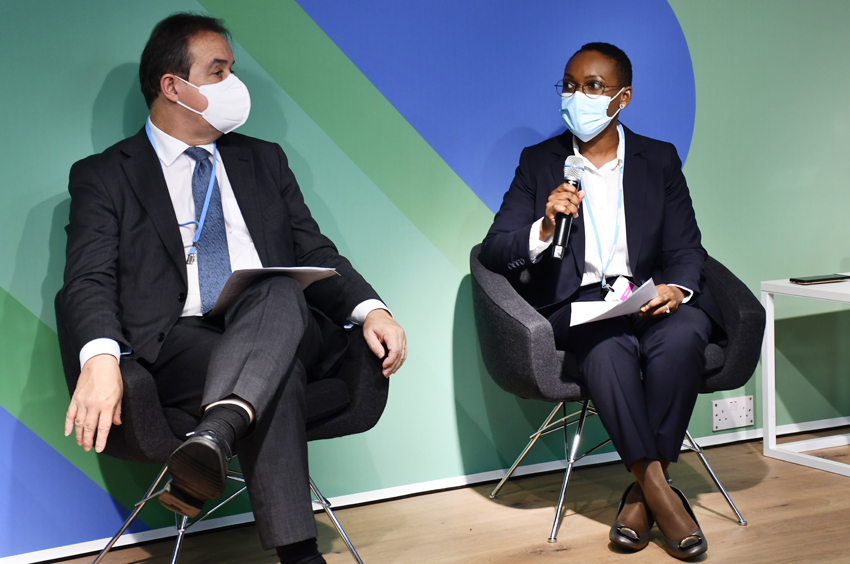
That was said by head of policy and strategy development in the Ministry of Mineral Resources, Green Technology and Energy Security, Dr Mareledi Maswabi in her contribution to a Green Climate Fund panel discussion themed Energy Transition: Supporting Developing Countries’ Aspirations and Ambitions’ at the ongoing climate summit in Glasgow, Scotland.
The objective of the panel discussion, which also featured panelists from Nepal, Niger, Costa Rica and Tanzania, discussed the role of climate finance to mobilise funds for transformative investments in the energy sector.
It further sought to identify challenges and opportunities for innovations in technology and financing mechanisms for scaling up investments in low emission energy access and power generation in developing countries in the context of COVID-19, while at the same time mapping a way forward to reinforce collaborations to assist developing countries raise and realise their emission reduction ambitions by 2030.
Dr Maswabi noted that Botswana was committed to joining the rest of the world in responding to climate change and its impacts, as evidenced by the country’s nationally determined contributions target of reducing emission by 15 per cent by 2030 and acknowledging the important role of renewable energy in Vision 2036.
She said Botswana’s recent funding through the Sustainable Renewables Risk Mitigation Initiative (SRMI) was not only in line with the Vision 2036 on facilitating public-private partnerships and investment in clean energy, but would also close the gap for energy transition in the wake of devastating financial effects of COVID-19.
“Botswana government applied for and has been granted funding under the SRMI facility to facilitate our energy transition pathway by covering technical assistance for designing, implementing and operationalising a sustainable programme through bankable projects that will be procured competitively,” she said.
She added that the facility would also finance critical public investments needed for renewable energy integration as well as mitigate development risks for the private sector through development of solar and wind parks.
“Additionally, part of the funding will go towards tailored risk mitigation instruments to mitigate critical residual risks that could not be covered through upfront de-risking,” she said.
Again, she said Botswana’s energy transition plan aspired to gradually reduce reliance on coal for electricity generation while on the other hand increasing renewable energy contribution to 15 per cent, improving the efficiency of the country’s energy system by 18 per cent and improving universal access to 60 per cent and 80 per cent electrification rate by 2030.
Further, Dr Maswabi noted that Botswana intended to exploit the abundant sunlight to connect electricity to settlements that were left out of the national grid, targeting groups such as subsistence farmers, poor and disadvantaged people. ends
Source : BOPA
Author : Kehumile Moekejo
Location : GLASGOW
Event : COP26
Date : 07 Nov 2021
Related News

07 Aug 2026
Xiplomacy Hosting the world building the future

07 Aug 2026
Xiplomacy Pursuing the greater good for all

06 Aug 2026