


SADC region mourns Kaunda
20 Jun 2021
A colossal figure in southern Africa’s liberation, Dr Kenneth Kaunda, 97, died Thursday, sending many of the region’s countries into a period of grief.
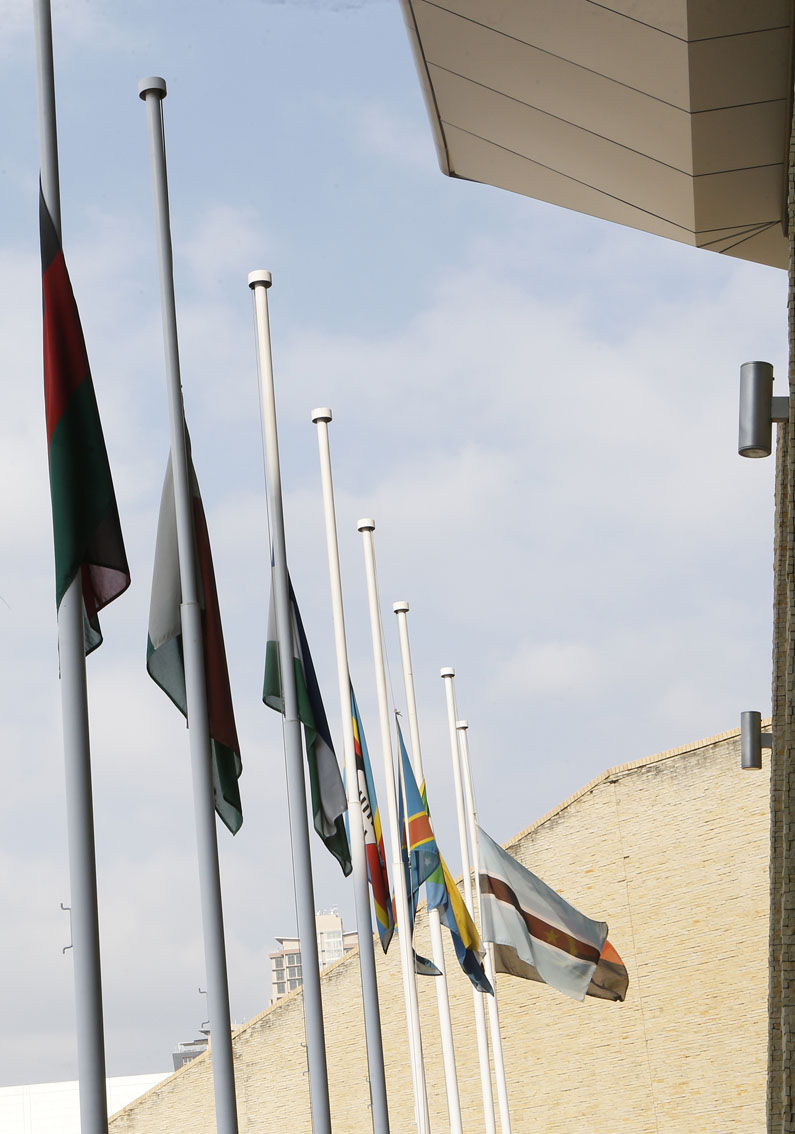
President Dr Mokgweetsi Masisi declared a seven-day mourning period commencing Friday during which flags would fly at half mast.
“Dr. Kaunda was Botswana’s best friend and together with the likes of Sir Seretse Khama and Mwalimu Julius Nyerere (of Tanzania) championed the liberation and independence of our region,” the President says in his official Facebook account.
Born Kenneth David Kaunda on April 28, 1924 at Lubwa Mission in Chisali, Northern Rhodesia (colonial Zambia), his father was an ordained Christian minister and missionary and his mother a teacher.
Having trained as a teacher and progressing to the level of headmaster, he switched to politics agitating for the liberation of his country alongside Harry Nkumbula in the Northern Rhodesia African National Congress.
Dr Kaunda would then lead a breakaway faction to found the United National Independence Party (UNIP) which led civil disobedience against British colonial rule.
For that, he was imprisoned and briefly exiled but remained resolute, pursuing the struggle and travelling to meet with American civil rights leaders Martin Luther King and Malcom X and fellow African freedom fighters.
His party won the country’s pre-independence elections making him president of the Republic of Zambia in 1964.
Affectionately called “KK”, he became known for his trademark safari suits, white handkerchief and “One Zambia, One Nation” slogan.
Dr Kaunda’s Zambia hosted southern African liberation movements fighting for independence from white minority regimes in South Africa, South West Africa (Namibia), Rhodesia (Zimbabwe) as well as Portuguese-ruled Angola and Mozambique.
As noted by President Masisi, Dr Kaunda worked with Mwalimu Nyerere and Sir Seretse Khama in organising the Frontline States, which supported regional liberation movements and used international diplomatic forums to fight for the region’s full independence.
Dr Kaunda was also among the leaders who in 1980 formed the Frontline States’ economic wing, Southern African Development Coordinating Conference (SADCC), forerunner to SADC.
As part of his philosophy of humanism, underpinned by central planning, state intervention in the economy and social development, Dr Kaunda’s government invested in physical infrastructure, education and healthcare.
With copper being the mainstay of Zambia’s economy, plummeting international prices drove the country into heavy debt rendering it unable to finance Dr Kaunda’s ambitious development programmes.
The International Monetary Fund (IMF) and World Bank introduced economic structural adjustment reforms including social spending reduction and privatisation of state enterprises with its associated downsizing.
Having made the country a one-party state in the 1970s, Dr Kaunda oversaw a return to multiparty system in 1991 but lost to Frederick Chiluba’s Movement for Multiparty Democracy (MMD).
Dr Kaunda gracefully stepped down and remained a respected elder statesman both in Zambia and across the African continent.
He had eight children with wife Betty who died in 2012 aged 84.
The elderly statesman passed away on June 17 at Lusaka’s Maina Soko Military Hospital. Ends
Source : BOPA
Author : Pako Lebanna
Location : Gaborone
Event : Interview
Date : 20 Jun 2021
Related News
08 Aug 2026

07 Aug 2026
Xiplomacy Hosting the world building the future

07 Aug 2026