


Botswana remembers first friend
20 Jun 2021
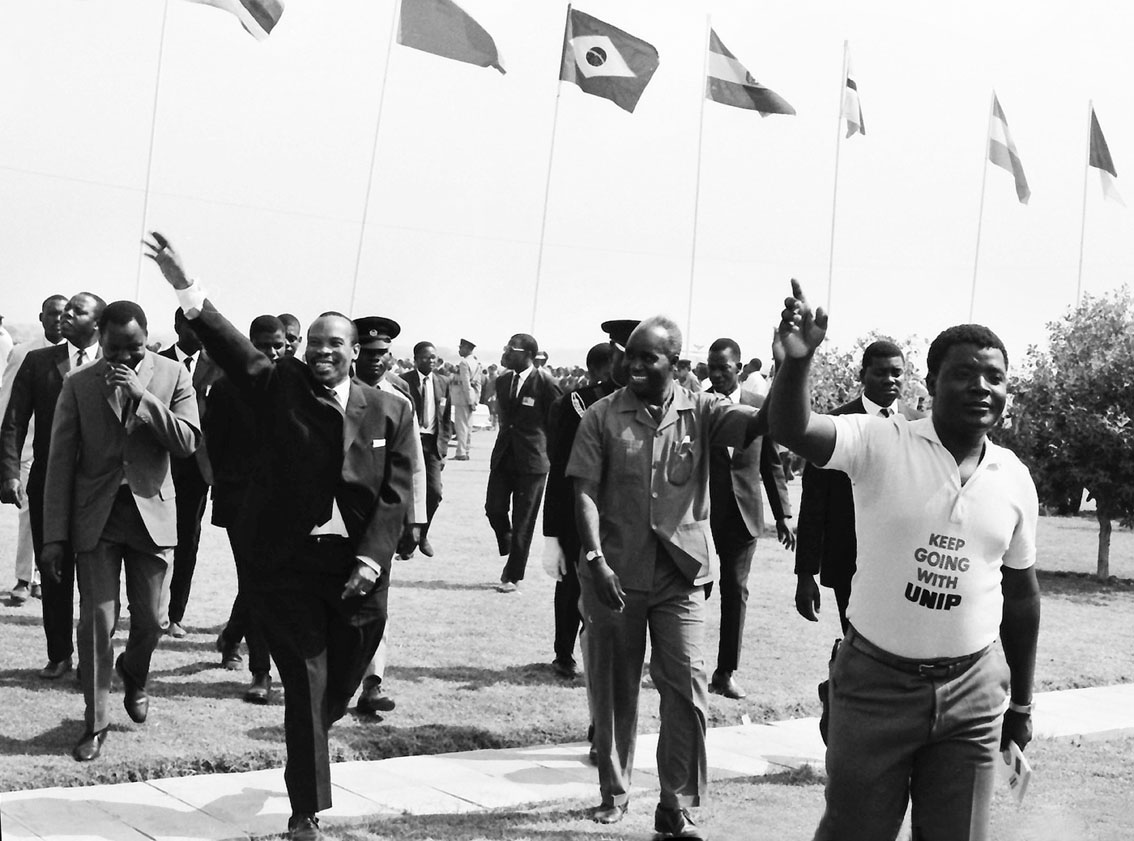
Botswana, one of the world’s poorest nations at independence and almost wholly surrounded by hostile white minority regimes, had only the 150-metre borderline with Zambia at Kazungula linking it to independent Africa.
Under the leadership of its founding president, Dr Kenneth Kaunda, who passed away June 17 aged 97, Zambia became Botswana’s crucial link to independent Africa and the free world.
“Kaunda was Botswana’s first friend. Zambia was the first African state to open a diplomatic mission in Botswana after independence, and Kaunda was the first foreign head of state from anywhere in the world to visit Botswana in 1968,” stated historian Dr Jeff Ramsay in an interview.
Dr Ramsay says Zambia, with its copper mining boom, also became an important partner to the poor and geographically disadvantaged Botswana.
“Batswana were sent for training in Zambia and some Zambian personnel came to work in the country.
Strong relations were developed between the two countries, and after the 1968 visit, Kaunda remained a frequent visitor to Botswana,” he says.
According to Dr Ramsay, the friendship became vital for regional liberation movements.
“That boundary with Zambia was important pipeline for southern African freedom fighters. Many nationalists, including Nelson Mandela of South Africa, Sam Nujoma of Namibia, Samora Machel and Armado Guebuza of Mozambique, passed at the well-coordinated Kazungula Freedom Corridor,” Dr Ramsay says.
He says apartheid South Africa, which occupied Namibia at the time, and Rhodesia, considered the Kazungula boundary important to the extent of disputing that Botswana and Zambia actually shared a border.
“They unsuccessfully tried to get the Kazungula ferry to stop operating, but Botswana and Zambia stood their ground,” he says.
Dr Ramsay says the issue got international attention and at some point then American President Richard Nixon sent an envoy to Zambia and Botswana on a familiarisation mission.
Dr Kaunda, Sir Seretse Khama and Mwalimu Julius Nyerere of Tanzania founded the Frontline States and when joined by Mozambique’s Samora Machel and Angola’s Agostinho Neto after their countries’ independence in 1975, the regional bloc was further strengthened.
“They played a role in the negotiations for Zimbabwe’s independence, and then in 1980 formed an economic bloc, the Southern African Development Coordinating Conference (SADCC), which later became the Southern African Development Community (SADC),” Dr Ramsay says.
With SADCC, the Frontline States were now closely working alongside Lesotho and Swaziland (now eSwatini), states that harboured South African freedom fighters.
These states were often attacked, such as on May 20, 1986, when the capitals of Botswana, Zambia and Zimbabwe were raided in a single day by the South African Defence Force.
“There was a need for all states to be united against the apartheid onslaught, but Malawi under Kamuzu Banda for example had opened full diplomatic ties with apartheid South Africa, while Zaire under Mobutu Sese Seko supported the UNITA rebels in Angola.
Kaunda was diplomatic in having to negotiate such regional dynamics,” Dr Ramsay says.
Dr Kaunda’s relations with Botswana were reinforced by his close personal friendship with the country’s first two presidents, Sir Seretse Khama and Sir Ketumile Masire.
“In 1964, Seretse sent Masire to Lusaka to meet Kaunda, at the time seeking support for the Botswana Democratic Party (BDP) campaign,” Dr Ramsay says.
From those early encounters, a warm friendship blossomed between Dr Kaunda and Sir Ketumile which ended with the former convincing the latter to become a vegetarian.
“They were candid, very honest with each other, at times differing on policy issues, and remained good friends even in retirement,” Dr Ramsay says.
He says notwithstanding some mistakes made in office, Dr Kaunda’s positive contribution to Zambia and the region would favourably place him as an important historical figure in southern Africa. Ends
Source : BOPA
Author : Pako Lebanna
Location : Gaborone
Event : Interview
Date : 20 Jun 2021
Related News
08 Aug 2026

07 Aug 2026
Xiplomacy Hosting the world building the future
07 Aug 2026