


River bank farmers ready for inflow
18 May 2020
Some farmers who have ventured into ploughing along the Thamalakane River banks popularly known as Molapo farming are harvesting their fields to avoid destruction from the incoming water flow from Okavango Delta.
Water has already reached the Thamalakane River in Maun and farmers revealed in random interviews that they expected high inflows towards end of May; hence the need to harvest quickly.
Molapo farming is a flood recession farming, which uses moisture from the river. The system reportedly proved to be sustainable and profitable.
The farmers stated that this kind of farming was effective since they harvested better yields as compared to dry land farming.
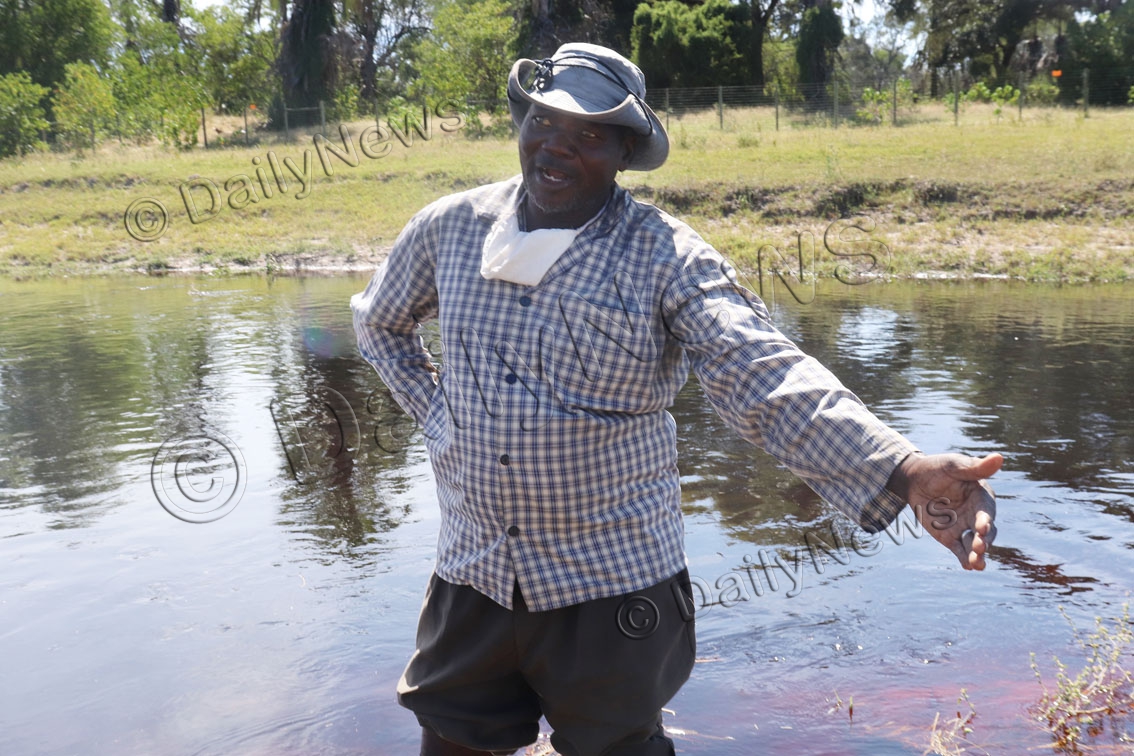
One of the farmers, Mr Ditihalo Sefo said he had ploughed two hectares of maize, water melons at an area commonly known as Boro/Thamalakane junction.
He said when the river was flooding, water penetrated his field and destroyed plants. Mr Sefo had been practicing molapo farming since 1990 and confirmed that it was profitable.
Although he revealed that this year he could not manage to sell his products due to COVID-19 pandemic outbreak, he saw it fit to harvest and prepare the field to plough vegetables before they experience high inflow, which he anticipated to come around June.
Mr Sefo wished members of the community could take advantage of molapo farming to improve their livelihoods and also to help Botswana’s food production efforts.
“Molapo farming is good because it can contribute substantially to rural livelihoods by providing better yields than rain-fed farming,” he added.
Another farmer, Mr Erick Nleya, who started practicing molapo farming in 2009, concurred that when the river is flooded, water destroys his field situated in an island in the middle of the river and he ploughs different types of vegetables and herbs.
He noted that the system was working wonders as compared to arable farming, which he described as an extensive system with minimal input but more often low returns.
Mr Nleya, who is passionate about the practice, has connected four boreholes in his field to use during difficult times such as the drying of the river.
As the annual floods arrived, he is prepared to relocate and shift to irrigation farming at his fields at Botshabelo ward and explained that the market was lucrative as he supplied supermarkets, private butcheries and individuals. Ends
Source : BOPA
Author : Esther Mmolai
Location : Maun
Event : Interview
Date : 18 May 2020
Related News


11 Aug 2026
Boko calls for radical reforms in public service

11 Aug 2026
Botswana and US commit to global peace

11 Aug 2026
Chobe district receives malaria drugs

11 Aug 2026