


Soldiers learn combat swimming skills
03 Feb 2020
Botswana Defence Force (BDF) has intensified its efforts to equip soldiers with basic combat swimming skills for the second year in succession.
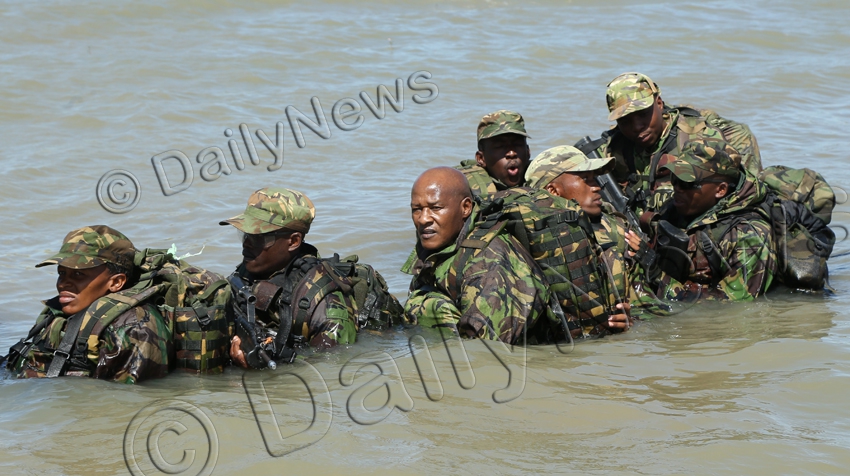
As a result, the 2nd Brigade Group organised a demonstration to display combat patrol skills by participants, who underwent a basic swimming course at the Shashe Dam.
The course commenced on December 11, 2019 and would end on Friday.
The demonstration involved simulation exercises for soldiers undertaking patrols in waterborne terrain.
In one of the exercises, participants simulated a BDF patrol boat, which had been shot by the enemy, while navigating the water on its daily mission to guard the country’s wildlife resources and borders.
The soldiers displayed skills ranging from exiting the boat and re-grouping to strategise inside the water bodies and then continuing the patrol through swimming.
They also demonstrated how soldiers reacted when an attack occurs, while they are patrolling inside water and how they evacuate casualties to safety during operations.
These types of exercises and skills learnt were crucial because BDF had been at the heart of anti-poaching campaigns since 1987.
Recently, the country saw the rise in the number of wildlife poaching incidents, which required those charged with protecting wildlife to be up skilled sufficiently to operate in difficult conditions.
The fight against poaching posed significant economic and security challenges and the army as custodians of the country’s security left no stone unturned in an endeavour to stem the tide.
The 2nd Brigade Group Commander, Brigadier Joseph Seelo, underscored significance of the ability for every soldier to be able to operate in all terrains.
He explained that this was the second course where soldiers were equipped with basic combat swimming skills as a way of preparing them to operate, especially in the country’s northern water sector and during rescue missions. “Our job as the defence force is to police our borders, including those in the Okavango and Linyanti, where poaching also happens to be prevalent.
“Remember that poachers can operate anywhere, including in water bodies, hence soldiers need to be equipped to also be proficient in that terrain and even surpass poachers’ capabilities,” he highlighted.
As leaders in the defence force, Brigadier Seelo said they understood that poachers could not be stopped by any obstacles, hence the need to take part in these simulation exercises to build the confidence of other soldiers.
Those who completed the course last year were deployed in operations and the results were satisfactory. One of the course participants, Lt. Kesego Gaborone said combat swimming patrols required teamwork and good communication if they were to be successful.
She noted that while operating in water was challenging, one of the key ingredients for success in aquatic conditions was to ensure that team members did not panic in case of an attack and to always have the ability to re-group and strategise during patrols.
Anti-poaching patrols in water bodies, Lt. Gaborone said, were challenging, hence requiring swimming skills to execute them efficiently. ENDS
Source : BOPA
Author : Puso Kedidimetse
Location : Francistown
Event : Basic swimming course
Date : 03 Feb 2020
Related News

13 Aug 2026