

Tomato production below demand
10 Oct 2018
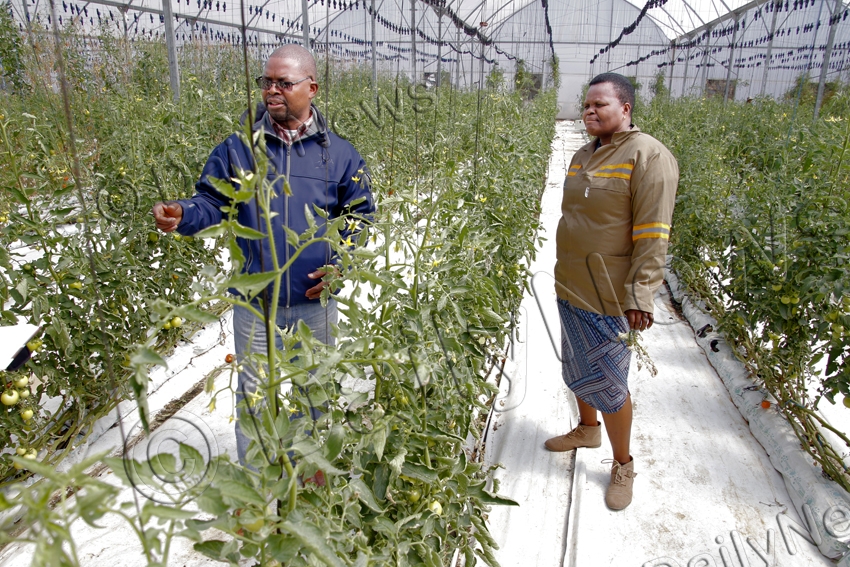
The Local Enterprise Authority (LEA) is determined to reduce the importation of tomatoes.
Glen Valley horticulture incubator manager, Mr Isaac Bok said it would be achieved through the training of aspiring and existing tomato farmers on entrepreneurship and technical skills.
Mr Bok said the training took nine months, and that access to land and water was the two requirements.
Mr Bok advised those interested to have no official engagements as the training was intensive and required one to be hands on.
“The trainees will spend 75 per cent of the time on field work while 25 per cent will be theory,” he said.
He noted that tomatoes were a widely consumed fruit. He also stressed that tomato production was demanding in terms of being labour intensive and that they required fertilisers and pest management. Mr Bok said LEA also had a parallel programme called attachment that catered for those who could not take nine months training. He said they came for a week to learn about a programme of their interest.
The incubator manager also explained that LEA used an indeterminate tomato which grew up to 12 feet.
He said tomatoes were a warm season crop but that they could be grown out of season under protection. He said one could use tunnels as they had a plastic material which trapped heat, or use net houses which reduced the intensity of the sun and were suitable for summers.
He said green houses were made of plastic and trapped heat in winter while in summer they had a cooling effect. He said prices ranged between P70 000- P100 000 on a 300 meter square space for tunnels, P700 000 on 7 500 square metres for nets, and that a greenhouse costs P3.1 million on a 1,1 hectare land.
Mr Bok said the net was doing well under local temperatures and advised trainees to start small.
He noted that their graduates faced challenges such as the capital intensive nature of growing tomatoes, and that drilling and equipping a borehole was also costly.
He said the other challenge was competition as traders had their own preferences of buying.
“Tomatoes need warm environments and most Batswana cannot afford to plough in winter hence production goes down. So there is a challenge of market as production goes up in summer,” he said. Mr Bok said the other challenge was that of heat as plants suffered and pests increased in summer. He added that managing pests increased the cost of production.
He also said crop rotation was necessary because of soil borne pathogens, which were specific to certain crops.
Mr Bok said the country produced about 12 000 tonnes of tomatoes annually while the needs were double the production hence 60 per cent was imported. Ends
Source : BOPA
Author : Sylviah Disele
Location : GABORONE
Event : Interview
Date : 10 Oct 2018
Related News


30 Jul 2026
BMC eyes new export deals
29 Jul 2026
Modisaotsile on rise to the top
29 Jul 2026
Poultry industry attains self-sufficiency
28 Jul 2026
Ross Breeders pioneers Botswana poultry exports

28 Jul 2026