


President inaugural addresselate Batswana
08 Apr 2018
In his inaugural address on April 1, President Mokgweetsi Masisi assured the nation that many government programmes and interventions, more especially poverty eradication programmes such as Livestock Management and Infrastructure Development (LIMID) and Integrated Support Programme for Arable Agricultural Development (ISPAAD) would continue during his tenure.
Poverty alleviation is a goal for most governments around the world, but in Botswana, former President, Lt Gen. Dr Seretse Khama Ian Khama pronounced policy shift from poverty alleviation to poverty eradication.
This policy shift, in his 2009 inaugural address, former president said it was meant to ensure all Batswana lived dignified and sustainable lives free from poverty.
Owing to this policy shift, government committed to taking on the challenge of poverty eradication head on and due to its importance, the programme is coordinated from the Office of the President.
President Masisi said poverty eradication programmes and interventions had grown over the years and had, since inception, contributed significantly towards uplifting the lives of Batswana and improving the country’s agricultural output.
In an interview, 32-year-old Mr Mogomotsi Gaeganetswe, from Mahalapye, said he was delighted to hear President Masisi vowing to continue with poverty eradication programme, saying he was living a better life due to his Mahalapye Tyre Products company, funded under the poverty eradication programme.
Mr Gaeganetswe encouraged other youths not to despair, but to take advantage of the many government programmes to uplift their lives.
He said social workers were there to assist, guide and advise youth on businesses or projects they wanted to venture into.
Through the use of old tyres, Mr Gaeganetswe said he had been able to produce outstanding products, such as furniture.
Another poverty eradication programme beneficiary, 63-year -old Ms Mary Mabotseng from Ramotswa, thanked the Lord for the visionary leaders who had led Botswana.
Ms Mabotseng said it was because of God’s grace that President Masisi decided to continue with government’s social upliftment programmes, something she said was a blessing to the nation.
She said she had always been passionate about farming from a young age because her parents were farmers.
This, she said was why she decided to opt for small stock farming and encouraged other Batswana to take advantage of government’s various programmes to better their lives.
“Ever since I got my 11 goats from the poverty eradication programme, I am always happy. I also plant trees and flowers. I thank God because we are very fortunate as Batswana. This is only because of His will,” she said.
The LIMID was introduced by the Ministry of Agriculture in 2002, following the review of the subsidy schemes such as Services to Livestock Owners in communal Areas and Livestock Water Development Programme.
The review resulted in the merger of the two schemes to create LIMID, which is composed of; animal husbandry and fodder support, water development, cooperative poultry abattoirs for small-scale poultry, small stock, guinea fowl and Tswana chickens production.
The programme, which is available to Botswana citizens only, also has components of monitoring success indicators and a graduation component, which spells out how farmers graduate out of the support.
Its main objective is to; promote food security through improved productivity of livestock (cattle and small stock); improve livestock management, improve range resource management and conservation, alleviate poverty and provide safe and hygienic poultry.
The LIMID programme component comprises of construction of the; dip tanks, spray races, chaff cutters, kraals, crushes and loading ramps and fodder barn.
Further, to address challenges in the arable sub-sector of; poor technology adoption by farmer and low productivity of the sub-sector, in 2008 government introduced ISPAAD as one of the main agricultural support schemes.
The ISPAAD’s main objectives are to; increase grain production, promote food security at household and national levels, commercialise agriculture through mechanisation, facilitate access to farm inputs and credit an improve extension outreach.
The components of this programme include; cluster fencing, provision of potable water, provision of seeds, provision of fertilisers, facilitation of access to credit, establishment of agricultural service centres and draught power provision. ENDS
Source : BOPA
Author : Lorato Gaofise
Location : GABORONE
Event : Interviews
Date : 08 Apr 2018
Related News

21 Aug 2026
20 Aug 2026
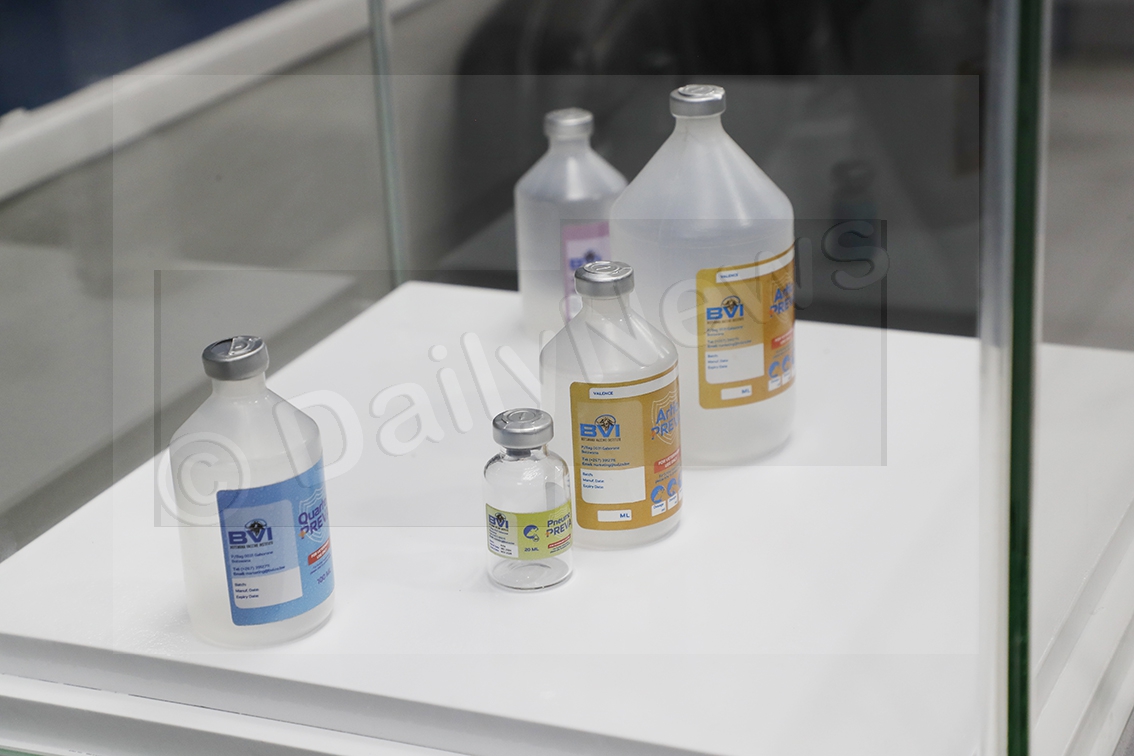
Botswana Donates FMD Vaccines To Lesotho
20 Aug 2026
Atamelang new transport minister
20 Aug 2026