



Water crisis needs robust approach
03 Dec 2017
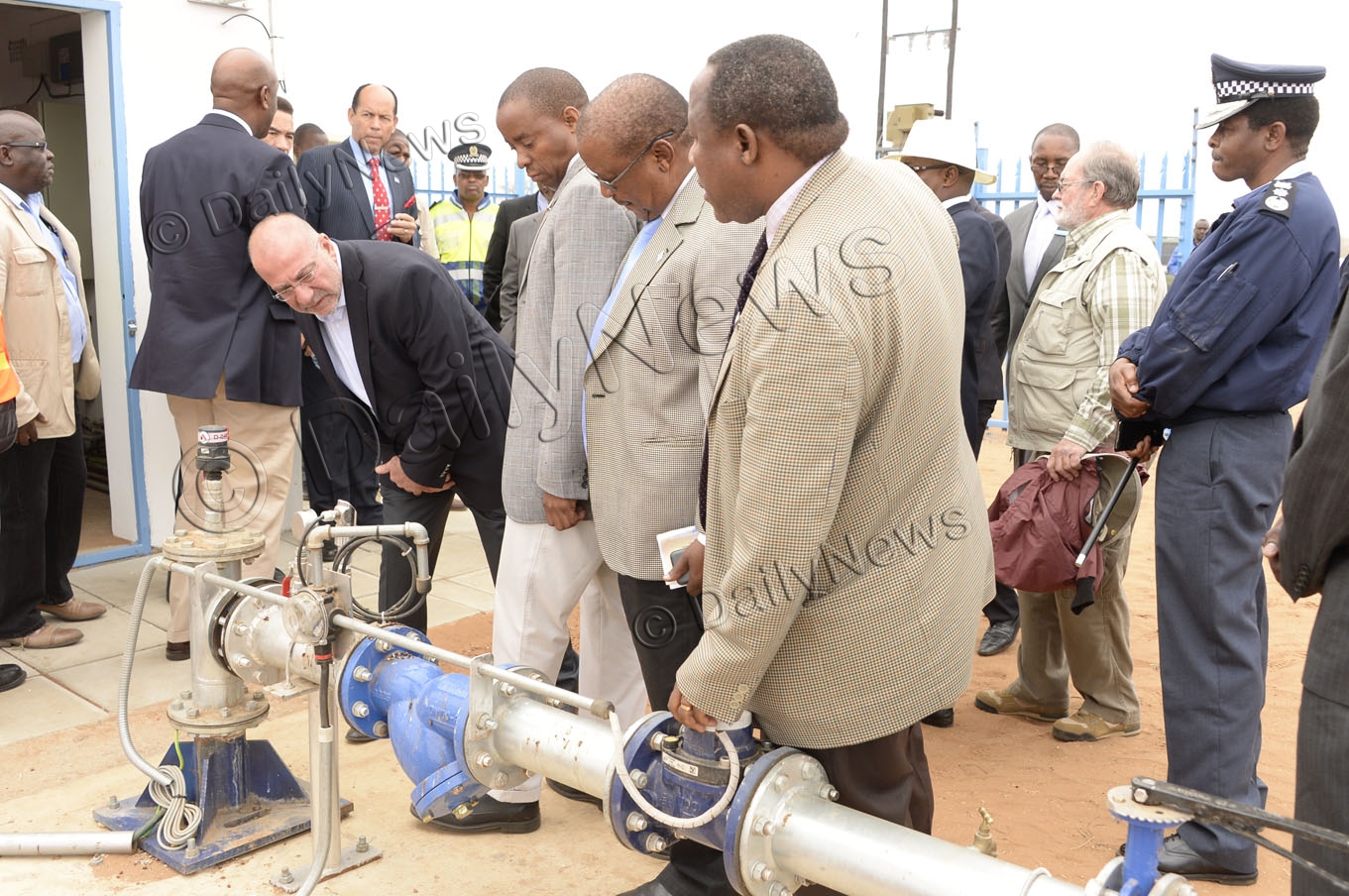
Addressing the water crisis in the country requires a multifaceted approach including, but not limited to exploration of; surface water sources, rain water, underground aquifers as well as intensifying water construction projects and exploring possibilities of grey water re-use.
Answering a parliamentary question on November 30, the assistant Minister of Land Management, Water and Sanitation Services Mr Itumeleng Moipisi said his ministry had therefore embarked on a number of initiatives to improve water supply in the country since Botswana was an arid country with few water sourses.
The project, he said, included the expansion of the North-South Carrier scheme by constructing the second pipeline that would increase the flow of water from Letsibogo and Dikgatlhong dams to Mmamashia Water Treatment Works, which is expected to be completed in 2020. “This will augment the supply of water throughout the Greater Gaborone inclusive of Mochudi, Lobatse, Kanye and Molepolole management centres,” he said.
Mr Moipisi said another initiative was the Masama West Wellfield ground water, which had the capacity to inject up to 30 mega litres of groundwater from the boreholes into the NSC to supply the Greater Gaborone area by 2018.
Further, the minister said assessment of the Stampriet Trans-boundary Aquifer System which his ministry was implementing as the Matsheng Groundwater Development project that would develop sufficient potable groundwater to supply Kgalagadi North as well as some of the villages located in Ghanzi Districts by 2020 was being made.
The Chobe-Zambezi project, was also an initiative in which assessment of the viability and costs of bringing additional water supply to the large demand centres of South Eastern Botswana from Chobe/Zambezi Rivers as well as improved sanitation services which assist in considering possibilities of wastewater reuse.
The sanitation projects in Kanye, Molepolole and Maun will be completed by 2021.
In addition, the assistant minister said most of the areas were planned to be addressed under the NDP11 and the World Bank loan.
Mr Moipisi further told Parliament that his ministry did not have any plans to decentralise water distribution to the Department of Water Affairs (DWA), adding that the National Water Master Plan Review of 2006 (NWMPR) recommended the institutional arrangement in the water sector be reformed.
He said following the recommendation, the DWA was given the responsibility of Water Resource Management while Water Utilities corporation (WUC) took the role of water distribution and waste water collection and treatment in all the cities, towns, villages and settlements in Botswana.
Meanwhile, he said the World Bank loan was signed in May 2017 and projects had since been conceptualised and currently at procurement vetting stage with a view to award the tenders in April 2018. “Issues related with the process, such as land acquisitions, environmental and governance issues were being addressed, and these were thwe pre-requisites that should be done first,” he said.
On another issue, assistant minister said his ministry was aware that the design for Sowa Master Plan did not go ahead due to financial constraints. Government has since secured funding for implementation under World Bank and the project will be implemented together with other projects for which they were currently working on tender documentation with the hope of kick-stating early next financial year.
Member of Parliament for Nata/Gweta Mr Polson Majaga had asked the assistant minister when the water crisis would be solved in Botswana; if he would consider decentraliation of water distribution in the future by engaging the DWA to assist in some regions and parts of the country.
MP Majaga had also asked the minister if he was aware that the Sowa Master Plan project which was supposed to start during the 2015/16 financial year had not started. ENDS
Source : BOPA
Author : BOPA
Location : GABORONE
Event : Parliament
Date : 03 Dec 2017
Related News

25 Aug 2026
Forensic audit generates 90 priority actions
25 Aug 2026