


Ministry tackles education challenges
21 Sep 2017
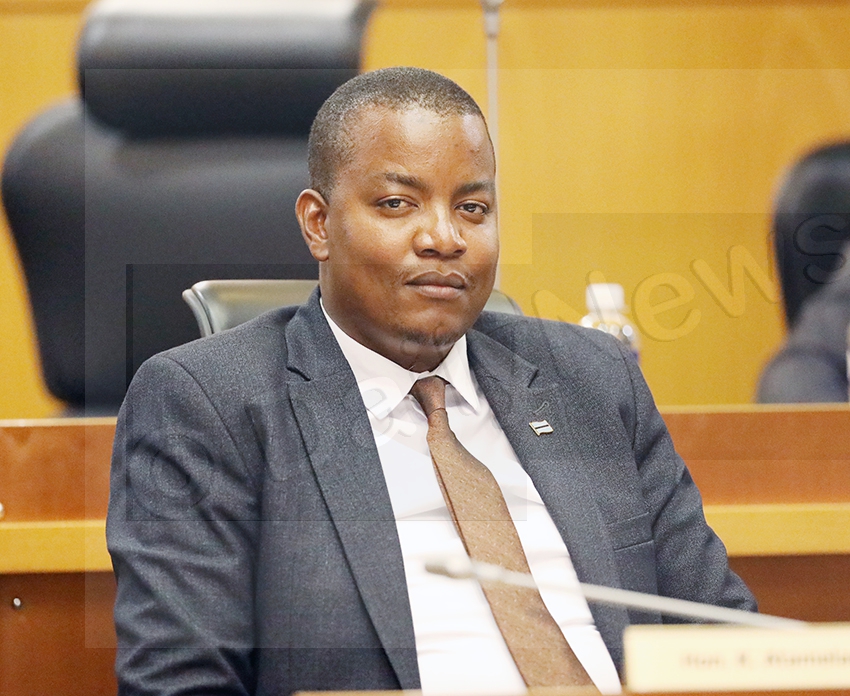
Assistant Minister of Basic Education, Mr Moiseraele Goya has confirmed that overstaying of teachers and decline of transfers are major challenges facing the ministry.
Mr Goya said when responding to councillors’ comments who requested the minister to transfer teachers who had overstayed in rural areas for more than 10 years.
They argued that overstaying of teachers could be a contributing factor towards poor performance in the district.
The assistant minister explained that the ministry was currently handling the issue, adding that they had embarked on an assessment which indicated that 3789 teachers had overstayed in schools, Ngamiland region included.
Mr Goya informed them that currently the ministry was in the process to transfer a number of teachers, noting that transfer letters had been submitted to them to respond if they agreed.
However, he expressed concern that they had been experiencing challenges where some teachers declined transfers despite the fact that they were transferred at places where their services were needed.
“Most of the teachers want to be transferred to Gaborone, but school heads in Gaborone complained about absenteeism of teachers coming on transfers as they were always on sick leaves, while some went for check-ups,” he added.
On other issues, the assistant minister praised North West District Council for their efforts in promoting learning by constructing two classrooms in some villages with material such as reeds and canvas tents.
Mr Goya said it was pleasing to see the council thinking outside the box and coming up with ways to address the current situation, while they experienced financial constraints to undertake some developmental projects.
He encouraged the council to extend their efforts to other areas where children still travel long distances to access education, noting that his ministry would assist with posting of teachers.
Earlier on, Mr Goya briefed the councillors about the education transformation taking place at the ministry.
He explained that his ministry was established in October 2016 following the re-organisation of the then Ministry of Education and Skills Development where it was split into three ministries. Furthermore, he noted that the Ministry of Basic Education’s mandate was to drive pre-education, primary, secondary and out of school education.
He said the ministry continued to come up with transformative shifts as they wanted the county to shift from being mineral to be knowledge -based economy.
He briefed them about the implementation of the Education and Training Sector Strategic Plan (ETSSP) which emphasised on the outcome based education and multiple pathways.
The plan aimed at improving sector performance to produce a knowledgeable and skilled nation through life long learning. The ETSSP, he said was an extensive undertaking that addressed a number of pillars such as improving access, quality, inclusion and equity, accountability and governance in the education system.
Mr Goya revealed the country had done well in access to 10 year basic education, but the challenge was that there was no quality and relevance of education, hence “we were prompted to come up with the plan because there was limited accountability across the education sector,” he added.
He also mentioned that there was poor delivery of curriculum as there was more teaching as compared to learning, hence result in poor performance. The plan, he said aimed to professionalise teachers’ career in the country, adding it would have impact on all levels being the learner, industry and the nation.
Councillors also learned that the ministry had introduced outcome based education which was skills competence assessment and outcome assessment. Ends
Source : BOPA
Author : Esther Mmolai
Location : MAUN
Event : council meeting
Date : 21 Sep 2017
Related News

21 Aug 2026

20 Aug 2026
Botswana Donates FMD Vaccines To Lesotho
20 Aug 2026