

SADC summit headlines 2015
29 Dec 2015
As 2015 reaches its sunset, different actors in the socio-political sphere of Botswana would pen different epitaphs if they had to eulogise their experiences of the year.
Some will sneer at the memory, await the New Year's Eve festivities that they may chant, 'ngwaga o sa nthateng kgabaganya!' while others will forever cherish a memorable year.
Collectively, as a nation, Batswana will have a mixed memory; for example, challenges in electricity and water provision continued, yet the marked progress made since independence continued to be visible.
The year 2015 marked 50 years since Botswana's first general elections on March 1, 1965, which ushered in a period of nominal self-government under prime minister Sir Seretse Khama; who would become the first president of fully independent Botswana, a year later, on September 30, 1966.
At the commemoration of this event in Lobatse in March, one of the country's pioneering figures, Dr Gaositwe Chiepe outlined the enormous challenges the country faced at independence, with severe drought and low levels of physical infrastructure and social development huge impediments.
But Botswana, she said, went on to flourish against these initial odds.
Indeed, 2015 underlined this progress of Botswana as an emergent, developing nation-state within the global community of nations.
With a year left before the 50th anniversary of independence and the attainment of Vision 2016, groundwork for Vision 2036 is also in progress.
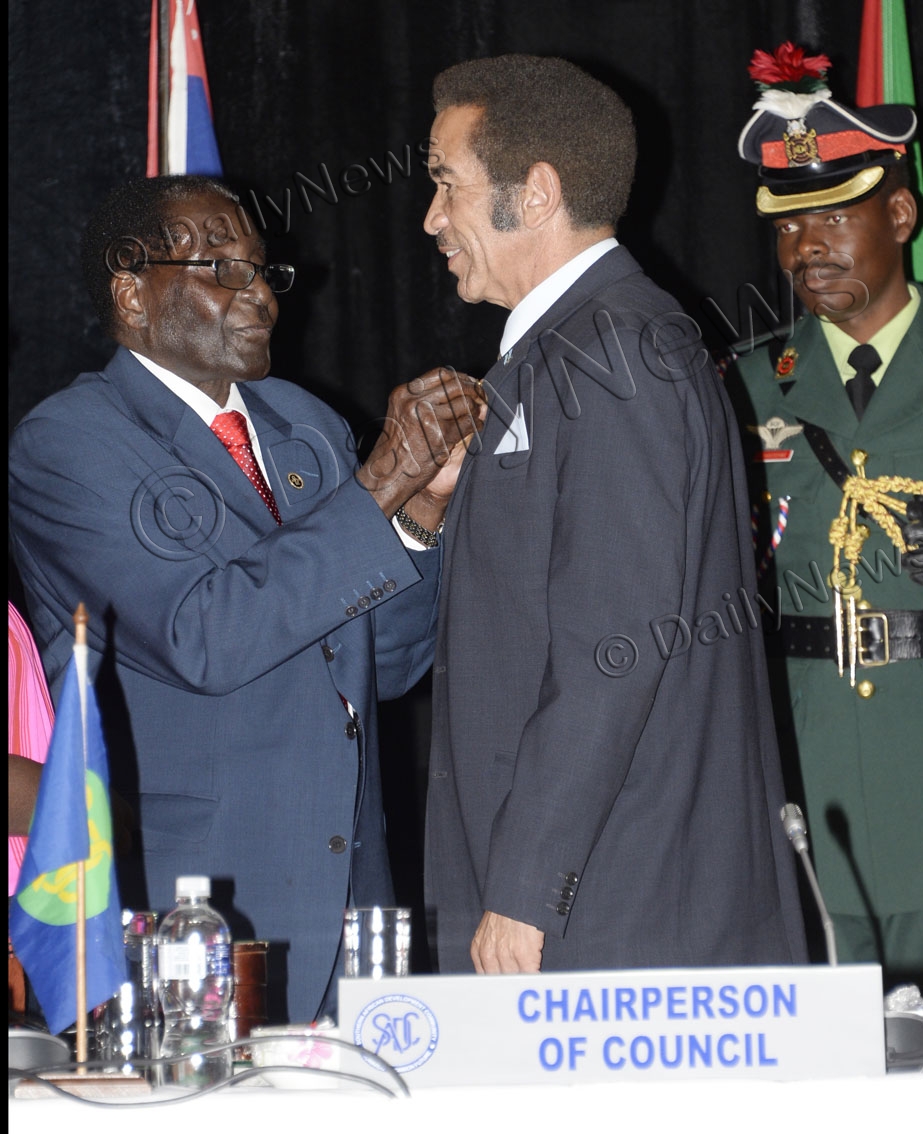
Regional heads of states converged in Gaborone for the Southern African Development Community (SADC) heads of state summit in July, with President Lt Gen. Seretse Khama Ian Khama assuming the chairmanship of the regional body.
President Khama visited France twice; at the invite of President François Hollande in June, and for the United Nations Climate Change Conference (COP 21) in November.
Also, President Khama partook in the Commonwealth Heads of State and Government Meeting in (CHOGM).
Ahead of that event, Ms Masekgoa Masire-Mwamba captivated national imagination as she campaigned to be the first African and first woman Commonwealth secretary general.
She eventually lost the contest to Patricia Scotland of the Dominican Republic, a former attorney general in the United Kingdom, who became the sixth and first woman Commonwealth secretary general since 1965.
President Khama had assisted in lobbying for Ms Masire-Mwamba's endorsement, including at the Commonwealth Local Government Conference hosted in Gaborone in June.
The government announced a new Economic Stimulus Programme (ESP), which is set to address the backlog of developmental projects that were deferred due to economic downturn in recent years, and further stimulate economic activity through Economic Diversification Drive (EDD) and the creation of Special Economic Zones in parts of the country.
Domestic party politics saw the Vice President, Mr Mokgweetsi Masisi elected the chairman of the governing Botswana Democratic Party (BDP) at a congress in Mmadinare in July, with Mr Botsalo Ntuane (secretary general) and Jagdish Shah (deputy treasurer) among the other new entrants in the BDP central committee.
The official opposition, Umbrella for Democratic Change’s (UDC), Member of Parliament for Good Hope/Mabule, Mr James Mathokgwane left his seat for a job at the Selebi Phikwe Economic Development Unit (SPEDU).
This set the scene for a bye-election contested by Mr Eric Molale of the BDP, Kgosi Lotlaamoreng II of the UDC and Mr Comfort Maruping of the Botswana Congress Party.
Kgosi Lotlaamoreng won the poll and was sworn in as an MP in November. The BCP elective congress in July returned Mr Dumelang Saleshando as party leader and granted party leadership the mandate to negotiate a working arrangement with the UDC.
The Botswana Public Employees Union (BOPEU) took a decision at its Palapye congress in December to sever ties with the Botswana Federation of Public Sector Unions (BOFEPUSU).
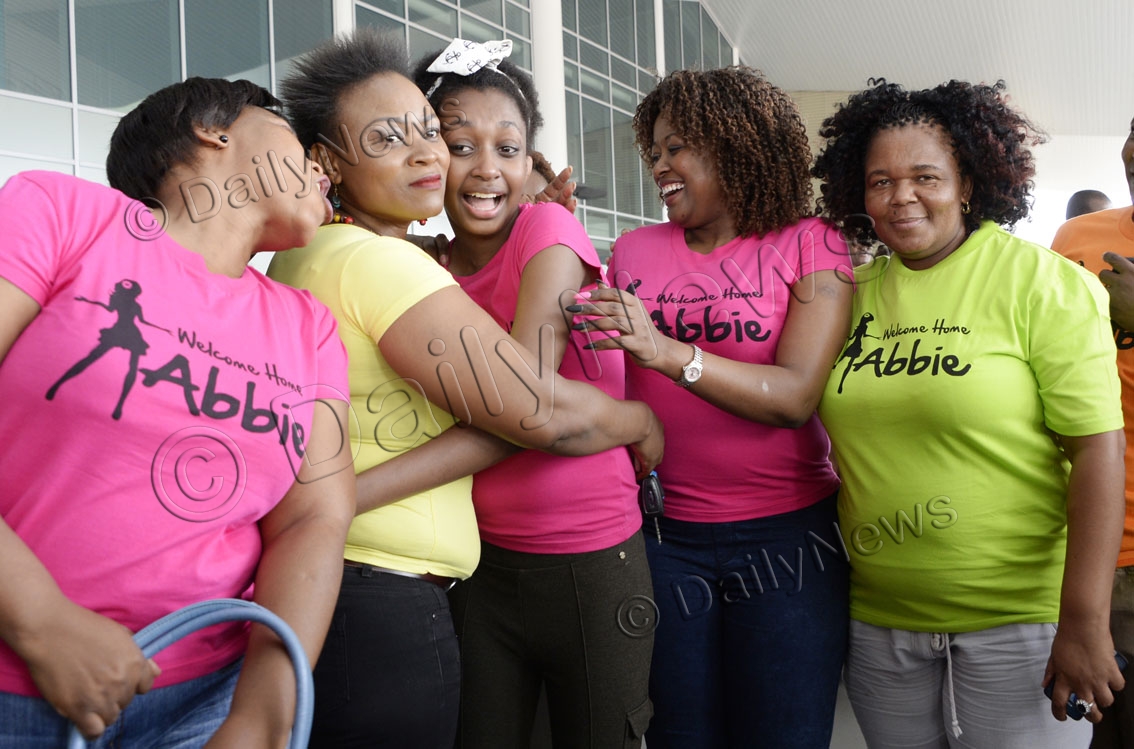
Botswana's moral conscious as a nation stood with Abian 'Abie' Ntshabele, a 14-year-old girl from Mochudi.
Abie, diagnosed in early 2014 with metastatic immature teratoma, a rare form of ovarian cancer, underwent surgical operation and further treatment in the United Kingdom, after a touching public appeal managed to raise over P1 million towards her medical bills.
Later in the year she returned home, still in need of further care, but her health having progressed beyond the odds.
On Friday, 13 November, a truck carrying over 100 Matsha College students was involved in a tragic accident near Dutlwe, a village nestled between Motokwe and Takatokwane along the road to Letlhakeng in Kweneng West.
The heart-rending accident killed seven students on the day, the eighth victim dying a month later at the hospital.
As the nation reeled in shock at the loss of young lives, the government and ordinary citizens united in ensuring that the deceased received dignified burials, and the surviving students had access to medical care as well as material and emotional support.
Those were some of the highlights of 2015, and beyond the headlines lay the ordinary men and women who on a day- to-day basis worked hard to make Botswana a better place to live.
It was a year Batswana lived on through their daily grind, expressing political differences where need be; yet these proving subordinate to a common national identity expressed in our collective prayers for Abie, in solidarity with the Matsha families, in supporting the Zebras, Isaak Makwala or Nijel Amos.
Batswana bid 2015 farewell a united and proud nation. Ends
Source : BOPA
Author : Pako Lebanna
Location : Gaborone
Event : The year that was
Date : 29 Dec 2015
Related News

04 Jun 2026
04 Jun 2026
SADC Fortifies Region Anti-Money Laundering
04 Jun 2026
Calls Mount To Phase Out Lead Ammunition
04 Jun 2026