Mogae meets youth

22 Sep 2015
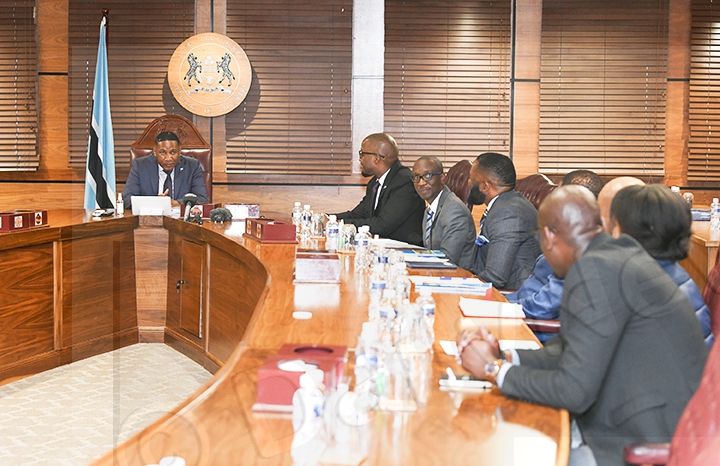
Youth engagement is key to building young people’s leadership and accountability in AIDS development post 2015. Botswana's third president, Dr Festus Mogae, echoed the sentiments at a youth dialogue between him and youth leaders.
The meeting was meant to engage with the Champions for AIDS free Generation in Africa, which Dr Mogae chairs. He said 65 per cent of the African population was under 35 years and statistics had shown that they were the most affected and infected with HIV/AIDS, hence the need to engage with them on how best to tackle the epidemic
“The young, educated and upcoming leaders of tomorrow have become involved in risky behavior even though statistics show that sub-Saharan African countries are the most affected,” he said.
The Champions for an AIDS free Generation is a group of former presidents and influential leaders committed to an AIDS free generation.
Individually and collectively, the champions support regional leaders towards ending the AIDS epidemic as a public health threat.
Dr Mogae said the champions were concerned that progress was fragile and that their hopes for an AIDS free generation might also be jeopardised by the threat of inaction and unsustainable development.
“During the high level coordinating committee held in April 2015 in South Africa, we defined and signed a declaration that calls for action on achieving steeper declines in new HIV infections, focus on adolescent girls and women, reduce external dependency through a common continental approach and forging stronger partnerships for the urgent scale up of action,” he said.
He said the purpose of the dialogue with the youth was to have increased understanding on programme delivery successes and challenges faced by youth in the AIDS response.
Speaking on the role of parents, Dr Mogae said, “most parents are always looking to do the right thing but in the wrong way and children should bear that in mind”.
He said parents needed to understand that times had change and they should start doing things differently to achieve the desired results.
He indicated that culture was known to be conservative but things needed to change and parents should talk to their children about issues of sex.
The issues that the youth raised touched on most aspects of HIV/AIDS.
One of the young people, Mr Phenyo Moroka, said “alot of focus has been placed on discouraging inter-generational relationships neglecting the root causes of this problem,” he said, adding that young people, especially girls, were under immense pressure to portray themselves at their best all times due to pop culture influences and social media.
He also said there was need to engage youth role models in promoting behaviour change.
“Regardless of how the message is framed and delivered, it is of very little impact and significance to young people if it is not delivered by someone seen as a role model,” he said. Ends
Source : BOPA
Author : Omphile Ntakhwana
Location : Gaborone
Event : Meeting
Date : 22 Sep 2015
Related News
09 Jun 2026

09 Jun 2026
SARS cautions foreign motorists against scammers

09 Jun 2026
Labour agreement to strengthen workplace harmony
09 Jun 2026
Motsamai hails Werda for role in FMD fight
09 Jun 2026