Government ups literacy drive
15 Sep 2015
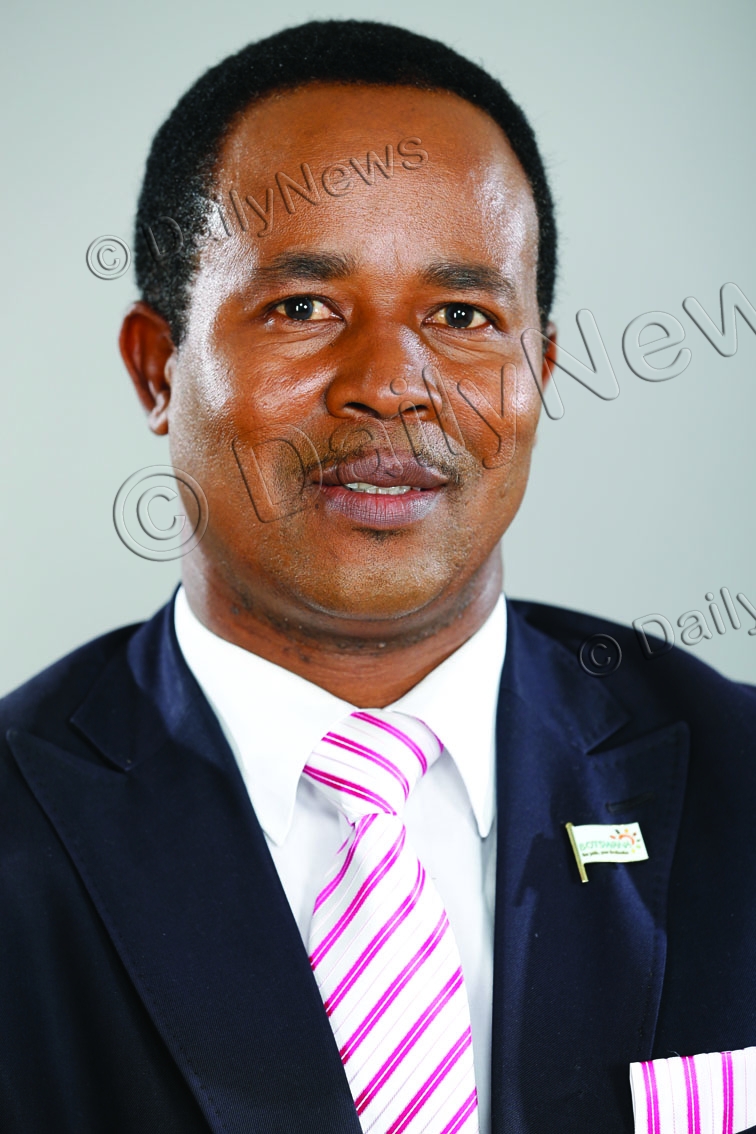
Three per cent of children in Botswana never experience school at all while 10 per cent never get around to completing their primary education. This was shared by Assistant Minister of Education and Skills Development, Mr Moiseraele Goya at this year’s commemoration of world literacy day.
‘‘These children,’’ he said ‘‘are herd-boys, some with disabilities, and others in remote and mobile communities as well as children of cultural and religious groups whose practices often clash with school culture.’’
“As a nation, we need to scale up and accelerate responses with a special attention to these marginalised children,” he said.
The minister acknowledged that learner performance results are declining, something which has raised a concern for the need to shift focus from access alone to access and quality.
Regarding literacy, the minister noted that Botswana has an 88.6 per cent literacy rate noting that the 11.4 per cent illiteracy translates to 230, 839 illiterate Batswana. Through the Skills Development and Training programme (SDT), a total of 4 344 learners have been trained in different trades and indigenous knowledge areas.
Globally, literacy rate has increased in different countries around the world during the period 2000- 2014, and the global adult literacy rate increased from 82 per cent to 84 per cent.
“Locally, Botswana’s literacy grew from 68.9 per cent in 1993 to 81.2 per cent in 2003, and in 2014 it stood at 88.6 per cent maintaining a higher rate among women than men,” he said.
When reflecting on the day, he noted that it is a day set aside to take stock of the milestones achieved worldwide by various member states in fighting literacy amongst their citizens.
“During the past decade, the world set itself major development targets, most of which culminated in or around the year 2015 such Millennium Development Goals (MDGs), United Nations Literacy Decade and Vision 2016,” he highlighted.
He went on to say that governments, civil society, Non-Governmental Organizations reaffirmed their commitments to achieving milestones on education and literacy for children, youth and adults by 2015.
“However most of these milestones, as observed and pronounced by UNICEF and UNESCO Institute for statistics are broken promises since the set targets have not yet been achieved as intended, both at global and country levels,” he noted.
Botswana is no exception despite progress amidst challenging budgetary situations. Regional education director, Mr Sonny Mooketsi explained that the underlying mandate of Out of School Education and Training (OSET) is to reach those who have not been reached by the mainstream basic education system.
Set up in 1973, OSET also provides skills training in home economics such as nutrition and dress making largely targeting rural and urban women from the poor environments.
Mr Mooketsi explained that the programme was restructured following the revised National Policy on Education of 1994 to expand and transform the National Literacy Programme into three programme. The theme for the year was “Literacy and the Post-2015 agenda.” Ends
Source : BOPA
Author : Ludo Chube
Location : Kasane
Event : World Literacy Day
Date : 15 Sep 2015
Related News

02 Jul 2026