


Assistant minister admits to overtime challenges
08 Mar 2015
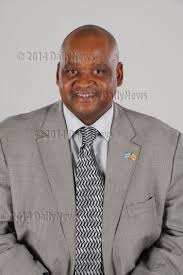
The Asistant Minister for Presidential Affairs and Public Administration, Mr Phillip Makgalemele, says government is facing problems of management of overtime due to challenges related to implementation of the Public Service Act of 2008.
Speaking in Parliament on March 6, he explained that the act had ushered in some dynamics within the work environment that were not experienced under the old Public Service Act, (CAP 26.1).
He said overtime payment used to be selective and was paid to classified groups of the civil service, but that changed when the national labour laws were amended to align them with International Labour Organisations (ILO) Conventions, ratified by government in 1997.
“Commuted overtime allowance was also paid to selected groups of civil servants who were deemed to be working excessive hours,” Mr Makgalemele said, in response to a Parliamentary question.
Mr Makgalemele said overtime was low during the period of the old Public Service Act because understanding then was that a public officer’s entire time was placed at government’s disposal.
“The Public Service Act, CAP 26.1 did not define a permanent and pensionable civil servant as an employee, nor did it define government as an employer, for this category of civil servants. As such this category was not covered by the provisions of the International Labour Organisation’s Conventions on rest periods and paid public holidays. It was only the permanent and non-pensionable employees, referred to as industrial employees, who enjoyed protection of these Conventions because they were referred to as employees,” Mr Makgalemele said.
He said ratification of ILO Conventions in December 1997, and the subsequent amendment of labour laws, including the Public Service Act, introduced unionisation of the public service. He said this led to establishment of bargaining structures and payment of overtime for work done outside working hours as well as work done during rest periods or paid public holidays.
“Every public service employee became eligible for payment of overtime. There has been no provision of a cut-off point in terms of eligibility for payment of such pay,” Mr Makgalemele explained.
He said the situation where all public service employees are eligible for payment of overtime has a serious impact on the wage bill.He also said reluctance by most public employees to opt for days-off rather than overtime payment has compounded this issue.“The other major challenge is lack of proper supervision from management and failure to enforce overtime payment guidelines as issued by the employer,” he said.
He also said some service require to be carried out over weekends, which results with more payment of overtime to public sector employees.
Selebi Phikwe West MP, Mr Dithapelo Keorapetse had asked whether the minister was aware of challenges with management of overtime allowance for civil servants.ENDS
Source : BOPA
Author : BOPA
Location : GABORONE
Event : Parliament
Date : 08 Mar 2015
Related News

25 Aug 2026
Forensic audit generates 90 priority actions

25 Aug 2026