


Vaccinate every girl child8232 - ministry
23 Feb 2015
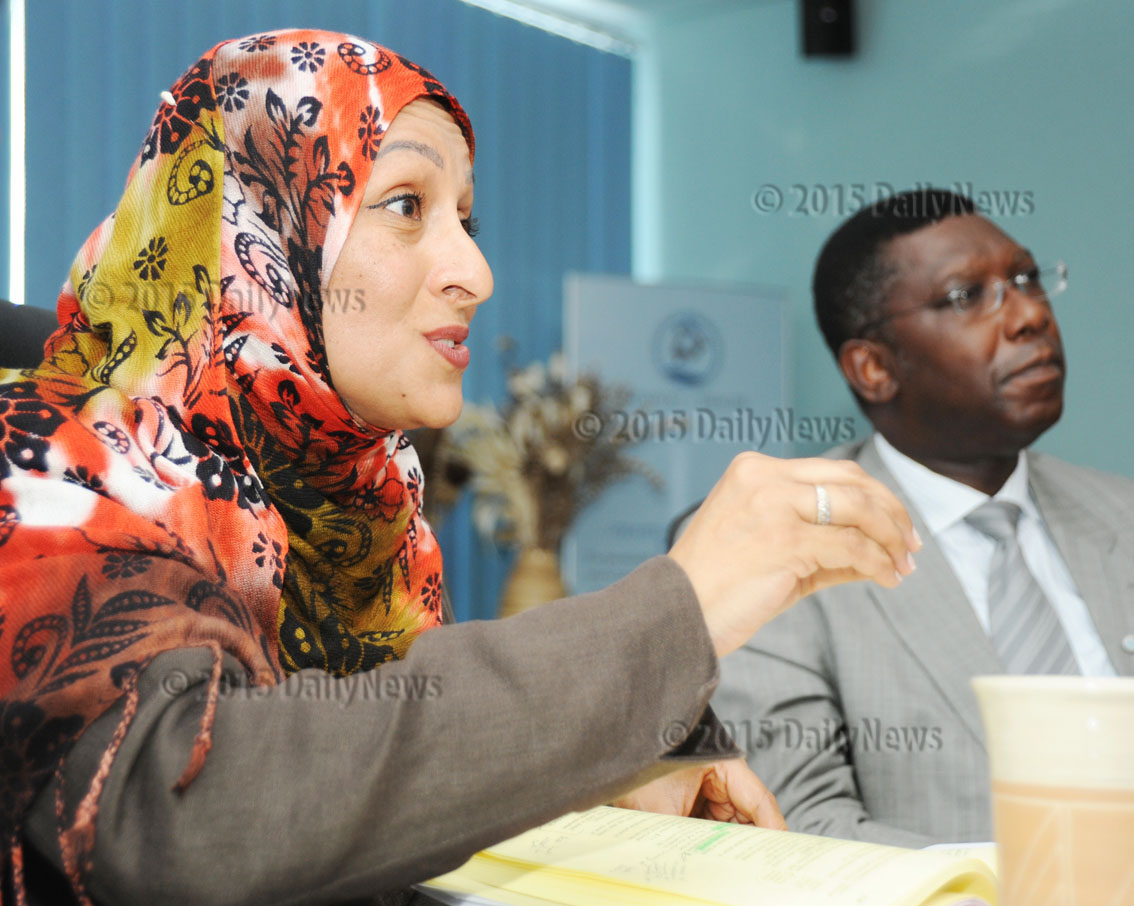
Every girl child between the ages of 9-13 years should be vaccinated against the Human Papilloma Virus (HPV) when the national rollout campaign kicks off on February 23-27.
Addressing the media on Thursday, February 20, the acting permanent secretary in the Ministry of Health (MoH), Ms Shenaaz El-Halabi said health was a personal responsibility hence the need to jealously protect the good public health practice.
Ms El-Halabi said every girl child should be protected, adding that the HPV vaccine prevents infection from HPV types which are responsible for 70 per cent of cervical cancer worldwide.
She said cervical cancer was a public health priority in Botswana particularly that it leads in cancer related deaths among women in the country, adding that those commonly affected were aged between 30 and 49.
El-Halabi stated that the World Health Organization (WHO) estimates that if the current trends persisted, cervical cancer would increase to 20 per cent in women under the age of 65 and to 80 per cent in women of ages 65 and older by 2025.
Ms El-Halabi said the vaccine that arrived in the country two weeks back, also protects against types that cause anal and genital warts.
She said the vaccine has already been dispersed to every DHMT to be administered in all the primary schools and health facilities.
Girls of similar age not attending school should also get the vaccination from the nearest health facility, she said.
She stated that two doses of the HPV vaccine would be administered, saying the first dose would be at first contact and the second dose would be administered six months after the first dose.
Vaccinating the girls before they are sexually active provides an excellent opportunity to decrease the incident of cervical cancer over time, she said.
Me El- Halabi said in 2012, the ministry and the Department of Public Health developed the national cervical cancer prevention program (NCCPP) comprehensive strategy. Though the primary prevention was planned for 2017, the country worked very hard to be able to start sooner, she added.
The strategy, she added covers primary HPV vaccination, secondary screening and treatment of precancerous lesions through visual inspection with acetic acid (VIA), cryotherapy and Loop Electrosurgical Excision Procedure (LEEP) and tertiary (treatment of cancer and palliative care) components.
The acting permanent secretary noted that before the national roll-out two HPV demonstration exercises were conducted to assess the feasibility, acceptability, accessibility and cost effectiveness of both facility based and school based mode of delivery in selected demonstration sites.
Ms Halabi said during the Phase 1 demonstration exercise in 2013, approximately 2500 girls aged 9-13 years in standard 4, 5 and 6 in selected Primary schools in Molepolole village in the Kweneng East District were vaccinated.
She said the ministry achieved 73 per cent of the target group, while during the Phase 2 demonstration exercise, conducted in Kweneng West and Selibe Phikwe villages respectively, 97 per cent of the girls were vaccinated.
Ms El- Halabi thanked amongst others the government of the United States of America and UNICEF, Ministry of Education and Sillks development, World Bank, NACA and Merck for donating the HPV vaccine for the first demonstration in 2013, as well as for rolling out a cervical cancer screening and treatment service.
She also appealed to the public to work together in ensuring that the HPV vaccination national rollout becomes a success. ENDS
Source : BOPA
Author : Lesedi Chikumbudzi
Location : GABORONE
Event : Press conference
Date : 23 Feb 2015
Related News



01 May 2026