


Analysts expect budget to address job creation
01 Feb 2015
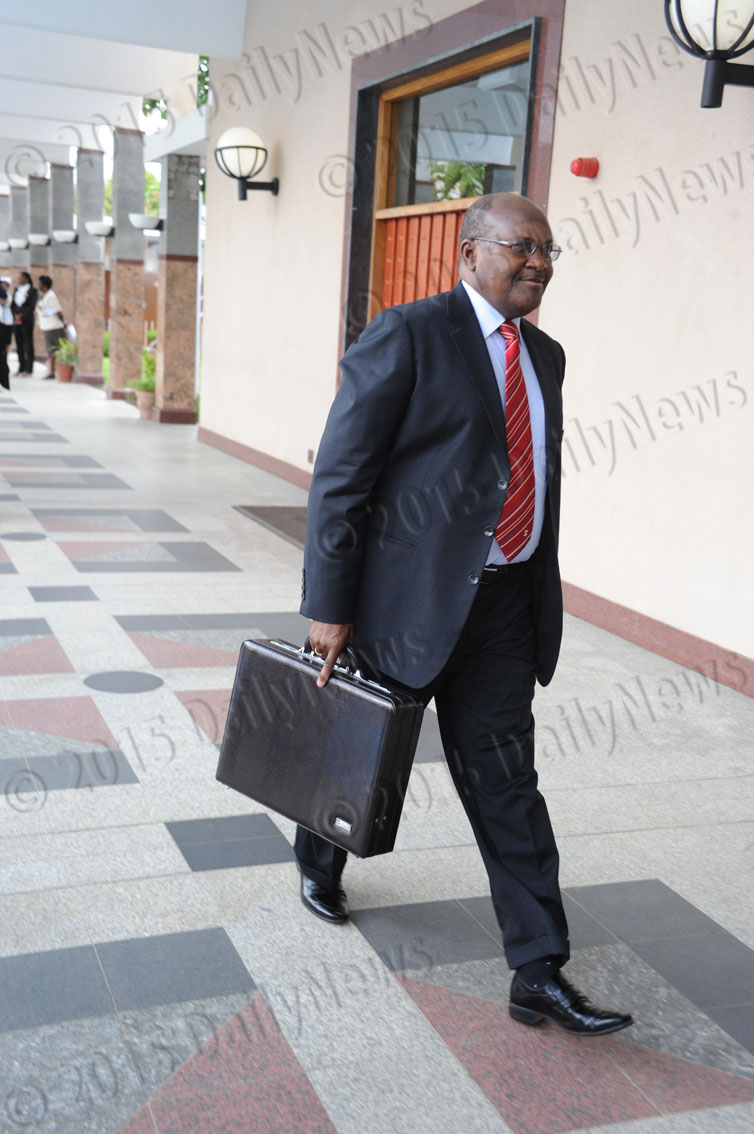
As the Minister of Finance and Development Planning, Mr Kenneth Matambo prepares to deliver the 2015/16 budget speech later today (February 2), there is an aura of expectation on new policy approaches to the challenges of youth unemployment and creation of jobs.
During last year’s address, the minister informed Parliament and the nation that there had been positive growth rates in some non-mining sectors which reflected success in economic diversification effort something which he said had potential to create jobs.
In an interview Senior Research Fellow and Macroeconomics specialist at Botswana Institute for Development Policy Analysis (BIDPA) Dr Grace Tabengwa said there was a need to understand the environment within which the budget unfolds.
“That is essentially the macroeconomic environment we are looking at, growth rate and the turnaround in the growth rate momentum. It is still lower than the pre-crisis level. Botswana wishes to have a growth rate of 7.5 percent to attain its objectives of National Development Plan (NDP 10) and Vision 2016 and the long term sustainable growth. This has not been happening since the financial and economic crisis,” she highlighted.
Dr Tabengwa said revenues have not returned to their pre-crisis levels, which she said brought constraints on the ability of government to generate income and generate significant growth.
“As the minister will be presenting the budget these are the guiding principles to what kind of a budget and what kind of national challenges are there in the economy.
One of the challenges is high unemployment amongst youth which should be given priority in the budget allocation and my expectation is that it will be considered in terms of some initiatives that will create jobs for young people.
When you talk about employment you are looking at the government’s effort to continue with support for enterprise development with programmes such as Citizen Entrepreneurial Development Agency (CEDA) and Local Enterprise Authority (LEA),” she said.
Dr Tabengwa said government must continue to support youth programmes such as the Internship programme so that young people can continue to be engaged. She said there should be private sector development support because with significant growth in the sector, there should be opportunities for job creation.
She said youth should not be looked in isolation of other strategies that government will be funding.
“I also expect the minister to promote diversification of the non-mining sector economy because if it grows it is also in a position to create employment.
The other challenge we have is poverty. We expect the minister to allocate funds to those initiatives that can alleviate poverty in our economy. In that respect we expect the budget to continue focusing on social welfare programmes, social safety nets and support for welfare in the economy,” she added.
Dr Tabengwa explained that the other challenge was the provision of water and electricity.
She said the minister must allocate funds for infrastructure development and also to address the problem which had been impacting negatively on the productivity of firms locally.
She said elements that were constraining competitiveness in the economy must be prioritized which were related to components such as human capital development, business reforms and lack of adequate skills. “There are fiscal reforms that we hope will be given priority so that government may have fiscal sustainability”.
Quizzed on her views and expectations for the 2015/16 budget, Senior Economist at Econsult Botswana Bogolo Kenewendo said job creation must remain top priority for the minister.
“In the last few years we have been talking about how large the wage bill was and that calls for an alternative to public service employment.
The sector is saturated and new employment cannot come out. We just hope to hear more push from government to say how the private sector can help in ensuring that jobs are created,” she added.
She said as captains of industry they have proposed solutions and they hope to hear how government will create an enabling environment for doing business.
Minister Matambo’s speech comes at a time when Parliament had approved a proposal to extend the National Development Plan (NDP 10) to March 2017. The strategic focus of the development policy in the NDP 10 was amongst others to accelerate diversification of economy with main focus areas including Human Resource development, infrastructure and utilities, agriculture and environment and governance.
Ms Kenewendo said already there was a sense of what the NDP 11 will carry and she expects the minister to cover these thematic areas.
“There is a target for full employment by 2016 and the target generally means an employment rate of about five percent.
We need job creation to grow to around eight to nine percent annually to ensure that we reach full employment level and at this moment job creation has been at about two percent and we need to up measure to get the private sector to employ more people and only by making the private sector grow, not only existing companies but to have new ones grow and create space for innovation,” she said.
The proposed ministerial recurrent budget for financial year 2014/15 was P33.32billion representing an increase of P2.79billion or 9.1 percent increase over the 2013/14 revised budget of P30.53billion, while the development budget for 2014/15was P12,24billion.
ENDS
Source : BOPA
Author : Baleseng Batlotleng
Location : GABORONE
Event : interview
Date : 01 Feb 2015
Related News


06 May 2026
Countries forge diplomatic relations
06 May 2026
Botswana responds to Polio threat
06 May 2026
Kanye Brigade attracts more students
06 May 2026