


Saleshando calls for land audit
25 Feb 2013
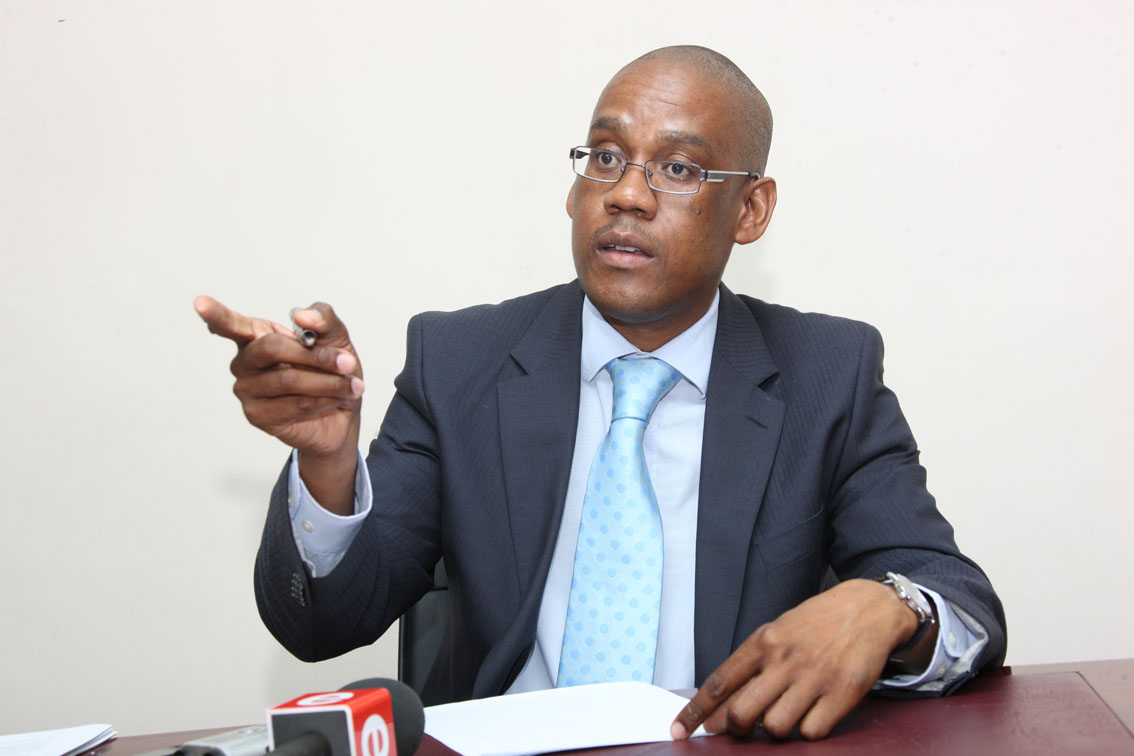
Gaborone Central MP has requested government to carry out a comprehensive land audit in all urban, peri-urban, freehold farms and tourism frontier settlements with the objective of establishing ownership, values, tenure and synergy between planed and actual use.
Presenting a motion on Friday, Mr Saleshando argued that land, as a limited resource, needed to be managed in a sensitive manner.
“That is because not only are we addressing the needs and requirements of present day generation but whatever decisions we take about the manner in which we manage land will also affect the future generation,” he said.
He said land ought not to be an issue of great concern, but was disappointed that there were major problems, which he said continued to trouble citizens such as the waiting period that one had to go through to access land.
In Francistown, he said in their last allocation in 2012, the oldest applicant had been on the waiting period for 14 years, while in Gaborone, last allocations were made in September 2012 with the oldest applicant having had waited for 12 years.
On tribal land, he said in the Mogoditshane Land Board they also had allocations that were made in October 2012 and the oldest applicant was on the waiting list for 20 years.
On SHHA locations; he said in Gaborone, the last applications were made in December 2009 while an applicant was on the waiting list for 28 years. Such long waiting periods, he said created problems arguing that dynamics had changed.
That, he said consequently led to desperation amongst the general populace hence the issues of emergence of squatter settlements in some parts of the country.
Also, he said there were demolitions in areas that had been in existence for more than 20 decades or more and was disappointed that there were still land authorities maintaining that there were no records of those allocations being made in the land boards. Further, the MP argued that while land appeared difficult to secure, there were clear signs of active land market where both developed and undeveloped land was traded on a daily basis.
For example, he said in a publication - The Advertiser dated February 15, 2013; 96 houses had been advertised for sale on tribal land, 175 undeveloped plots for sale on tribal land as well as 75 farms and fields for sale. Such figures, he said clearly indicated that there was some sort of informal market trading in land while no one could state reasons as to what drives the market.
“We need to understand these dynamics and the sellers and buyers pushing up the demand,” he said.
He also maintained that it was important to understand who owned what land in Botswana while the political leadership should also be concerned about how the people got the land. “If it emerges tomorrow that foreigners owned huge chunks of tribal land someone ought to take responsibility and it is only through an audit that we’ll be able to determine who holds or owns what and how they got it,” he said.
He argued that measures that were currently in place, such as the recently launched Land Administrative Procedures Capacity and System (LAPCAS) was basically about providing identity to all the plots and establishing to a limited extent, ownership.
Further, the MP argued that the magnitude of sale of undeveloped plots in Botswana showed that there must be huge chunks of land held for circulative purposes where people were holding land and not developing it and hoping to sell it at a later date when it has appreciated in value.
That, he said, created a false shortage of supply and consequently exaggerated levels of demand which will result in having high costs of land.
Also, he said rates in some countries were lower than cost of renting an office in Gaborone, adding that prices in Botswana were not competitive because rates were influenced by land being held for circulative purposes. ENDS
Source : BOPA
Author : BOPA
Location : Gaborone
Event : Parliament
Date : 25 Feb 2013
Related News

25 Aug 2026
Forensic audit generates 90 priority actions
25 Aug 2026