Irrigation to benefit Maunatlala
04 May 2014
The envisaged Maunatlala horticultural project is expected to yield high value horticultural and citrus production to supply the domestic market once it is in full swing.
Farmers will now be able to access and cultivate land that in the past seemed barren.
Although the improvement of irrigation schemes is part of government’s strategy to increase food production and security, to the ordinary farmer in this part of the country, it means a life changing undertaking.
They will no longer rely on monthly food baskets, but strive to become successful subsistence and gradually large scale commercial farmers.
Maunatlala Extension Area agricultural demonstrator, Mr Gotewamang Mokgethi explains in an interview that farmers in that area were duly compensated after at least 450 hectares of land was taken from them for the project.
So far a private investor has been allocated 250 hectares.
In addition, small entrepreneurs have been reserved 100 hectares of the fertile land while the remaining 100 hectares will take care of ancillary works such as processing plants and service centres.
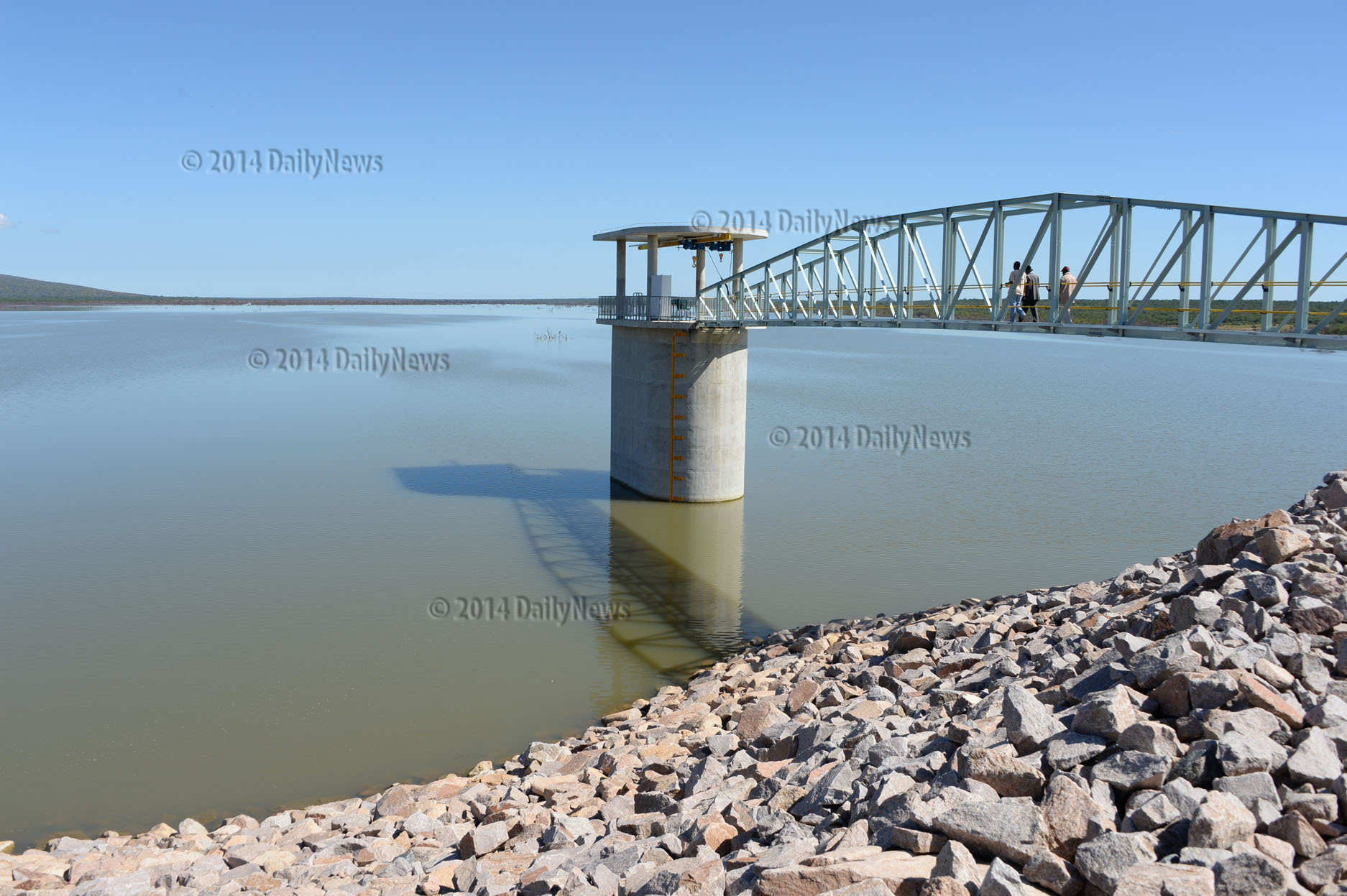
The Lotsane Irrigation Project sprawls on a 450ha of land drawing 5.5 million cubic metres of water per annum from Lotsane Dam.
The project is located just on the outskirts of Maunatlala and its primary objective is to establish viable commercial horticultural production.
Lotsane Dam is located 50Km east of Palapye along the Lotsane River near Maunatlala.
Lotsane River originates from the Serowe area and flows eastwards to its confluence with Limpopo.
The catchment area at the dam site is 6 760 square kilometres with annual inflow of 38 million cubic metres.
The main purpose of building the dam was to augment groundwater supplies to some 23 villages in the Tswapong foothills.
The aquifers in the region are mainly of fracture type rocks with a limited storage and are poorly recharged.
Maunatlala’s Kgosi Phoophoo Mapena explains that as local authorities they met with some officials from the Ministry of Agriculture (MoA) and the viability of the project was explained to them.
He says before construction started, they relied on tributaries from Lotsane River, besides Kopung Dam.
Feasibility studies were conducted before the construction of the dam, including the socio-economic aspect for the community.
There are also some developments which will benefit the community as a result of the dam and its activities.
Such include a network of a 175Km pipeline including two auxiliary pump stations, services reservoirs, break pressure tanks and telemetry equipment to serve the villages.
Maunatlala Village Development Committee deputy chairperson, Mr Oeme Mapena notes that the community was looking to fully utilise the dam and its related infrastructure.
He says that besides the irrigation component of the dam, they also intend to venture into other projects such as livestock production and poultry - but only when funds permit.
Ward councilor, Mr Samuel Morebudi, says the only shortcoming about the whole project are implementation delays.
He has already pleaded with the MoA to give feedback on progress.
In Mokokwana, Kgosi Goitsekgosi Balebetse explains that his subjects are also excited at the prospect of the project and opportunities thereof.
“Selelo sa go kgala ga metsi ke selo sa maloba,” (the outcry about shortage of water is a thing of the past) is all he can say in an interview at the main kgotla.
He advises his subjects to consider venturing into small scale farming and is upbeat that a lot of people in Mokokwana are into backyard gardening. It is hoped that conjunctive operation with existing groundwater boreholes will enable surface water yield to be significantly increased as the reservoir reliability criterion is relaxed, but with an implicit increase in deficit events, which is covered by groundwater use. Ends
Source : BOPA
Author : Baleseng Batlotleng
Location : MAUNATLALA
Event : Interview
Date : 04 May 2014
Related News
04 Aug 2026



03 Aug 2026
De Beers output surges in 2026 first-half

03 Aug 2026