


Global Sanitation Crisis Requires Urgent Investment- World Bank
17 Mar 2026
Experts from the World Bank have warned that the global sanitation crisis continues to threaten public health, economic development and education, particularly in developing regions.
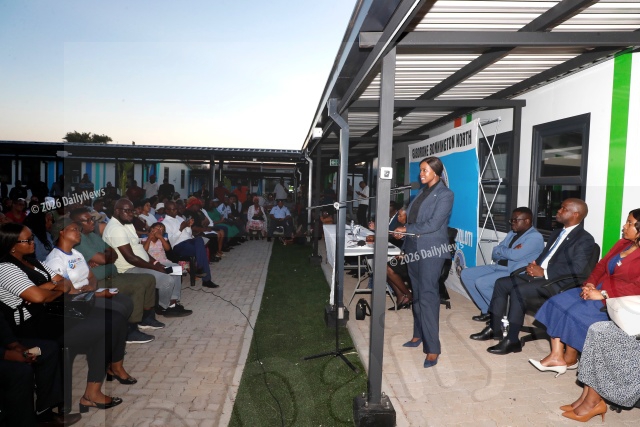
Speaking at the Sanitation Stakeholder Forum in Gaborone, World Bank representative, Mr Miguel Vargas-Ramirez, highlighted the urgent need for increased investment and coordinated planning to meet global targets under the United Nations Sustainable Development Goals.
Mr Vargas-Ramirez said that according to the latest estimates, about 3.4 billion people worldwide lacked access to safe sanitation services, placing millions at risk of disease and poverty.
He noted that the crisis was especially severe in low-income countries, where only about eight per cent of wastewater was properly treated, compared with roughly 70 per cent in high-income countries.
Mr Vargas-Ramirez said achieving sanitation targeted under Sustainable Development Goal 6.2, which aimed to ensure access to adequate sanitation and hygiene for all, would require significant financial resources.
“Current estimates suggest that around 140 billion US dollars per year is needed globally, roughly six times the current level of investment. In sub-Saharan Africa, funding would need to increase by more than twenty times current levels,” he said.
Poor sanitation is directly linked to the spread of infectious diseases such as cholera, typhoid fever and parasitic infections.
Health researchers estimate that around 829 000 people die each year due to inadequate water, sanitation and hygiene services.
Mr Vargas-Ramirez pointed out that children were among the most vulnerable, as frequent illness caused by poor sanitation could prevent them from absorbing essential nutrients and might affect brain development during critical growth years.
He added that sanitation challenges also affected school attendance, particularly for girls.
“In many communities, the lack of clean and private sanitation facilities makes it difficult for students, especially during menstruation, to attend school regularly,” he said.
Improving sanitation infrastructure can help close education gaps, increase school attendance and improve long-term learning outcomes.
Beyond health and education, sanitation investment can also contribute to economic growth by creating jobs in construction, sanitation services and maintenance.
“It also generates indirect employment in manufacturing materials such as pipes and toilets, as well as in sectors that depend on clean environments, including tourism, fisheries and agriculture,” he said.
Mr Vargas-Ramirez therefore called for government leadership, coordination agencies and partnerships with the private sector to finance and operate services in sanitation.
Meanwhile, the Department of Water and Sanitation director, Mr Stanley Semetsa, called for the elimination of open defecation in Botswana.
Mr Semetsa said that despite progress made in expanding sanitation services, open defecation remained a concern in some areas.
“It is our responsibility to make sure we eradicate open defecation,” he said.
He emphasised that sanitation solutions must focus not only on infrastructure development but also on proper operation and maintenance to ensure long-term functionality and environmental protection.
Mr Semetsa added that sanitation services must also reach remote areas such as the Central Kalahari Game Reserve, where infrastructure and service delivery remain challenging.
He said cultural practices and local preferences should also be considered when designing sanitation technologies to ensure that the solutions adopted are both appropriate and sustainable.ENDS
Source : BOPA
Author : Lesedi Thatayamodimo
Location : Gaborone
Event : Forum
Date : 17 Mar 2026
Related News



10 Oct 2026
Feature Reliving the Long March 90 years on


09 Oct 2026