Navigating the Use of Kgaba in Tsabong
16 Mar 2026
In the heart of the Kgalagadi District, a deep-rooted tension exists between the sterile corridors of Tsabong Primary Hospital and the ancient wisdom of local herbalists.
At the centre of the dialogue is kgaba, some ancient traditional medicine used by expectant mothers to facilitate labour. While elders view the remedy as a sacred tool for ensuring successful delivery, medical professionals are increasingly vocal about the life-threatening clinical risks associated with its use.
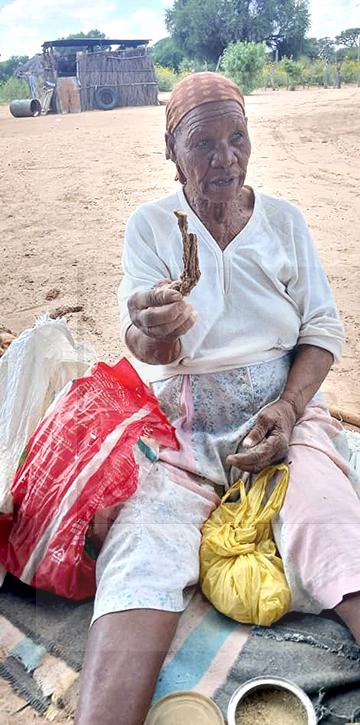
In an interview, Ms Mosadiwatsela Khuruthu, a 94-year-old local herbalist, who hails from Maleshe, explains that the use of kgaba is a generational practice passed down from her parents to help women, who are having difficulties delivering or those who are overdue.
She states that the medicine is often used to ‘cleanse bad luck’, as it is widely believed that a prolonged labour is frequently the result of a curse placed upon the mother by someone close to her.
Ms Khuruthu insists that the medicine eases the labour process so that the delivery does not take long. She cites a specific instance where a woman who was nearly 10 months pregnant and scheduled for surgery delivered the same day after being assisted with kgaba.
This success is viewed by many as evidence of the medicine’s power to bypass the need for clinical intervention when spiritual or physical barriers to birth are present. When addressing concerns about safety, she maintains that while complications can occur if people use the medicine for the wrong reasons, or when they are not yet due, it remains safe if used properly and at the right time.
However, the medical perspective from Tsabong Primary Hospital paints a much more precarious picture. Midwives, Ms Nelly Maruru and Ms Maria Kerumotswe report that they estimate that two in five women in the district use kgaba at the onset of labour.
While tradition prizes the speed of delivery, these midwives warn that the results in precipitated labour, can compress a standard 16-to-18-hour labour for a first-time mother into just three hours.
This rapid acceleration creates extreme physical stress, leading to hypercontraction of the uterus and uterine rupture. Such conditions often result in profuse bleeding post-delivery, which significantly increases the risk of maternal death.
The impact on the unborn child is equally concerning to clinicians. While kgaba does not appear to affect long-term fetal development, the intense hyper-contractility during labour can cause acute fetal distress or even fetal death.
Compounding these physical risks, Ms Maruru states the challenge of under-reporting. Many patients are hesitant to disclose their use of traditional medicine to nurses and doctors, often only admitting to it when they are overwhelmed by a critical emergency.
This secrecy prevents the medical team from preparing for complications and makes it difficult to control bleeding or manage the hazardous interactions between kgaba and modern labour-induction medications, Ms Mruru said.
In response to these challenges, the District Health Management Team has been working to bridge the gap through health education at kgotla meetings and workshops for traditional doctors.
The primary message from these midwives is one of collective responsibility, emphasising that since post-delivery bleeding is a leading cause of maternal death, it is vital for health workers, community leaders, and elders to work together to protect the lives of expectant mothers. BOPA
Source : BOPA
Author : Naomi Leepile
Location : Maleshe
Event : Interview
Date : 16 Mar 2026
Related News
12 Oct 2026


10 Oct 2026