


Feeding programme reaches over 500 00 learners
02 Mar 2026
The National School Feeding programme has reached 580 214 learners across primary and secondary school throughout the country in 2025.
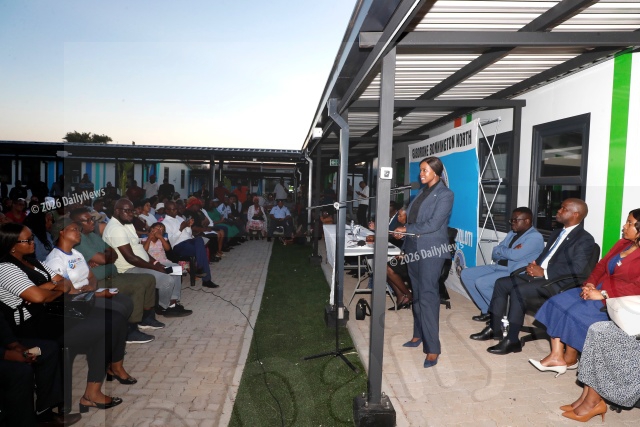
This was revealed by Minister of Child Welfare and Basic Education, Ms Nono Kgafela-Mokoka during the annual 11thAfrican Day of School Feeding (ADSF) forum on Saturday.
For the 2026 fiscal year, she said, the projected allocation for the national school feeding programme was P1.63 billion, comprising P1 billion for primary schools and P613 million for secondary schools.
This, she said cemented that access to school meals remained universal and non-discriminatory by ensuring that all eligible learners within the public schools benefited from the programme.
“The coverage achieved reflects Botswana’s continued commitment to equity, inclusion and universal access to education support services,” she said
The minister acknowledged that the school feeding in Botswana had evolved into a structured public investment platform that simultaneously advanced human capital development, food system transformation, economic resilience and Botswana remained committed to collaboration with African Union member states in strengthening sustainable, resilient and inclusive homegrown school feeding systems across the continent.
She highlighted that a structured inter-ministerial governance framework was strengthened and local procurement frameworks were expanded to prioritise domestic producers and support smallholder participation.
“Food safety standards and inspection regimes were reinforced and phased upgrading of kitchen infrastructure and wash facilities was initiated in priority schools. Monitoring, reporting and accountability mechanisms were strengthened to improve programme oversight and value for money,” she said.
For his part, South African Development Community (SADC) Senior Nutrition Officer, Mr Raymond Chikomba, who was speaking on behalf of the SADC Executive Secretary, said SADC has joined the global call to improve and expand school meals to reach the most vulnerable children by becoming a member of the School Meals Coalition in 2025.
As of last year, he said 12 SADC countries had joined the school meals coalition. He said SADC had improved national school meals programmes by also developing school meals guidelines as well as a school health and nutrition toolkit that was useful in guiding member states.
Mr Chikomba pointed out that across Africa, many children still struggled with preventable barriers to learning, which were, malnutrition, inadequate Water Sanitation and Hygiene (WASH) services, micronutrient deficiencies, and lack of safe drinking water.
“These challenges undermine cognitive performance, increase absenteeism and reduce academic outcomes. Evidence, including from the SADC School Health and Nutrition Toolkit, consistently shows that combining nutritious school meals with strong WASH interventions boosts enrolment, attendance, gender equality and learning outcomes,” he said.
He added that when linked with robust WASH systems, absenteeism could drop by more than half, which demonstrated how school feeding drives Agenda 2063’s goals of inclusive and sustainable development. In his welcoming remarks, Assistant Minister of Child Welfare and Basic Education, Mr Justin Hunyepa stressed that across land, Africa produced nutritious food, which should also find a way towards the children’s development.
“Nutritious food is more than supporting the economy and community development. It includes school enrolment, attendance, consultation, and learning outcomes. A hungry child cannot protect his education. A healthy child can dream, can innovate and transform Africa,” he said.
He further said the 11th ADSF teachings should be remembered as results to invest in the strategic continental collaboration.
Sharing the event objectives, Head of Division, AUC Education Science Technology and Innovation Department, Ms Sophia Ashipala emphasised that children were motivated to attend school if there was school feeding.
However, she said the expected outcomes for the forum, amongst others was to have a shared continental understanding of integrated school feeding approaches, increased stakeholder engagement and investment commitments and have strengthened home-grown school feeding policy and implementation frameworks. ENDS
Source : BOPA
Author : Thokozani Matiha
Location : Tlokweng
Event : Africa Day of School Feeding
Date : 02 Mar 2026
Related News


10 Oct 2026
Feature Reliving the Long March 90 years on


09 Oct 2026