Residents Raise Mixed Views On Constitutional Court
24 Feb 2026
Kang residents have expressed mixed reactions to government’s proposal to establish a Constitutional Court, with some welcoming the move as a long-overdue step toward equality and access to justice, and others urging authorities to prioritise constitutional reforms and economic recovery.
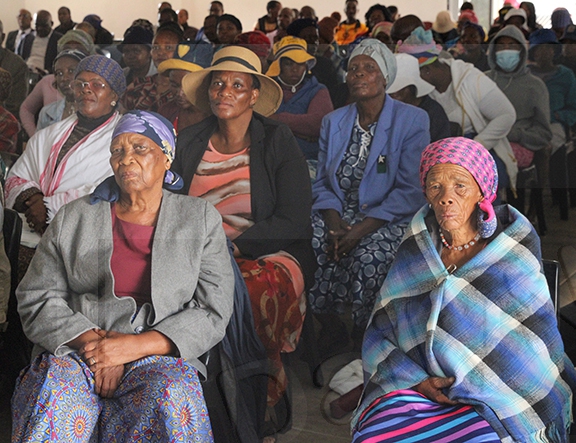
Residents expressed these sentiments at a Constitutional Court consultative kgotla meeting which was addressed by the Minister of Water and Human Settlement, Mr Onneetse Ramogapi in Kang on Monday.
Those in support said the court could help address long-standing concerns of marginalisation in the Kgalagadi region, where ethnic groups had historically been regarded and treated as minority communities.
They argued that locating the court in Kang would promote equitable distribution of national resources and decentralisation of key institutions, which were largely concentrated in the southern part of the country.
One resident, who supported the establishment of ConCourt was Mr Kemmone Makatane, who said such a move would strengthen citizens’ rights and enable communities to benefit more directly from natural resources in their areas.
“In countries where there is a Constitutional Court, citizens are able to benefit from their natural resources. This could create opportunities for tribes in mining areas to benefit from the mines in their districts, unlike the current situation where government benefits while local communities receive no royalties,” he said.
Mr Makatane added that such a court would provide recourse for citizens to hold government accountable for service delivery in sectors such as health, education and development.
Meanwhile, other residents called on government to halt the process and instead focus on amending the Constitution or strengthening the Court of Appeal pending a comprehensive constitutional review.
Mr Mautswe Mabe questioned how the proposed court would deal with sensitive issues such as intermarriages and capital punishment, while Mr Abel Phori challenged the urgency of the proposal in light of the country’s economic challenges.
He said the establishment of the court would be costly and could create further financial obligations through judges’ remuneration and administrative expenses.
Some residents also called for assurances that the ConCourt’s decisions would not conflict with Christian principles, particularly on issues such as same-sex marriage.
Responding to the concerns, Minister Ramogapi, said the proposal was not being rushed and had been the subject of consultations under previous administrations.
He noted that during the presidency of Dr Festus Mogae consultations were conducted to assess the need for a Constitutional Court, while the Dibotelo Commission established under former president Dr Mokgweetsi Masisi also found that there was a need for such a court, although it was not implemented.
Mr Ramogapi said the ConCourt would be particularly beneficial to communities in Kgalagadi, which he said had experienced marginalisation and discrimination.
He explained that a Constitutional Court would be the highest authority on constitutional matters, with its rulings being final, and its primary role would be to protect human rights and shield citizens from abuse of power.
Mr Ramogapi also mentioned that Botswana currently had no dedicated forum to address disputes such as alleged irregularities in general elections, a gap the proposed court would fill.
On suggestions to empower the Court of Appeal instead, he said many countries were moving toward establishing Constitutional Courts as specialised institutions for constitutional interpretation.
He dismissed allegations that government had already planned for this proposal, adding that, so far, no land had yet been identified and no funds secured for the project.
Mr Ramogapi noted that its establishment was not currently provided for under the National Development Plan and would only proceed if citizens supported the proposal.
On that note, he implored the residents to vote for the establishment of the ConCourt when the referendum process was undertaken.
For her part, Kgosi Basadi Seipone II expressed optimism that the proposed Constitutional Court would promote peace, unity and equal protection of the law across the country.
She said the timing of the initiative was appropriate, noting that the court would help emancipate many people by strengthening the protection of their constitutional rights.
Kgosi Seipone II emphasised that the Constitution required a specialised body to interpret and safeguard it, adding that the establishment of a Constitutional Court would ensure that dedicated experts were entrusted with handling constitutional matters.
She commended the government for taking the initiative, saying the court would be particularly beneficial to communities that had experienced marginalisation. BOPA
Source : BOPA
Author : Thuso Kgakatsi
Location : Kang
Event : Consultative meeting
Date : 24 Feb 2026
Related News

12 Oct 2026
12 Oct 2026