


Experts urge government to review subsidies and boost tax collection
17 Feb 2026
Now is the time for government to review subsidies and improve tax collection to boost revenue as the country grapples with a dwindling revenue base and youth unemployment.
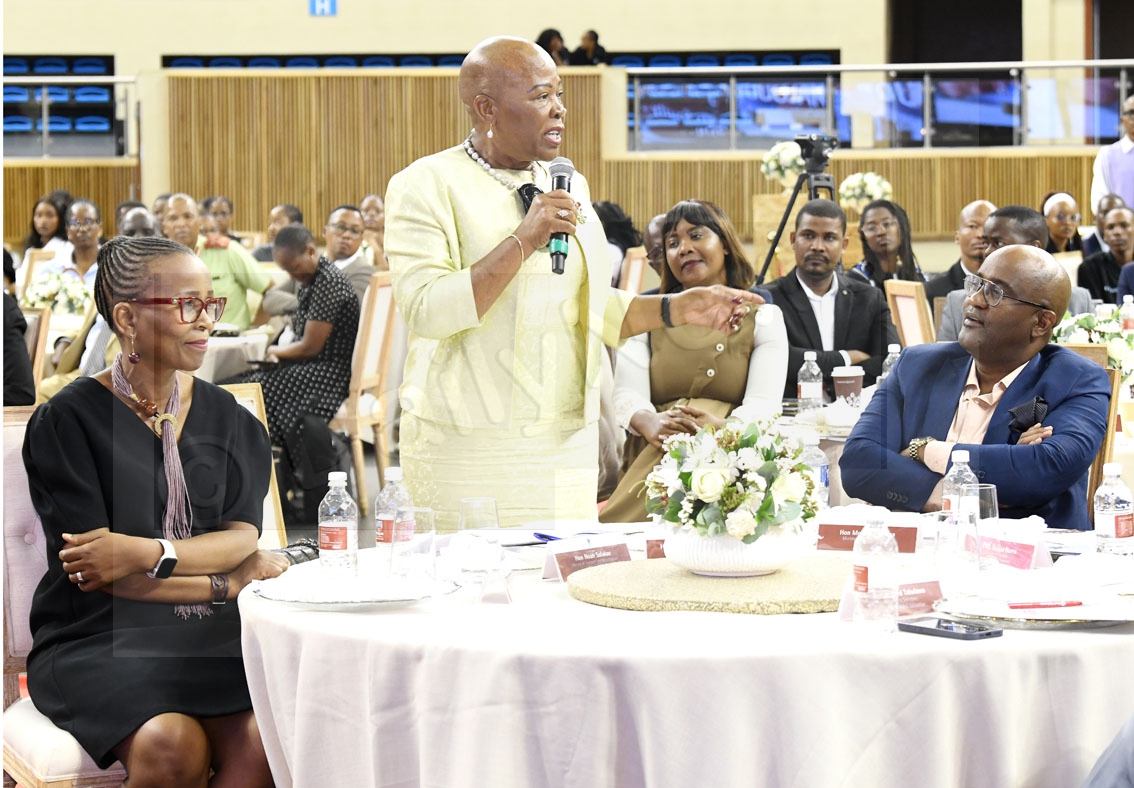
Experts at the University of Botswana (UB) Budget Dialogue reasoned that subsidies are not reaching intended beneficiaries, resulting in revenue losses.
They warned that increasing the debt ceiling could lead to higher interest rates, while advocating for investment in the creative sector to drive job creation and economic growth.
UB academic, Dr Jonah Tlhalefang pointed out that existing subsidies were missing the intended beneficiaries, hence should be reviewed to ensure targeted beneficiaries benefitted.
Taking the electricity subsidy as an instance, Dr Tlhalefang said it was intended to enable the poor access to electricity, but the underprivileged were not necessarily connected.
He said the subsidies were only serving as a revenue loss to the economy, and reviewing them could save government money.
Also, to increase revenue mix, the government should ensure efficiency in tax collection as well as reduce tax expenditure.
With regard to increasing the country’s debt ceiling, Dr Tlhalefang said, “adjusting the debt ceiling upwards is not a good thing, it is a surprise to the market. Such a move could lead to high interest rates, increasing the cost of borrowing.”
Before an increase, there is a need to address how the country reached the 40 per cent debt ceiling, and if the debt is under 60 per cent of the country’s GDP, it would be prudent to increase the ceiling with caution, Dr Tlhalefang said.
The Department of Visual and Performing Arts’, Professor Connie Rapoo, said the country was wrestling with the crisis of youth unemployment, and that the creative sector offered employment opportunities.
“And I want to say very confidently and broadly that the creative industry sector creates jobs better than any other economic industry,” she said, adding that there were several industries within the sector.
Therefore, intentional investment and policy framework in the sector could help reduce the burden of unemployment.
The Ministry of Higher Education permanent secretary, Professor Richard Tabulawa, said the 2026/27 National Budget was clear, as its focus was pivoting the country towards a diversified, export-driven, digitally enabled, and skills-rich economy.
“This pivot is informed by youth demographics, our competitiveness ambitions, and our national conscience,” said Prof Tabulawa.
He said that the country faced real fiscal pressure and diamonds had dwindled, a situation that called for bold choices for the country to invest strategically, modernise institutions, support innovation, and mobilise societal efforts for jobs, productivity and inclusive prosperity.
Minister of Transport and Infrastructure, Mr Noah Salakae said government was prioritising toll gates as another revenue source.
UB Chancellor, Ms Tebelolo Seretse stated that the issue of toll gates to expand government revenue sources had been mooted, but nothing had thus far been done. ENDS
Source : BOPA
Author : Bonang Masolotate
Location : Gaborone
Event : Budget Dialogue
Date : 17 Feb 2026
Related News


13 Oct 2026
Expo sparks regional leather expansion
12 Oct 2026
Partnership to boost vehicles maintenance
12 Oct 2026
Farmers urged to treat agriculture as a business
12 Oct 2026