


Botswana economic slowdown demands structural reforms
10 Feb 2026
Botswana’s economic slowdown is no longer just about diamonds. It is now a story of weak productivity, fragile private-sector growth and an urgent race to diversify before structural cracks widen further.
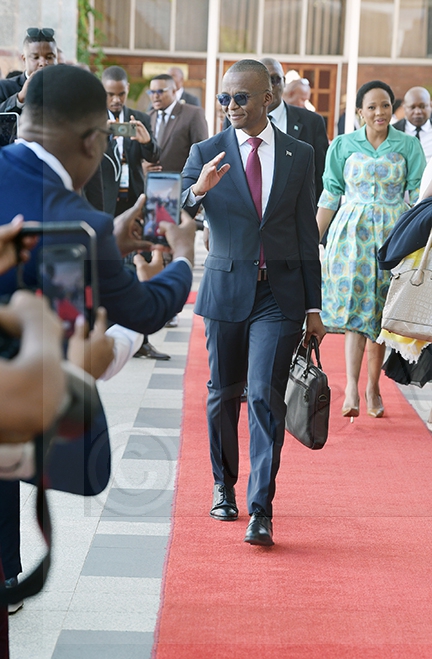
Presenting the 2026 Budget Speech on Monday, Finance Minister, Mr Ndaba Gaolathe painted a sobering picture of an economy that shrank by 2.8 per cent in 2024 and was expected to remain in negative territory in 2025 and the better part of 2026, with growth projected at minus 0.4 per cent.
While the downturn was triggered by a slump in diamond activity, the minister made it clear that the country’s deeper problem lied in the limited strength of its non-mining sectors.
Manufacturing, construction, transport and storage industries that should be absorbing shocks from mining volatility, he said, had instead slowed, weighed down by the country’s dependence on government spending financed by diamond revenues.
“Growth is rebounding to 3.1 per cent in 2026, but without structural reforms, the economy will continue operating below potential,” he said.
A major red flag, he said was the continued decline in Total Factor Productivity (TFP), a key measure of how efficiently labour and capital were used.
Minister Gaolathe stated that Botswana’s TFP fell to minus 1.0 per cent in 2024, reversing earlier modest gains. He said the decline signaled that businesses were producing less value from the same inputs, a trend linked to aging infrastructure, regulatory bottlenecks, weak skills alignment and slow private-sector expansion.
Also, he said poor infrastructure maintenance, in particular, was quietly eroding returns on investment, making it harder for firms to expand competitively.
However, he mentioned that government now would now scale back its direct footprint in the economy and push harder for private-sector-led growth under the Botswana Economic Transformation Programme (BETP).
He said planned interventions included regulatory streamlining, targeted skills development and improved value-chain productivity.
After a period of low inflation, he said price pressures were now resurfacing. He said inflation stood at 3.9 per cent in December 2025, up from 1.7 per cent a year earlier, driven by higher utility tariffs, fuel price adjustments and exchange rate changes that raised the cost of imports.
Nonetheless, he said inflation was expected to temporarily breach the upper limit of the Bank of Botswana’s three to six per cent target range in 2026 before easing later in the year.
Minister Gaolathe further stated that the central bank had already raised the Monetary Policy Rate to 3.5 per cent, signalling a cautious stance as it balanced price stability with weak economic growth.
While the financial sector remained stable, the minister said government was increasingly concerned about rising household indebtedness.
Therefore, he said government planned to promote a stronger savings culture and expand financial literacy programmes to reduce long-term vulnerability among citizens.
He added that the Financial Stability Council also flagged climate risks and uneven liquidity distribution in the financial system as emerging pressure points.
“Without faster diversification, improved productivity and a stronger private sector, future downturns in diamonds could have even sharper consequences,” he said.
The next phase of reform, the minister suggested, would determine whether Botswana’s economy regains momentum or remains stuck in a low-growth cycle. BOPA
Source : BOPA
Author : BOPA
Location : Gaborone
Event : Parliament
Date : 10 Feb 2026
Related News

13 Oct 2026
Expo sparks regional leather expansion

12 Oct 2026
Partnership to boost vehicles maintenance
12 Oct 2026
Farmers urged to treat agriculture as a business
12 Oct 2026