


Fiscal outlook downward as government tightens consolidation measures
10 Feb 2026
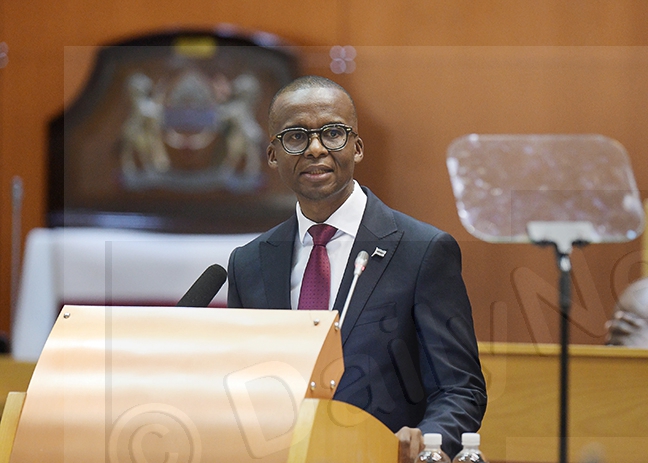
Vice President and Minister of Finance, Mr Ndaba Gaolathe has announced a downward revision of Botswana’s medium-term fiscal outlook, citing persistent global and domestic economic headwinds that continue to strain the country’s public finances.
Delivering the 2026 Budget Speech in Gaborone yesterday, Mr Gaolathe said the revision reflected the urgency of strengthening fiscal and external buffers while maintaining policy credibility in an increasingly challenging macro-fiscal environment.
“The macro-fiscal environment remains difficult, characterised by declining mineral revenues, rising expenditure pressures and growing demands for social and economic support,” he said, adding that those factors continued to place strain on the fiscal position.
Despite the pressures, Mr Gaolathe reaffirmed government’s commitment to a coordinated fiscal consolidation strategy aimed at restoring fiscal sustainability, rebuilding buffers and safeguarding macroeconomic stability.
He said key measures included tighter expenditure prioritisation, improved efficiency in public spending, strengthened domestic revenue mobilisation and accelerated reforms of state-owned enterprises (SOEs).
Mr Gaolathe further emphasised that consolidation efforts would be implemented in a balanced and growth-supportive manner, with essential social spending protected and critical investments preserved to support long-term economic transformation.
The minister warned that Botswana’s medium-term outlook was subject to significant macro-fiscal risks, both external and domestic.
Externally, he said, slower global growth, continued weakness in the diamond market, volatile commodity prices, heightened geopolitical tensions and climate-related shocks could prolong economic recovery.
“Such developments could widen fiscal and current account deficits and undermine efforts to rebuild buffers.”
Domestically, he said growth risks remain skewed to the downside, particularly if the diamond market fails to recover. While the non-diamond sector is expected to cushion the economy, Mr Gaolathe cautioned that its stabilising effect was limited.
He also highlighted the potential economic fallout from delays in containing the Foot and Mouth Disease (FMD) outbreak, which could lead to production losses, higher livestock mortality, reduced beef export receipts and threats to national food security.
In addition, he said the slower-than-anticipated implementation of the Botswana Economic Transformation Programme (BETP) could impede progress on diversification and the broader transformation agenda.
On the fiscal front, Mr Gaolathe said revenue risks were mounting as mineral earnings were projected to remain well below long-term averages, offering only modest upside.
“The persistent shortfall is widening fiscal gaps and intensifying financing pressures,” he said.
At the same time, Mr Gaolathe said expenditure risks remained elevated, with both recurrent and capital spending continuing to outpace revenue growth.
“Without credible consolidation, structural deficits are likely to persist, increasing reliance on borrowing,” he said, adding that as a result, debt vulnerabilities were becoming more pronounced.
While public debt remains within statutory limits, Mr Gaolathe warned that sustained fiscal slippage could place debt on a steeper trajectory, undermining sustainability and increasing exposure to future shocks.
He said additional risks identified included rising inflation pressures, climate-related disruptions, SOE fiscal risks, weak implementation of public-private partnership projects, supply-chain disruptions, cyber-security threats and volatility in food and energy prices.
To mitigate the risks, he said government planned to strengthen fiscal risk management, enhance policy coordination and accelerate economic diversification anchored on private-sector-led growth.
He said that advancing diversification, deepening private-sector participation and boosting productivity were central to building a more resilient, diversified and sustainable economy.
Mr Gaolathe said sustained medium-term growth would require faster implementation of economy-wide reforms across key sectors, given their potential to lift productivity and competitiveness.
He added that further expenditure measures, including containing the public wage bill, simplifying and better targeting social benefits and improving the governance and operational efficiency of SOEs, were necessary to deepen fiscal discipline.
“To secure long-term fiscal and economic sustainability for Botswana, the path ahead demands discipline, coordination and reform,” Mr Gaolathe said. BOPA
Source : BOPA
Author : BOPA
Location : Gaborone
Event : Parliament
Date : 10 Feb 2026
Related News

13 Oct 2026
Expo sparks regional leather expansion
12 Oct 2026
Partnership to boost vehicles maintenance
12 Oct 2026
Farmers urged to treat agriculture as a business
12 Oct 2026