

Dikhwaere - Rhythm of the countryside
13 Jan 2026
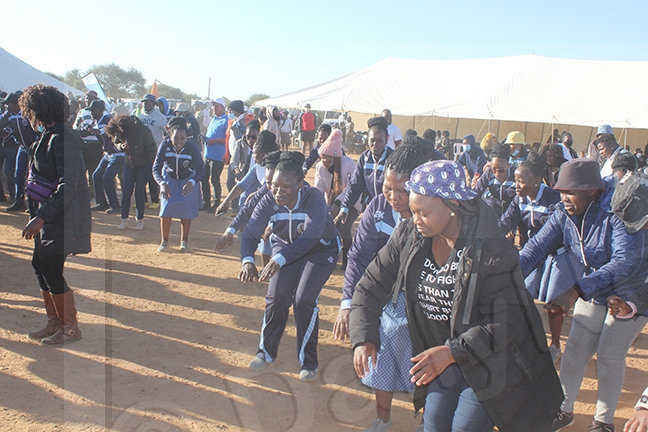
For the thousands congregated on a farming field along the Mochudi-Sikwane road, the rhythm of Dikhwaere, local ensemble Badiragatsi hosting Mokwepa Choir of Molepolole, beats any snow and rain-deer Christmas or major fireworks New Year’s experience elsewhere on the globe.
Every grain of sand they step over in the dusty patch, the cobblestones on the sides of the gravel pathways, the stench coming from dung odour dropped by passing livestock, just creates memories, and the residents of Kgatleng congregated would rather not be anywhere else in the world.
A staple festive season fare, particularly in the southern parts of the country, dikhwaere traditional music choirs bring delight to cultural enthusiasts over the holidays.Dikhwaere tunes and specially choreographed dance sequences were dished out by the two choirs immaculately dressed in their respective tunics.
“The original, and proper name for this type of music is Dikopelo,” Tswana traditional music authority and former Radio Botswana announcer, Mogatusi Kwapa explains.
“This evolved out of the youth of Kgatleng, creating entertainment for themselves in their farming lands and cattle posts. Dikoma (tribal regiment songs) were for the elders, the youth developed Dikopelo.”
Over time, the youth formed singing groups for their masimo (farming lands) to challenge others.
“From the late 1970s we started having the choirs identify themselves through the purchase of uniforms, and from being just a pass-time, the Dikopelo became a feature of the Christmas holiday period, first in Kgatleng, and then progressively adopted by the neighbouring districts,” Kwapa explains.
In 1985 Kwapa joined Radio Botswana and was handed over the Dipina Tsa Dikhwaere programme by the late Riecks Morake, who had over the years worked with the likes of Batho Molema in recording traditional Setswana music countrywide, for the Dipina Le Maboko programme and Radio Botswana signature tunes.
“I found that that Morake had recorded music from a few choirs from Bokaa and Dikwididi lands in Kgatleng, and another choir from Tlokweng. I undertook the task of recording more choirs over the period 1986 to 1988 and we managed to get a variety of choirs," Kwapa said.
"This also broadened interest from the rest of the country, as choirs organised themselves and wrote to us, with the hope to hear their music on national radio. We recorded choirs from Mochudi, Lentsweletau to as far afield as Tonota and Tobane.”
From the earlier songs recorded by Morake, Kwapa picked a song called Selemela by Ramatlhaku Choir from Dikwididi to be the signature tune for Dipina Tsa Dikhwaere.
“Iyo iyo Selemela, selemela… Banna re tsile kwano go opela, dumelang lotlhe dikhwaere…” the lyrics, later immortalised in popular culture by Mr Tagg’s modern remake, became an anthem of sorts.
“I picked the song because it spoke to how dikopelo originated. Selemela was a star that marked the seasons, such as the ploughing season, the time at masimo to congregate, and it proceeded with the invite to choirs that it is the time to sing,” Kwapa adds.
In 1990, Kwapa got involved with Rangers Marena of Artesia which were emerging as the country’s leading choir. He recalls how, having spoken to the Department of Culture and Registrar of Societies on how choirs could be assisted, he worked on Rangers having a constitution, and modernising their operations.
“I had inquired and got to realise that funding was possible from government if the choirs became organised as registered societies. I also advised that we orgnise the singing fields better, to fence the area where the choirs sing. In that regard Rangers became a pioneer and other choirs followed suit,” Kwapa recalls.
While both Kgatleng have been the genesis and stronghold of dikhwaere culture spanning decades, over the past festive season it was somewhat of a surprise to witness Molepolole’s Mokwepa have a slight edge over their Mochudi rivals Badiragatsi.
Isaiah Lejone, Mokwepa Choir Chairman revealed in an interview that their generation of Molepolole youth founded the choir in 2010 when the government started promoting artistic competitions.
And since, they have grown in leaps and bounds to the extent of Mokwepa winning the 2025 Ma48 Choir competition, against strong competition from others.
Originating from Kgatleng as Dikopelo, the sub-culture gained popularity countrywide as Dikhwaere, the Setswana interpretation of the English word ‘Choirs’ but in reference to the overall repertoire of music and dance this style encompases.
The structure of the Dikhwaere has grown to the extent of Super League choirs now charging an entrance fee and being overall more organised in their preparation for events.
Artists such as Dr Vom have taken the traditional Dikhwaere into modern popular music recorded format. Political party rallies and football supporters have also adopted the Dikhwaere influence, which indicates the national mainstream influence of this musical sub-culture.
“Political parties initially used chorale music, but over the years, noting the popularity of Dikopelo among Batswana, they switched to the Dikhwaere style. As for football supporters, it started with the very Kgatleng choirs attending Mochudi Centre Chiefs matches and singing to motivate their team. Supporters of other clubs and the national team, the Zebras followed suit,” Kwapa notes.
Back to the Kgatleng field, Badiragatsi Choir representative said their choir, founded on June 16, 2012 had also grown in stature, first competing in the lower category before being admitted to the Super League.
The huge crowd drawn to their field, and the following week as they travelled to Molepolole for the return fixture at the Mokwepa Grounds along the Lephephe road, bore testament to the popularity of Dikhwaere, the rhythm of the countryside. BOPA
Source : BOPA
Author : Pako Lebanna
Location : Gaborone
Event : Interview
Date : 13 Jan 2026
Related News


29 Jul 2026
Artefacts repatriation drive paramount

28 Jul 2026
From Scrap metal to Timeless art

28 Jul 2026
Initiative to celebrate young achievers
27 Jul 2026
Hyperrealism artist earns recognition

27 Jul 2026