


Association wants intersex surgeries abolished
09 Jul 2025
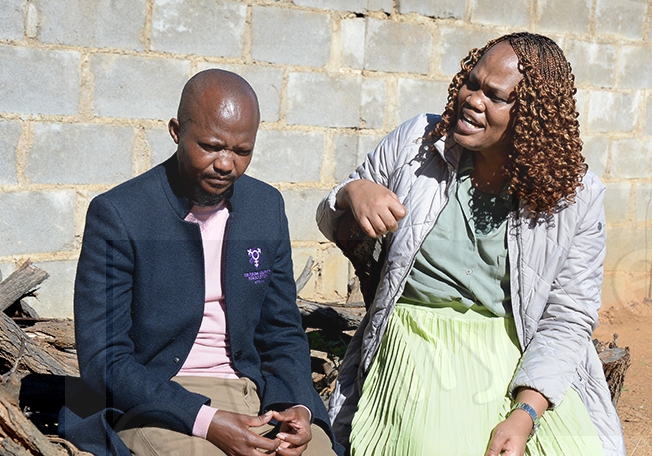
Rainbow Identity Association, a local advocacy group, is calling for an end to intersex surgeries performed on babies, describing them as non-essential.
The association’s project coordinator, Mr Kagiso Bannye said in an interview that the procedures were mostly not medically necessary, as they were performed based on a child’s genitals. He explained that a person’s sex was complex and could not be determined solely by visual inspection, as it involved hormones, chromosomes, and genitals. Mr Bannye said the sex assigned by a doctor was recorded on the child’s birth certificate, and could be difficult to change at a later stage if a need arose.
“The challenge in Botswana is that when a child is born, they are assigned either one (male) or two (female). We are saying that we intersex individuals belong to neither category; we should be assigned zero or three,” he said.
He stated that when an individuals’ sex identity differed from the one assigned at birth, the situation became more complex if such an individual’s other reproductive organ had been surgically removed.
“We are calling for an end to these operations,” he continued, noting that the association was currently running a campaign, ‘Hands off Our Genitals,’ which urges medical professionals to avoid making decisions solely based on genital anatomy.
Mr Bannye explained that parental consent for these operations often stemmed from misinformation by medical practitioners and societal pressure. He added that some surgeries resulted in medical complications, leading to some individuals having to frequent health facilities while others became recluse.
Furthermore, he highlighted that some intersex people faced challenges accessing facilities due to their national identity cards reflecting an opposite sex, adding that they were sometimes forced to undress to prove their sex. Also, he emphasised the need for societal efforts to foster acceptance of intersex people, adding that they were often subjected to derogatory names due to widespread ignorance. Despite their challenges, he said the National Registration Act was their lifeline, enabling individuals to change their sex designation on their identity documents.
Ms Mpho Mudendu, another project coordinator responsible for transgender issues, said intersex and transgender individuals were often perceived as gays or lesbians, which was inaccurate. She stated that their sexuality was not determined by sexual partner preference but rather by their biological makeup.
Due to the lack of a law explicitly recognising and protecting the rights of intersex people, the government attempted to introduce such protections, along with protections for people with disabilities, through a failed constitutional amendment last year. The amendment, which failed to pass, defined intersex as ‘a person born with any of several sex characteristics, including chromosome patterns, gonads, and genitals that do not fit typical binary notions of male or female bodies.’ According to the United Nations it is estimated that 1.7 per cent of the world population is born with intersex traits. ENDS
Source : BOPA
Author : Bonang Masolotate
Location : Gaborone
Event : Interview
Date : 09 Jul 2025
Related News
14 Oct 2026
Ramogapi tours Maun water project
14 Oct 2026
Mophuting pays tribute to Masire
14 Oct 2026
