


Uphold food safety standards - Modise
13 Jun 2025
Ministry of Health has raised alarm over the growing public health threat posed by the consumption of hazardous food, urging citizens to be more vigilant about what they eat and where it comes from.
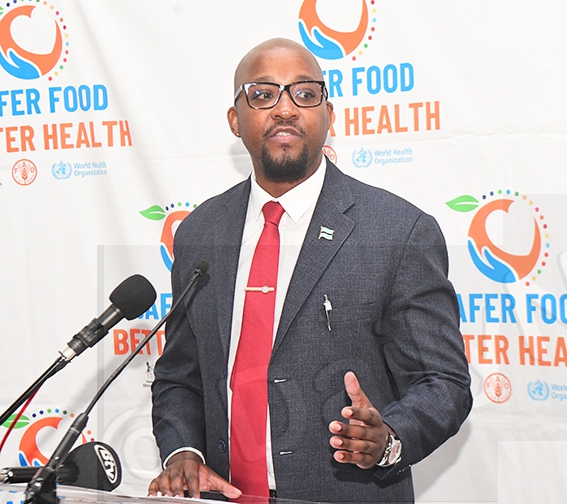
Speaking during the commemorating World Food Safety Day in Gaborone yesterday, Minister of Health, Dr Stephen Modise warned that consuming unsafe food could lead to severe health consequences, particularly for vulnerable groups such as children, pregnant women, the elderly and individuals with weakened immune systems.
“Food is meant to nourish and sustain life, but when contaminated, it becomes a silent threat, causing illnesses that range from mild discomfort to life-threatening,” he said, urging the public to remember that ‘if it is not safe, it is not food’.
Dr Modise said hazardous food may contain bacteria, viruses, parasites, harmful chemicals, or natural toxins. He pointed out that food borne illnesses such as diarrhea, salmonella, listeriosis and food poisoning were often linked to contaminated food, adding that in severe cases, those illnesses could lead to long-term health complications, hospitalisation and even death. He said recently, the ministry revealed that several food products sold locally were found to be non-compliant with safety regulations.
“These included peanut butter with excessive aflatoxins, rancid cooking oils, and mislabeled packaged foods, some of which have since been recalled.”
Beyond personal health, Dr Modise stressed that the wider impact of unsafe food affected the national healthcare system, productivity and economic growth. He mentioned that the cost of treating food borne illnesses, combined with lost working hours placed a heavy burden on both families and government resources.
To combat the problem, he said the ministry was advancing the Food Safety and Quality Bill, which seeks to strengthen regulation, surveillance, and response to food safety threats. The bill also aims to modernise the country’s food safety framework and align it with international standards.
He called for the public in general to take precautionary measures including buying food from reputable and hygienic sources, reading food labels carefully, cooking food thoroughly, storing food at appropriate temperatures, washing fruits and vegetables before consumption and reporting any suspected unsafe food to authorities. Dr Modise also called for greater cooperation among producers, food handlers and regulatory bodies to ensure the entire food supply chain was governed by science-based safety practices. ENDS
Source : BOPA
Author : Lesedi Thatayamodimo
Location : Gaborone
Event : World Food Safety Day commemoration
Date : 13 Jun 2025
Related News



14 Oct 2026
Mophuting pays tribute to Masire

14 Oct 2026