


Mathoothe commends farmers for thriving against odds
27 May 2025
In the heart of the Kgalagadi Desert where harsh temperatures, salinity-challenged underground water, and limited rainfall paint a challenging picture for agriculture, a determined group of farmers is rewriting the narrative.
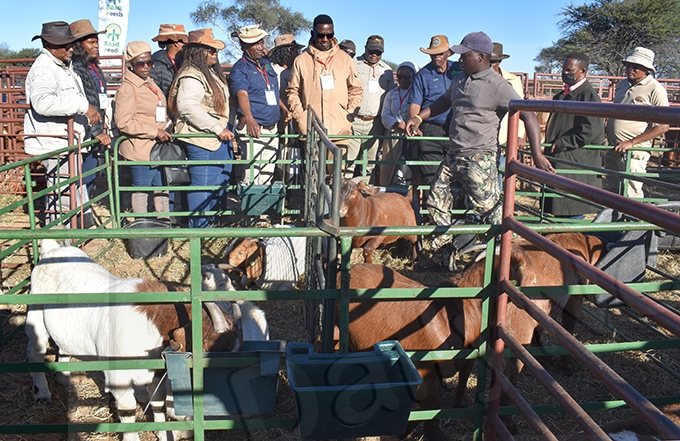
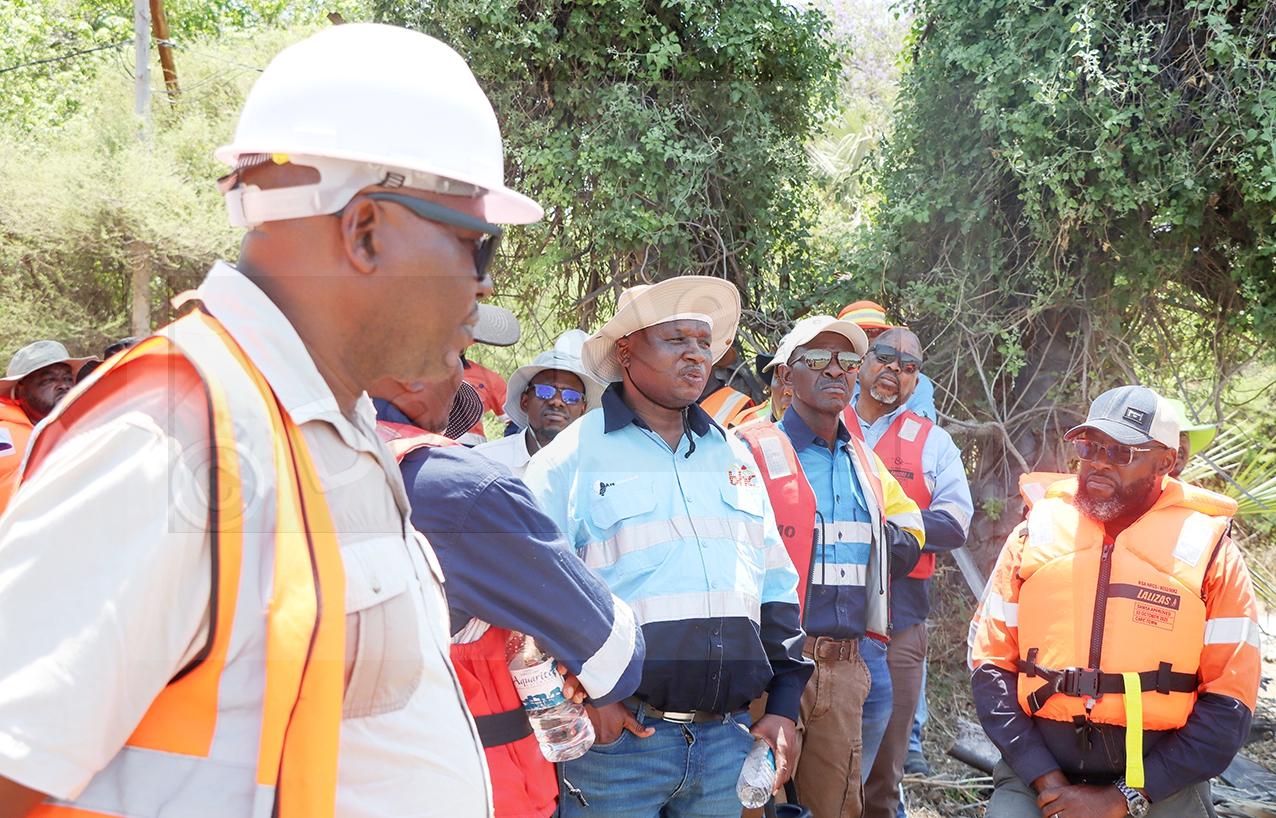
The 6th Kang Farmers’ Field Day, held recently at Khakha Farm located 10km east of Kang, became a platform for celebrating agricultural resilience and mapping out a bold new future for Botswana’s farming sector. In his keynote address, Assistant Minister of Trade and Entrepreneurship, Mr Baratiwa Mathoothe commended farmers in Kang for their exceptional ability to produce against all odds.
“Despite extreme salinity in underground water, limited rainfall, and harsh temperatures, you continue to produce, and thrive. Kang, traditionally known for its livestock farming especially cattle, goats and sheep has become a symbol of agricultural perseverance, while much of the district’s farming is still practised at a subsistence level, there is growing momentum towards commercialisation and value addition,” he said.
Mr Mathoothe noted that it was heart-warming to appreciate that livestock numbers have grown significantly over the years, adding that this growth has not gone unnoticed by the government.
He indicated that the multi-species abattoir, which had been constructed in nearby Tsabong was a key infrastructure project aimed at bringing processing closer to producers. Mr Mathoothe further urged farmers to take full advantage of the facility.
“It is one of its kind, brought closer to you. Even before it starts operating, we must prepare ourselves to be active players in the new business. The days of subsistence farming are gone. We must farm to grow, to sell, and to build wealth. I therefore call for a shift from subsistence agriculture to a model rooted in commercialisation and innovation,” he said, highlighting the transformative potential this could have on job creation and inclusive growth.
Mr Mathoothe shared that one of the government’s flagship initiatives, Thuo Letlotlo, designed to increase herd numbers and improve livestock quality, was recently suspended. However, he assured the audience that the programme is being restructured to better align with the principles of the new Botswana aimed at ensuring greater impact and inclusivity.
“The suspension was not an end, it is a step towards designing a programme that truly and meaningfully benefits communities like Kang,” he said.
In line with this vision, he said the ministry was working toward building integrated agricultural value chains, adding that the efforts were aimed at helping farmers move beyond primary production to include processing, packaging, branding, and even international market access.
“Let us process meat, hides, and skins locally. Let us package and brand our products, develop feed and input industries using indigenous knowledge, and explore small-scale food preservation,” he said.
He advised farmers to form cooperatives, adding that the aim was to create economic clusters and cooperatives that could collectively lift communities out of poverty and towards prosperity.
“Cooperatives and aggregated investments are particularly emphasised as vehicles for empowerment. Through joint ownership of facilities such as storage, processing centres, and digital market platforms, farmers stand to gain stronger market leverage and higher incomes,” he said.
Mr Mathoothe commended all stakeholders, from extension officers and sponsors to private sector partners and the farmers themselves, for coming together in a shared mission.
“The expansion and strengthening of value chains will not only improve productivity but give rise to new industries. This is how agriculture can become the engine of Botswana’s future economy,” he noted.
He called on attendees to embrace innovation and collaboration: “Let us grow Botswana, one farm at a time. Together we will overcome, and collectively we will achieve the ideals of the New Botswana.”
Kang chief, Kgosi Basadi Seipone called on government to consider adopting policies that reflect the district’s unique circumstances rather than applying a one-size-fits-all approach.
“To unlock Kgalagadi’s potential, there is a growing call for government to tailor economic development strategies to the unique needs of each district, ensuring that regions such as Kgalagadi are not left behind,” she said.
She said, the current national economic policy did not take into account regional differences, adding that each district had its peculiar challenges and opportunities, therefore a general policy could not adequately support development in areas such as Kgalagadi.
Kgosi Seipone noted that one of the stand out opportunities in Kgalagadi is farming as the district experiences fewer outbreaks of cattle disease as compared to other regions, making it ideal area for livestock production. She decried that local farmers faced a critical challenge as the landboard did not allocate ranches in the area, hampering efforts to develop commercial agriculture. ENDS
Source : BOPA
Author : Thuso Kgakatsi
Location : Kang
Event : Farmers day
Date : 27 May 2025
Related News

14 Oct 2026
Mophuting pays tribute to Masire

14 Oct 2026