


Preparedness plan for Ntimbale Dam crucial
26 May 2025
Ntimbale Dam has since commencement of operation in 2006 experienced overflow every year.
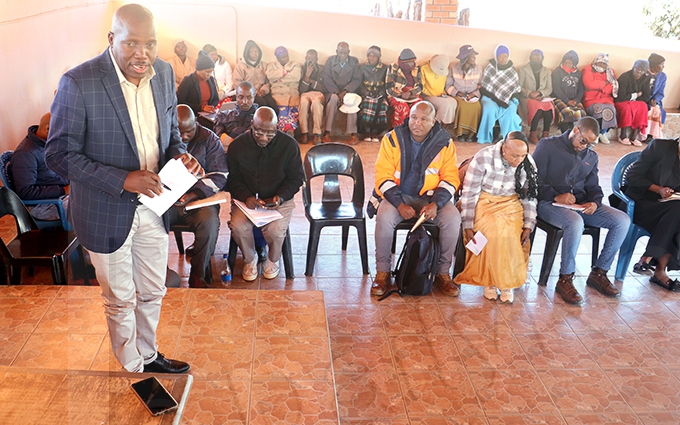
This, Senior Manager at Water Utilities Corporation (WUC)-Sustainability and Water Resources Mr Lesego Raditsebe informed stakeholders recently, necessitated an emergency preparedness plan. An Emergency Preparedness Plan (EPP) for a dam in Botswana, he explained, should be a detailed, written document outlining procedures for responding to dam failures or other emergencies. It should include dam break inundation mapping, evacuation routes, early warning systems, and communication protocols. The plan should also address roles and responsibilities, emergency response procedures, and post-emergency recovery actions
Mr Raditsebe further informed the stakeholders’ engagement on the updated emergency preparedness plan for Ntimbale Dam that the Tati River also posed danger to those living along the riverine. He said while dams like Thune, Shashe, Dikgatlhong regularly overflowed during rainy seasons, other dams could go for years without overflow, citing over flow of Gaborone Dam this year, which caused disruptions to daily lives. Mr Raditsebe said in 2016, government acquired a loan from the World Bank to make a water network from the Ntimbale Dam to also supply Tutume District.
“According to the World Bank requirements for the loan to be approved, government should provide emergency preparedness plan,” he said, adding that the plan should be rolled out to all those who might be affected in case of emergencies or dam walls break.
He said although some may think they would not be affected, as they were located behind the dam flow, activities that they conducted along the dam, which included cattle rearing, watering livestock, fishing could be affected. Mr Raditsebe said the high-speed water flow during dam breaks could damage water network, electricity network and also pollute the environment as it happened during the recent Gaborone Dam overflow. Although the emergency preparedness plan meeting was a new development, he said they would periodically address residents to keep them abreast with information relating to safety measures. He advised the village leadership, the development committee, district disaster committee and office of the district commissioner to collect data and phone numbers of all people residing along the dam flood plain who could be affected in case of dam break for easy reference and contact.
“Initially, Ntimbale Dam was fenced, but some members of the community stole the gates and fence,” he said, adding that some members of the public had witnessed the criminal act but did not report to the police.
He stated that livestock were not allowed within the dam premises more especially around the dam wall as their dung attracted termites resulting in termite mounts.
“These termite mounts would have tunnels that may ultimately lead to dam break when water finds its way through those tunnels,” he said, also encouraging them to acquaint themselves with all signage around the dam.
Project Engineer with Lebeana, Mr Keabeng Nkwada told the meeting that to conduct the emergency plan, they surveyed the area along the flow of water from Ntimbale Dam up to Francistown locating different disaster predisposed spots. He noted that about six kilometers from the dam, there were 25 residential plots covering 33 kilometres that could be affected in case of dam break, highlighting that in the event of a break, water could spread about 60-150 metres, which could affect people who residing within that range.
WUC-Safety Specialist, Ms Mmapula Keaikitse said there were restrictions around the periphery of the dam hence fencing, adding that permits for fishing at designated points were to be acquired from the Department of Wildlife and National Parks and picnic spots were also at selected zones.
“Canoes are not allowed in the dam and in the case of drowning, do not assist,” said Ms Keaikitse cautioning that that people who did not abide by the regulations placed lives of rescuers in danger as they were also at risk of drowning.
Ms Keaikitse cautioned people against using mattress to float on water, citing that some people recently died at Shashe Dam after using mattress to traverse through the dam. ENDS
Source : BOPA
Author : Goweditswe Kome
Location : Masingwaneng
Event : Stakeholder meeting
Date : 26 May 2025
Related News



14 Oct 2026
Mophuting pays tribute to Masire

14 Oct 2026